

What if the key to a successful transition into recovery isn't just about the habits you leave behind, but the specific environment you build for yourself on day one? For many people entering a MASH-certified home in Worcester, the process of deciding what to pack for a sober living house is the first real test of their new, independent life. It's completely natural to feel a sense of worry about losing your privacy or accidentally bringing an item that doesn't fit the house rules. You want your new space to feel like home, yet you're aware that every item must support your sobriety and respect the community around you.
We understand that this move is a significant milestone in your journey. This 2026 guide offers a clear, structured roadmap to help you pack with confidence and purpose. You will learn how to balance personal style with the practicalities of shared living, from choosing the right work attire to selecting toiletries that comply with safety standards. We'll walk through the essentials that create a peaceful, productive living space while ensuring you remain in full compliance with professional recovery standards. By the end of this checklist, you'll have a plan for a move-in day that is organized, stress-free, and focused on your future.
Key Takeaways
- Learn how transitioning to independent living requires a shift toward "real-world" essentials like professional attire and proper identification.
- Discover exactly what to pack for a sober living house by following the "one-week rule" to maximize shared storage space while keeping your room organized.
- Protect your recovery and community safety by identifying common household triggers and alcohol-based products that are prohibited in MASH-certified homes.
- Prepare for the unique climate and logistics of Worcester, Massachusetts, including seasonal clothing for New England and essentials for local transportation.
- Understand the intake process at The Willing House so you can arrive with peace of mind, knowing exactly how your belongings will be handled on move-in day.
Transitioning to Sober Living: How Packing Differs from Rehab
The transition from a clinical inpatient program to a residential community marks a profound shift in your recovery journey. In a detox or residential treatment center, your daily needs were likely met within a controlled environment where your schedule was managed for you. Sober living houses represent a different phase; they are designed to bridge the gap between intensive care and fully independent living. When you're deciding what to pack for a sober living house, you're doing more than filling a suitcase. You're curating the tools you need to take ownership of your new life.
At a MASH-certified home like The Willing House, the rules around your belongings are rooted in both safety and the National Alliance for Recovery Residences standards. These certifications ensure that your environment is structured and accountable, which influences what you can bring through the door. Unlike rehab, where you might have spent most of your time in comfortable loungewear, independent living requires you to prepare for the "real world." This means your packing list should reflect your goals, whether that involves returning to a professional career, starting a trade, or attending local recovery meetings in Worcester.
The Independence Factor: Packing for Work and Life
One of the biggest changes you'll experience is the freedom to leave the house for employment, education, or external treatment. This independence means you'll need a wardrobe that matches your daily responsibilities. If you're heading back to an office, pack professional attire that makes you feel confident and capable. If your path involves manual labor or a trade, ensure you have the specific gear and durable clothing required for the job. Because you'll be managing your own schedule for the first time in a while, a physical planner or a dedicated calendar is an essential item. It helps you track work shifts, house meetings, and appointments without the distractions that often come with a smartphone.
The Shared Space Reality
Most sober living environments involve shared bedrooms and common areas, which means storage space is a valuable resource. It's helpful to prioritize organization from day one. Consider bringing stackable plastic bins that can fit under a bed or a collapsible laundry hamper to keep your area tidy. Respecting the shared environment is a core part of the peer support model. While you want your space to feel personal, focus on items that foster a sense of belonging. Bringing a favorite board game or a deck of cards for the common room can be a wonderful way to connect with your new housemates during downtime, turning a shared house into a true community.
The Ultimate Sober Living Packing List: Essentials for Success
Transitioning into a community-focused home requires a thoughtful approach to your belongings. When you're deciding what to pack for a sober living house, it helps to view each item as a tool for your personal success. Following these categories ensures you have everything you need to thrive in stable, transitional housing without overwhelming your shared living space.
Proper documentation serves as the essential foundation for residents who are ready to secure employment and re-establish their professional lives.
Clothing and Personal Attire
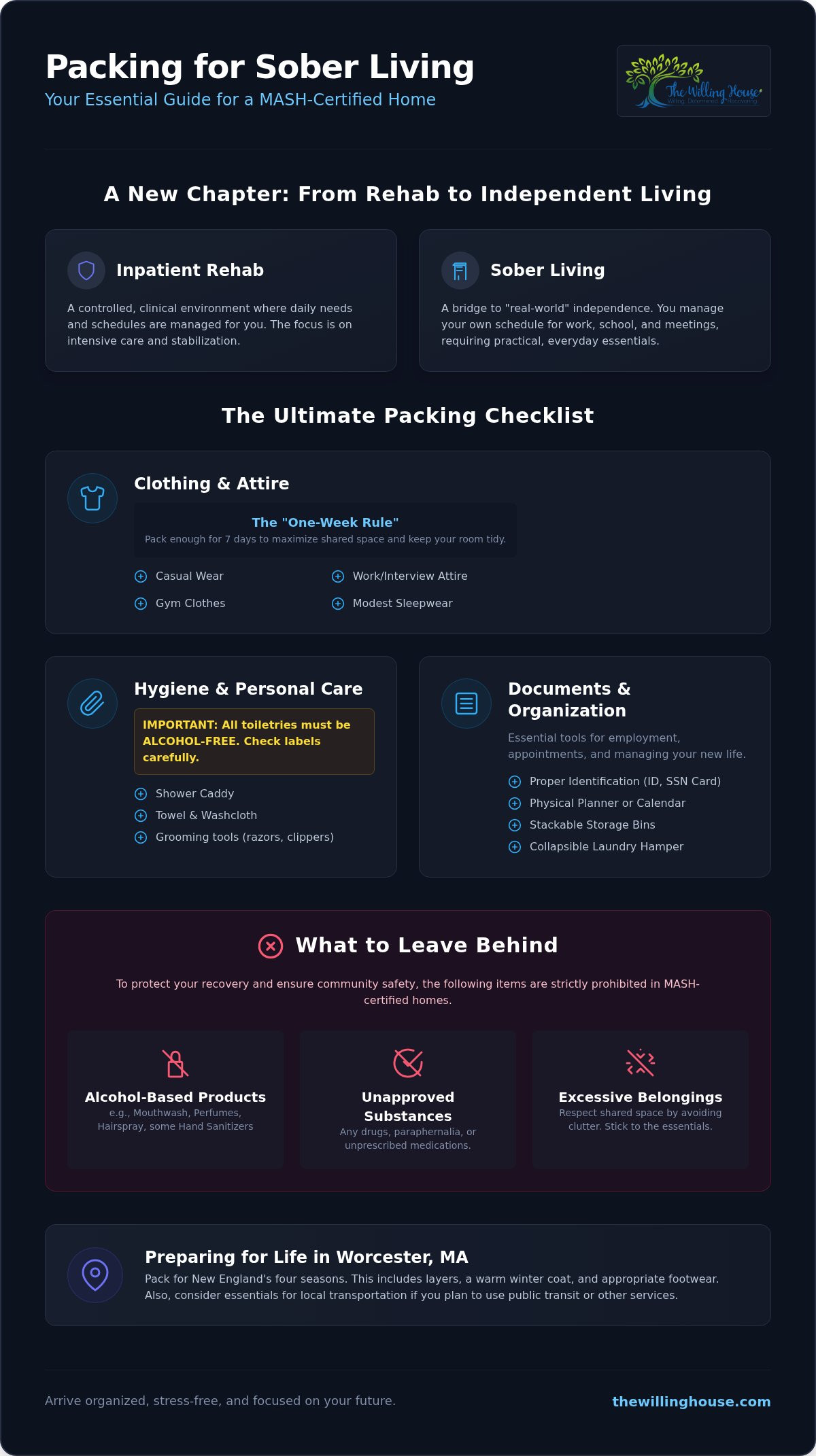
Space in a shared residence is often limited. We recommend following the "one week of clothing" rule to keep your closet manageable and your room tidy. This approach prevents clutter from becoming a source of stress. Your wardrobe should include:
- Casual wear for daily activities, chores, and community meetings.
- Work-appropriate attire, such as interview-ready clothing or durable work boots, depending on your specific career path.
- Gym clothes for physical wellness and modest sleepwear to respect the privacy of your housemates in shared rooms.
Hygiene and Personal Care
To maintain a safe environment for everyone, all toiletries must be alcohol-free. Check labels carefully on items like mouthwash, hairspray, and certain perfumes. A sturdy shower caddy is a must-have for transporting your items easily to and from shared bathrooms. Don't forget the small but essential items that are often overlooked, such as nail clippers, tweezers, and a supply of razors. If you're ever unsure about a specific product, our team at The Willing House is here to help you understand our community guidelines.
Critical Documents and Identification
Having your paperwork in order is a major step toward independence. Keep these items in a secure, organized folder that you can access easily:
- A valid photo ID, such as a Driver’s License or State ID, along with your Social Security Card.
- Current insurance cards and a detailed list of any prescribed medications.
- Emergency contact information for your sponsor, case manager, and family members.
Finally, remember to pack your recovery tools. A personal journal and copies of recovery literature, like the Big Book, are vital for your quiet time and group studies. These items turn your bedside table into a space for reflection and growth, helping you stay grounded in your daily practice. Choosing what to pack for a sober living house with intention helps you build a solid foundation from the very first night.
What to Leave Behind: Prohibited Items and Accountability
Understanding what to leave behind is just as vital as knowing what to pack for a sober living house. In a residential community, your belongings don't just affect you; they impact every peer living under the same roof. The rules regarding prohibited items aren't meant to be restrictive for the sake of control. Instead, they serve as a protective shield, ensuring that the home remains a sanctuary where everyone can focus on their growth without unnecessary distractions or risks.
One of the most common rules involves a total ban on alcohol-based products. This includes common items like mouthwash, certain hairsprays, and specific perfumes or colognes. While these might seem harmless, alcohol-based liquids can interfere with daily breathalyzer tests and, in some cases, provide a dangerous temptation for those in early recovery. We also ask residents to leave behind any clothing that features drug or alcohol-related graphics or logos. A shirt with a brewery logo might feel like a casual choice to you, but for a housemate struggling with a difficult day, it can serve as a powerful visual trigger. Maintaining a modest and respectful environment helps everyone stay grounded in their commitment to a new way of life.
Safety is our absolute priority, which is why weapons of any kind are strictly excluded from the premises. This policy is comprehensive; it includes items that some might consider tools, such as small pocket knives or multi-tools. By keeping these items out of the house, we eliminate potential safety concerns and maintain the tranquil, home-like atmosphere that defines our community.
The Science of Triggers in Shared Housing
Recovery is often a delicate process of rewiring the brain's response to environmental cues. In a shared living space, a familiar scent or a specific brand logo can unexpectedly spark a craving in a peer. By removing these cues, we create a "safe zone" that allows the nervous system to rest. Accountability measures, such as random drug screening and daily breathalyzers, act as a supportive safety net rather than a tool for judgment. The Willing House maintains these rigorous standards to stay in full MASH compliance, providing a structure that residents can rely on during their transition.
Electronics and Distraction Management
While we encourage you to stay connected with family and search for employment, we also guard against the dangers of isolation. You are welcome to bring laptops, tablets, or gaming consoles, but their use is subject to community guidelines. The goal is to prevent residents from retreating into their rooms for hours on end, as connection with others is a cornerstone of lasting sobriety. Most houses observe "lights out" policies and specific times for electronic usage to ensure that everyone gets the rest they need to be productive the following day. Balancing your digital life with face-to-face fellowship is a skill that will serve you well long after you leave our doors.
Preparing for Life in Worcester: Local Resident Considerations
Moving to a new city requires more than just internal preparation; it requires a practical understanding of your surroundings. When you're deciding what to pack for a sober living house in Central Massachusetts, you have to account for the unique demands of life in Worcester. Our city is a hub of recovery with a vast network of meetings and support groups, but reaching them often means being ready for the local elements. Whether you're heading to a 12-step meeting downtown or commuting to a new job, your gear should support your mobility and keep you focused on your goals rather than your discomfort.
Worcester’s job market is diverse, offering strong opportunities in healthcare, construction trades, and retail. If you're entering the medical field at one of our local hospitals, don't forget to pack clean, professional scrubs. For those in the trades, steel-toed boots and weather-resistant workwear are essential. Being prepared for these specific roles shows your commitment to building a stable, productive life. If you're ready to start this new chapter in a supportive environment, learn more about our MASH-certified housing and how we help you integrate into the Worcester community.
Seasonal Gear for Central Massachusetts
Worcester's weather is famously unpredictable, and your wardrobe needs to reflect the reality of four distinct seasons. Winter requires heavy, insulated coats and waterproof boots to handle the snow and slush while waiting for the WRTA. In contrast, the humid summers call for breathable, lightweight fabrics and sun protection for outdoor fellowship events. The most effective strategy is layering. Packing items like thermal undershirts, light sweaters, and a reliable windbreaker allows you to adjust to the temperature shifts that occur between morning commutes and evening fellowship.
Navigating the Worcester Community
Transportation is a key factor in your independence. Many of our residents rely on the WRTA bus system to reach work and treatment. Sturdy, comfortable walking shoes are non-negotiable for navigating Worcester's hills and sidewalks safely. We also suggest the following items to make your daily commute easier:
- A durable backpack for carrying your bus pass, recovery literature, and work lunch.
- A small umbrella or compact rain gear for the walk to the bus stop.
- A portable phone charger to ensure you can always reach your sponsor or house staff during long days out in the city.
Staying connected and mobile is a vital part of your accountability. By packing with the Worcester landscape in mind, you remove the small stressors that can accumulate and distract you from your recovery journey. You aren't just packing for a room; you're packing for a life in a vibrant, supportive city.
Moving Into The Willing House: Your Next Steps
Move-in day at The Willing House is designed to be a hopeful beginning rather than an ending. We want you to feel seen and supported from the moment you arrive at our doors. While you've spent the last few days carefully deciding what to pack for a sober living house, the real journey starts when you step inside and meet the community that will walk alongside you. Our team is dedicated to making this transition feel safe, organized, and deeply human.
The initial intake process is a vital part of maintaining our shared standards of safety and accountability. When you arrive, our staff will perform a respectful check of your belongings. This step ensures that no prohibited items accidentally enter the home, protecting the recovery of every resident. Once your bags are cleared, a peer mentor will be there to greet you. These mentors are residents who have already found their footing in our program; they understand exactly how you feel and are there to show you the ropes, from finding the laundry room to explaining the daily breathalyzer schedule.
The First 24 Hours: Settling Into the Community
Your first day is all about finding your rhythm within the house. You'll be introduced to your housemates, who quickly become a vital source of peer support and fellowship. We'll also walk you through the house chores, which are a cornerstone of our structured living program. These tasks aren't just about keeping the house clean; they're about building the habits of accountability and mutual respect that define a healthy, independent life. It's a shared effort that fosters a sense of pride in your environment.
Setting up your personal space is an important psychological step. As you unpack your clothing and arrange your recovery tools, you're signaling to yourself that you're ready for this new chapter. Whether it's placing your journal on your nightstand or hanging up your work attire for the next day, these small actions help turn a new room into a supportive home. This structure provides the stability that is often missing in early recovery, giving you the peace of mind to focus on your employment and treatment goals.
Final Checklist: Before You Leave Home
Before you head out on the morning of your move, take a deep breath and do one final sweep. Double-check that you've confirmed your arrival time with our intake coordinator so we can ensure a staff member is ready to welcome you. Use this quick-reference list to make sure the essentials are in your bag:
- Your photo ID, Social Security card, and insurance information.
- All current prescriptions in their original pharmacy bottles.
- Your shower caddy filled with alcohol-free hygiene products.
- Sturdy, comfortable shoes for walking and commuting in Worcester.
- Your Big Book, journal, and a physical planner for your schedule.
You've taken the brave step of preparing for change. Now, it's time to join a community that believes in your potential and provides the foundation you need to thrive. Contact The Willing House today to start your journey in Worcester.
Your Journey Starts With a Single Step
Deciding what to pack for a sober living house is more than a logistical task; it's a deliberate act of self-care and a commitment to your future. By focusing on essentials that balance your professional goals in Worcester with the safety of a shared community, you're setting yourself up for long-term stability. You've learned how to navigate the shift from clinical care to independent living, from selecting the right seasonal gear for Central Massachusetts to understanding the "why" behind house rules. Every alcohol-free toiletry and every pair of sturdy walking shoes is a tool that helps you move through your new environment with confidence and dignity.
At The Willing House, we provide the MASH-certified excellence and structured accountability for long-term success that you need to transition into a life of true independence. You don't have to navigate this transition alone. Our supportive peer community is ready to welcome you into a home-like setting that values your growth and respects your journey. We believe in your potential to build a foundation that lasts far beyond your time with us. Ready to build a life you are proud of? Join The Willing House community in Worcester. Your new chapter begins today, and we're honored to be part of it.
Frequently Asked Questions
Do I need to bring my own bed linens and towels to a sober house?
Most sober living homes provide basic bedding and towels, but many residents prefer to bring their own for an added sense of home. It's a good idea to pack two sets of twin-sized sheets, a pillow, and a few bath towels. Having your own linens can make your new space feel more personal and comfortable during your first few nights. Always check with the intake coordinator before you arrive to ensure you aren't overpacking unnecessary items.
Are cell phones and laptops allowed at The Willing House?
Yes, cell phones and laptops are permitted at The Willing House, as we encourage you to stay connected with family and search for employment. However, we have specific guidelines to prevent digital isolation and ensure you're participating in the community. Usage is generally restricted during house meetings and after "lights out" to support a healthy sleep routine. We focus on helping you balance technology use with real-world recovery and peer fellowship.
What kind of toiletries are prohibited in MASH-certified housing?
Any hygiene product containing alcohol as a primary ingredient is strictly prohibited in MASH-certified housing. This includes traditional mouthwash, certain hairsprays, hand sanitizers, and alcohol-heavy perfumes or colognes. These items can trigger cravings or interfere with daily breathalyzer testing. When considering what to pack for a sober living house, always opt for alcohol-free alternatives. Checking the ingredient labels on your deodorant and face wash ensures you stay in full compliance with house safety standards.
How much clothing should I pack for a shared room?
We recommend packing approximately seven to ten days' worth of clothing to accommodate limited closet space in shared rooms. Since on-site laundry facilities are available, you don't need an extensive wardrobe to stay clean and professional. Focus on versatile pieces that can be layered for the Worcester weather. Overpacking can lead to a cluttered living area, which often increases stress. Keeping your belongings organized helps maintain a peaceful environment for both you and your housemates.
Can I bring my own food or kitchen appliances like a coffee maker?
You are welcome to bring your own groceries, but personal kitchen appliances like coffee makers, hot plates, or toaster ovens are not allowed in individual rooms. These items pose a fire risk and can create cleanliness issues in shared spaces. Our community kitchens are fully equipped with the appliances you need for meal preparation. If you have specific dietary needs, we provide designated storage areas in the kitchen for your personal food items.
Is there a limit on the amount of money or cash I can bring?
There is no official limit on the amount of cash you can bring, but we strongly advise against carrying large sums of money. Having significant amounts of cash can be a safety concern in a shared living environment and may serve as a potential trigger in early recovery. Most residents find it helpful to keep enough on hand for bus passes or small personal items, while keeping the rest in a secure bank account accessible via a debit card.
What happens if I accidentally bring a prohibited item?
If you accidentally bring a prohibited item during move-in, our staff will simply ask you to send it home with a family member or store it safely off-site. We understand that mistakes happen, especially when you're feeling anxious about your transition. The goal of our intake search is to maintain a safe, trigger-free zone for everyone. As long as you are honest and cooperative during the process, we will help you resolve the issue without any judgment.
Are pets allowed in sober living houses in Massachusetts?
Pets are generally not allowed in sober living houses in Massachusetts due to the complexities of shared living and potential allergies among residents. This policy helps maintain a calm and predictable environment focused entirely on recovery. However, legitimate service animals protected under the Americans with Disabilities Act are handled differently. If you require a service animal, it's essential to discuss this with the house manager well in advance to ensure all legal requirements are met while deciding what to pack for a sober living house.


