

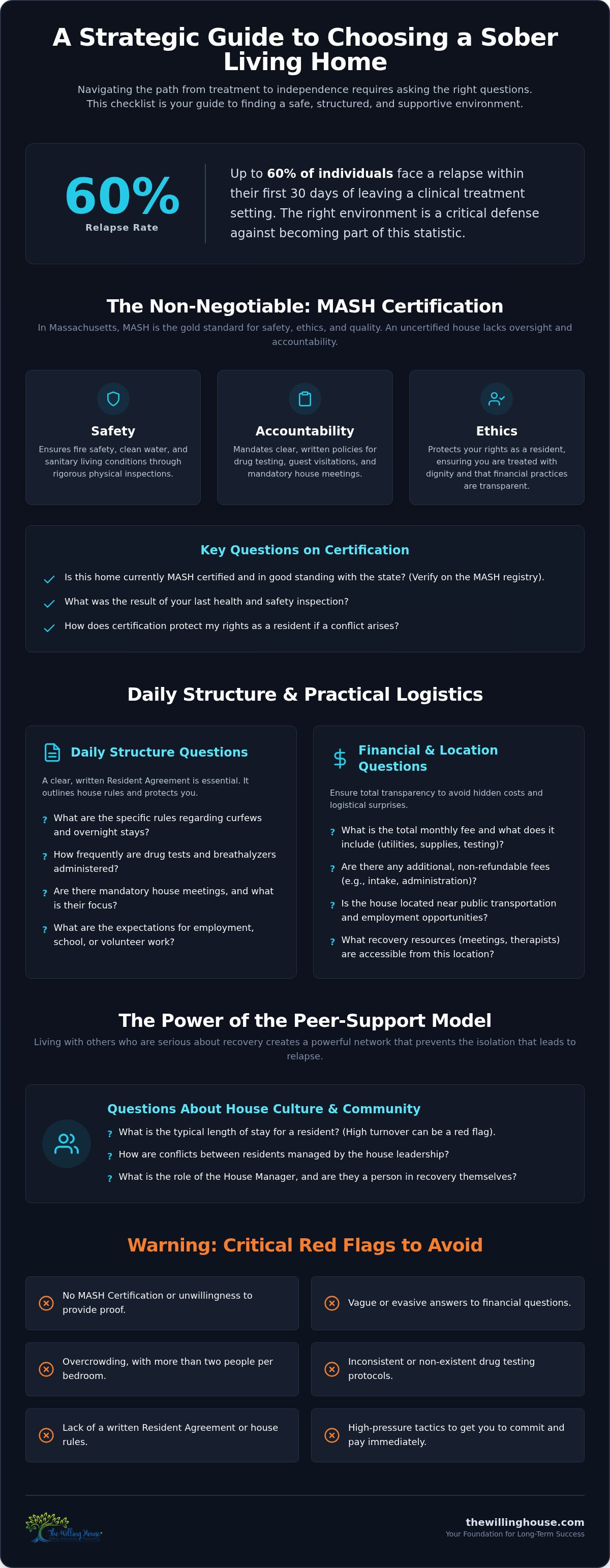
Up to 60% of individuals face a relapse within their first 30 days of leaving a clinical treatment setting. It's a staggering number that highlights just how vulnerable the transition from rehab to real life can be. You likely feel the weight of this reality every time you think about your next step. The anxiety of choosing the wrong environment, one where the structure is flimsy or the peers aren't serious, is enough to keep anyone up at night. Finding a safe harbor starts with knowing the specific questions to ask a sober living home before you commit your time and resources.
We understand that you're looking for more than just a bed; you're looking for a foundation where you can rebuild your career and reconnect with your family. You deserve a community that balances firm accountability with the warmth of a true home. This article provides a comprehensive, MASH-aligned checklist of 21 essential questions for 2026. These prompts will help you identify a certified, peer-driven environment that prioritizes your dignity and long term success. We'll explore how to spot hidden costs, verify safety standards, and ensure the house culture supports a life of purpose and independence.
Key Takeaways
- Learn why MASH certification is the non-negotiable gold standard for safety and professional oversight in Massachusetts recovery housing.
- Discover the specific questions to ask a sober living home to ensure their daily structure provides the accountability you need for lasting sobriety.
- Understand the power of the peer-driven social model and how living with others serious about recovery helps prevent the isolation that leads to relapse.
- Gain clarity on financial transparency and logistics, helping you avoid hidden costs while securing access to local employment and recovery resources.
- Identify critical red flags, such as overcrowding or lack of accountability, to protect yourself from predatory or unstructured environments.
Why Certification is Your #1 Question: The MASH Standard
Choosing a place to live after treatment is a monumental decision. It's not just about finding four walls and a roof; it's about finding a foundation. Sober living houses serve as the bridge between clinical care and total independence. In Massachusetts, the gold standard for this bridge is certification through the Massachusetts Alliance for Sober Housing (MASH). MASH is the state affiliate of the National Alliance for Recovery Residences (NARR), and they're responsible for auditing homes to ensure they meet rigorous quality standards. Without this certification, you have no guarantee that a home follows basic safety or ethical guidelines.
Certification is often the only thing standing between a legitimate recovery residence and what people in the community call a "flop house." While a flop house focuses on filling beds to maximize profit, a MASH-certified home focuses on resident outcomes. The certification process rests on three core pillars:
- Safety: Every home must pass physical inspections to ensure fire safety, clean water, and sanitary living conditions.
- Accountability: Certified homes must have clear policies for drug testing, guest visitations, and house meetings.
- Ethics: This protects your rights as a resident, ensuring you're treated with dignity and that the home's financial practices are transparent.
You can easily verify a home's status by checking the official MASH registry online. If a house isn't on that list, they aren't held accountable by any governing body. When you're compiling your list of questions to ask a sober living home, certification should be the very first thing you verify.
Questions to Ask About Certification
Don't be afraid to dig into the details during your initial call or tour. A reputable manager will be proud to show you their credentials. Ask these specific questions to ensure the home is in good standing:
- Is this home currently MASH certified and in good standing with the state?
- What was the result of your last health and safety inspection, and were there any deficiencies?
- How does being MASH certified protect my rights as a resident if a conflict arises?
The Danger of Uncertified 'Sober Houses'
Uncertified homes often operate in a legal gray area without oversight. This lack of supervision leads to dangerous overcrowding, where too many residents are squeezed into small spaces, creating high-stress environments. In these houses, drug testing is often inconsistent or nonexistent, which puts your hard earned sobriety at risk. One of the most vital questions to ask a sober living home is whether they are willing to provide proof of their current certification. MASH acts as the essential benchmark for a sober house Worcester Massachusetts, ensuring the community you join is actually invested in your long term success.
Assessing Daily Structure and Accountability Protocols
Structure acts as the essential scaffolding for early recovery. When you transition from the highly controlled environment of a clinical rehab facility, the sudden freedom of the outside world can feel overwhelming. Daily protocols are not meant to be restrictive for the sake of control; rather, they exist to reduce decision fatigue. In early sobriety, having a set routine helps prevent the mental exhaustion that often leads to relapse. According to SAMHSA's Definition of Recovery, this process is a journey of change where individuals improve their health and wellness while striving to reach their full potential. A structured environment provides the stability necessary to begin that journey.
Before you move in, a reputable home should provide a clear, written Resident Agreement. This document is a vital piece of the puzzle because it ensures transparency and protects your dignity. It outlines house expectations, financial obligations, and resident rights. If a home cannot provide these rules in writing, it's a sign that the environment may lack the professional oversight you need. Finding a structured living program that balances these rules with your need to work or attend school is key to long term success.
Questions About Drug Testing and Breathalyzers
Accountability is the glue that keeps a recovery community safe. When considering your options, some of the most critical questions to ask a sober living home involve their testing procedures. You need to know that your peers are as committed to their sobriety as you are. Ask the following:
- How often is random drug screening conducted, and is the process supervised to ensure accuracy?
- Are daily breathalyzer protocols in place to maintain a safe, alcohol-free environment for everyone in the house?
- What is the specific Safety Plan if a resident relapses, and how is the rest of the community protected during that time?
Questions About Curfews and Attendance
While the goal is independence, curfews provide a safety net during the evening hours when cravings can be strongest. A good home will offer a phased approach to freedom. Consider asking these questions about the daily schedule:
- What are the weekday and weekend curfews for new residents compared to those who have earned more seniority?
- Are there mandatory house meetings, and do they focus on peer support, logistics, or fellowship?
- How does the house handle accountability for residents who have late-shift jobs or intensive outpatient treatment schedules?
A house that can't answer these questions with specific, logical policies may not have the structure required to support your growth. You deserve an environment that is both disciplined and kind, providing a stable foundation while you rebuild your life.
The Peer Support Model: Who Will You Live With?
Recovery doesn't happen in a vacuum. While clinical treatment provides the tools for sobriety, the Social Model of recovery provides the practice ground. Research consistently shows that living with peers who share similar goals is significantly more effective than living alone or returning to an environment that lacks support. Isolation is a primary driver of post-rehab relapse. By surrounding yourself with others who are also navigating the transition to independent living, you create a safety net that catches you on the difficult days. This shared experience fosters a sense of belonging that is often missing in early recovery.
It is important to differentiate between staff-led and peer-supported environments. Staff-led homes often feel like an extension of a clinical facility, with outside employees managing daily operations. In contrast, a peer-supported model, like the one we utilize at The Willing House, focuses on a community-driven approach. This model encourages residents to take ownership of their environment and their progress. It is about building a life you are proud of alongside people who truly understand your journey. When you are evaluating your options, understanding the house dynamic is one of the most important questions to ask a sober living home.
Questions About House Culture and Demographics
The atmosphere of a house is hard to measure but easy to feel during a tour. You want to ensure the demographic aligns with your needs for safety and comfort. Ask these specific questions during your search:
- Is the house gender-specific, serving men-only or women-only, or is it a co-ed facility?
- What is the average length of stay for current residents? A longer average stay often indicates a stable and healthy community.
- How does the community handle conflict or personality clashes between peers?
Questions About Staff and Peer Leadership
Even in a peer-driven model, leadership is vital for maintaining the standards of the home. You need to know who is responsible for the house culture when challenges arise. Include these as part of your questions to ask a sober living home:
- Is there a live-in house manager or a designated peer leader available 24/7 for immediate support?
- What specific training or personal recovery experience does the leadership team possess?
- Beyond formal house meetings, how do residents actively support one another's recovery goals on a daily basis?
A healthy peer culture acts as a bridge to the real world. It allows you to practice social skills, resolve conflicts, and celebrate milestones in a safe space. When the house culture is strong, the residents become more than just roommates; they become a vital part of your support system.
Practical Logistics: Fees, Location, and Independence
Moving into a recovery residence is a significant life transition. While previous sections of this guide focused on safety and community, the practicalities of daily life are what sustain long term success. A sober home should not feel like an extension of a clinical facility or "rehab 2.0." Instead, it should serve as a launchpad where you regain your autonomy. This means having the freedom to use your cell phone, access the internet for job searches, and welcome family members for visits. These elements are crucial for building a life you don't want to escape from. Independence is the goal, and the house rules should support that growth rather than stifle it.
Transparency in costs is equally vital for your peace of mind. Many residents find themselves surprised by additional charges that weren't clearly discussed during the intake process. When you are formulating your list of questions to ask a sober living home, ensure you understand the total financial commitment required to maintain your residency. A professional home will be upfront about what your fees cover, from utilities to basic house supplies. If you're looking for a foundation that prioritizes your transition to the workforce, consider MASH-certified sober housing that offers both structure and independence.
Questions About Financial Requirements
Financial stress is a known trigger for relapse, so clarity is your best defense. You need to know exactly what is expected of you before you sign a resident agreement. Ask these specific questions:
- What is the total move-in cost, and what specific utilities or amenities are included in the weekly or monthly fee?
- Are there any hidden costs, such as separate drug testing fees or mandatory supply contributions?
- What is the house policy regarding refunds if a resident decides to leave or is asked to leave the community?
Questions About Location and Transportation
Worcester is a hub for recovery resources and employment opportunities. However, a home is only as good as your ability to get where you need to go. Location dictates your access to the "real world." Consider these logistics:
- Is the home located within walking distance of public transportation, such as the WRTA, or major employers in the Worcester area?
- Are residents allowed to have their own vehicles on-site, and is there designated parking available?
- How close is the home to local AA/NA meeting halls or outpatient clinical providers you may need to visit?
Choosing a home with the right location allows you to focus on your recovery and career without the added burden of transportation hurdles. You deserve a living situation that makes your daily goals achievable.
Red Flags to Watch For During Your Search
Finding the right recovery environment is about more than just checking boxes; it's about protecting your future. While many homes offer genuine support, others operate as "flop houses" that prioritize profit over people. These environments often suffer from severe overcrowding, a complete lack of drug testing, and zero accountability. If a home offers "free" or heavily subsidized housing that isn't tied to a legitimate, structured program, be extremely cautious. These arrangements often lack the oversight necessary to keep you safe. In Massachusetts, a lack of MASH certification is the biggest red flag of all. It means the home hasn't been vetted for the safety, ethics, or health standards we discussed earlier.
Trusting your intuition is a vital part of this process. If the atmosphere feels chaotic or the residents don't seem serious about their sobriety, it's likely not the right fit for you. Your recovery deserves a stable foundation, not a place that adds to your stress. When you are preparing your questions to ask a sober living home, pay close attention to how the staff responds. Vague answers or a defensive attitude are signs that the home may be hiding a lack of structure or professional oversight.
Communication and Transparency Warnings
A professional sober home should be an open book. If you encounter resistance during your inquiry, it's a sign of deeper operational issues. Watch for these specific warning signs:
- The house manager is consistently difficult to reach or avoids answering direct questions about house policies and resident rights.
- There is no written resident agreement or a clearly defined list of house rules provided for you to review before you move in.
- The house has a reputation for "kick-outs" that leave residents on the street without a safety plan or a referral to a higher level of care.
Physical Environment Red Flags
The physical state of a home often reflects the quality of the program inside. A home that is neglected or unsafe cannot provide the tranquility you need to heal. Keep an eye out for these physical red flags:
- The building is poorly maintained, looks structurally unsafe, or has visible code violations like blocked fire exits or broken windows.
- Residents appear unsupervised during your visit, or you notice evidence of substance use on the premises.
- The manager refuses to give you a physical or virtual tour of the entire facility, including common areas and bedrooms, before you pay a deposit.
Before you commit any funds, always insist on a tour. This is one of the most practical questions to ask a sober living home during your initial screening. Seeing the environment firsthand ensures it meets the standards of a true recovery community and provides the dignity you deserve in your new home.
Secure Your Foundation for Lasting Recovery
Finding the right environment is a vital step in your journey toward a life of purpose and independence. By prioritizing MASH-certified excellence, you ensure that your living environment meets the highest standards for safety, ethics, and accountability. The right structure doesn't just keep you safe; it provides the scaffolding you need to return to work, reconnect with your family, and thrive within a community of supportive peers. Using this checklist of questions to ask a sober living home will help you separate legitimate recovery residences from environments that lack the oversight you deserve.
We're here to provide that stable foundation in the heart of Worcester's recovery community. Our safe, structured peer environment is designed to help you bridge the gap between intensive care and independent living with dignity. Take the next step toward a life you're proud of—contact The Willing House today.
You've already done the hard work of seeking help. Now, it's time to build the future you've been working so hard to achieve. You don't have to walk this path alone.
Frequently Asked Questions
What is the difference between a sober living home and a halfway house?
Halfway houses are typically government-funded or clinical facilities often linked to the criminal justice system. Sober living homes are community-based environments that prioritize peer support and independence. While halfway houses may have more intensive clinical oversight, sober living focuses on the social model of recovery. It is one of the common questions to ask a sober living home when you are trying to understand the level of freedom provided in your daily life.
Can I work a full-time job while living in a Worcester sober house?
Yes, most independent sober living communities in Worcester encourage residents to maintain full-time employment. Working provides the structure and financial independence necessary for a successful transition back into society. The house schedule and curfews are generally designed to accommodate standard work hours. This allows you to rebuild your professional life while benefiting from the accountability of a supportive peer community in a safe, drug-free environment.
Is MASH certification mandatory for all sober homes in Massachusetts?
No, MASH certification is currently voluntary for sober homes in Massachusetts. However, it is a critical indicator of quality and safety. Many state agencies and clinical providers only refer individuals to MASH-certified residences because they have been vetted for health and safety standards. Choosing a certified home ensures that the operator is held accountable to professional ethics and rigorous oversight protocols, protecting your rights as a resident during your recovery journey.
What happens if I relapse while living in a sober living environment?
Safety and the integrity of the recovery environment are the top priorities when a relapse occurs. Most homes have a specific Safety Plan that requires the resident to leave the premises immediately to protect the sobriety of the other house members. The leadership team will typically provide a referral to a higher level of care, such as detox or inpatient treatment, to ensure the individual remains supported and safe during their personal crisis.
How long do most people stay in a structured recovery home?
Length of stay varies based on individual needs, but many residents stay between six and twelve months. This duration allows enough time to establish a solid foundation in recovery, secure stable employment, and build a local support network. Some individuals choose to stay longer to mentor newer residents within the community. The goal is to ensure you feel fully confident and stable before transitioning to completely independent living in your own home.
Can my family visit me at a sober living house?
Yes, family reconnection is a vital part of the recovery process. Most homes have designated visiting hours and specific areas for guests to ensure the privacy and safety of all residents. Visitors are typically required to be sober and follow house rules during their stay. Building healthy relationships with loved ones is encouraged as it provides a long term support system outside of the peer community, helping you maintain lasting sobriety.
Do I need to be in an IOP (Intensive Outpatient Program) to live here?
While many residents are enrolled in an IOP, it is not always a mandatory requirement for residency. Some individuals have already completed clinical treatment and are focused on maintaining their sobriety through work and community fellowship. However, most homes do require active participation in a recovery program, such as AA, NA, or other peer support groups, to maintain the house's focus on long term accountability, growth, and shared success among all residents.
Are medications like Suboxone or Vivitrol allowed in sober living?
Many MASH-certified homes are medication-assisted recovery (MAR) friendly and allow residents to take prescribed medications like Suboxone or Vivitrol. It's important to include this in your questions to ask a sober living home to confirm their specific policy. These medications must be managed according to strict house protocols, which usually involve secure storage and documented administration to ensure the safety and transparency of the entire household and protect all residents.


