

Imagine waking up with the heavy weight of a choice you didn't want to make, where your first thought isn't about your health; it's about the bed you're sleeping in. The fear of being cast out onto the street in the middle of the night is a terrifying reality for many in recovery. You likely feel a mix of shame and panic, wondering exactly what happens if you relapse in a sober house. It's a high-stakes moment where your safety and the safety of your housemates are the primary concern for everyone involved.
We know that recovery isn't always a straight line, and the anxiety you're feeling right now is completely valid. This article will help you understand the standard safety protocols, accountability measures, and recovery-first responses triggered by a relapse in a structured environment. We'll walk through the difference between a discharge and a supported referral, how MASH regulations protect your dignity, and why being honest is the most important step you can take to stay safe. You deserve a clear path forward, even when the road gets difficult.
Key Takeaways
- Understand why sobriety rules aren't just about discipline; they're essential for maintaining the "social model" that protects every resident's recovery capital.
- Gain clarity on what happens if you relapse in a sober house, including the immediate 24-hour protocols focused on your physical safety and mental well-being.
- Learn the difference between a punitive eviction and a safety-based administrative discharge designed to preserve the community's drug-free environment.
- Discover how a "Culture of Care" empowers you to support your housemates through honesty rather than silence, ensuring no one's safety is compromised.
- See how MASH certification ensures that even during a crisis, residents are treated with the dignity and structured support necessary for long-term success.
Understanding the Role of Sobriety Rules in Recovery Housing
A certified sober house operates on what's known as the Social Model of recovery. Unlike a clinical facility with doctors and nurses, this environment is a peer-led community where residents support one another's transition back into society. In this setting, sobriety rules aren't just arbitrary restrictions. They're the literal foundation of your recovery capital. Recovery capital refers to the internal and external resources you have to sustain long-term sobriety. Living in a drug-free home provides a massive boost to those resources by removing the constant stress of environmental triggers.
When someone asks what happens if you relapse in a sober house, they're often worried about the immediate consequences. However, it's vital to recognize that these rules exist to protect the collective sobriety of every person under that roof. A single person using substances in a shared living space can jeopardize the safety and mental health of everyone else. Whether it's a brief "slip" or a full return to active use, the response is always centered on maintaining the integrity of the home as a sanctuary for those committed to change.
The Purpose of Accountability Protocols
Daily breathalyzers and random drug screenings serve as a vital safety net rather than a tool for catching people in a mistake. For many residents, the psychological benefit of knowing that every housemate is held to the same high standard provides immense peace of mind. It allows you to relax into your environment, knowing that your home is a secure zone. MASH-certified houses maintain higher oversight standards than uncertified ones, ensuring that these protocols are handled with professional consistency and respect for your dignity. This structure acts as a necessary buffer between the intensive care of treatment and the total independence of the outside world.
The Ethical Discharge Standard
There is a significant difference between being "kicked out" and receiving an ethical discharge. In Massachusetts, MASH-certified homes follow specific guidelines to ensure that a resident who relapses isn't simply abandoned. An ethical discharge means the house helps facilitate a referral to a higher level of care, such as a detoxification center or an inpatient program. This prevents the dangerous practice of "patient brokering" and ensures that the individual’s safety remains a priority even when they can no longer stay in the house. The goal is always to move the person toward the help they need while keeping the remaining community safe and drug-free.
Immediate Protocols: What Happens in the First 24 Hours?
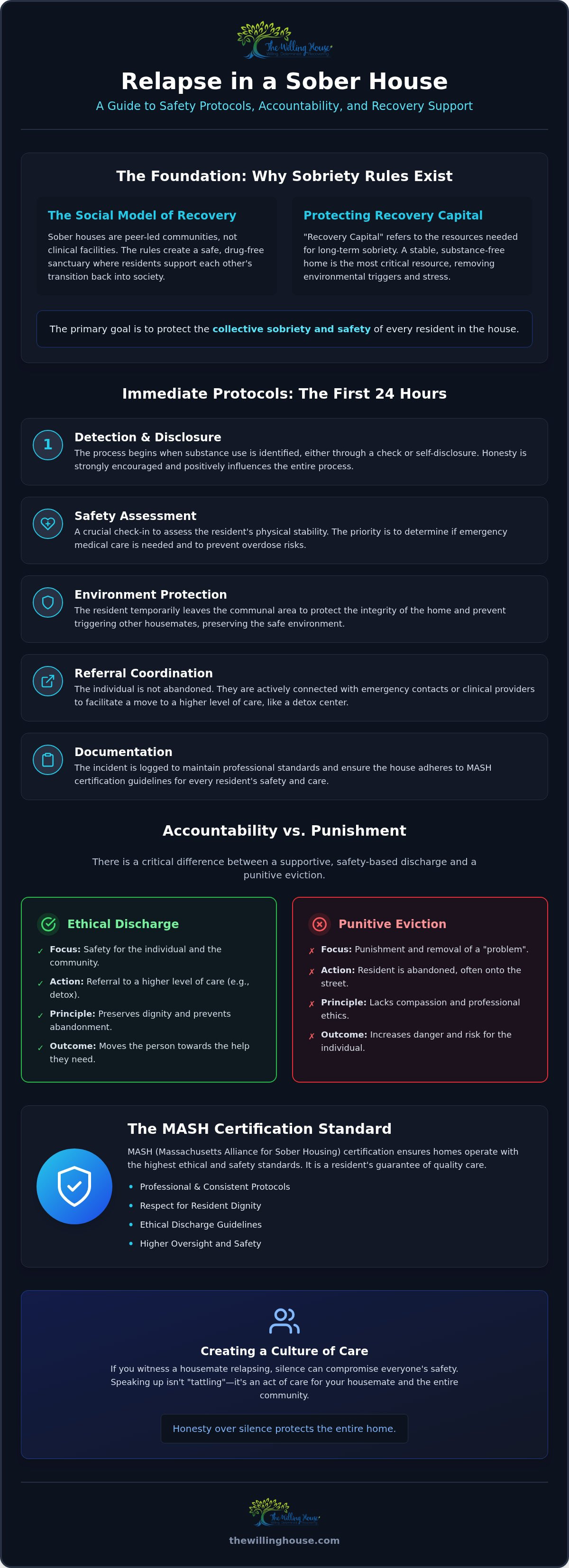
Understanding what happens if you relapse in a sober house starts with the immediate response. When a relapse occurs, the first 24 hours are critical for both the individual and the community. The process is methodical and prioritizes safety over punishment. If you’re wondering what happens if you relapse in a sober house, the reality is a structured sequence of events designed to keep everyone safe and moving toward a solution.
The immediate response follows a professional, five-step protocol:
- Detection and Disclosure: Whether through a scheduled check or a resident coming forward, identifying the use is the first step. Honesty is always encouraged and changes the tone of the conversation.
- Safety Assessment: Managers perform a human check-in to see if the resident is physically stable or if they need emergency medical care. This isn't a clinical diagnosis, but a vital check for potential overdose risks.
- Environment Protection: To maintain the "social model" of the home, the resident must temporarily leave the communal living area. This prevents triggers for other housemates.
- Referral Coordination: Instead of being left without options, the individual is connected with emergency contacts or clinical providers. This ensures they move toward a higher level of care, such as a detox center.
- Documentation: The event is logged to maintain MASH certification standards, ensuring the house follows ethical guidelines for every resident.
The Role of Toxicology Screening
Toxicology screening is a tool for safety, not punishment. These tests confirm the presence of substances so house managers can determine the appropriate level of care needed. When a screen returns a positive result, it leads to a calm, private conversation. The goal is to verify the facts and begin the referral process without delay or judgment. These screenings provide the objective data needed to keep the home a secure, drug-free sanctuary for everyone.
Honesty and Self-Disclosure
Coming forward before a test is even administered completely changes the dynamic of the house’s response. In a peer-support model, rigorous honesty is the most valuable currency you have. When you self-disclose, you show that you still value your recovery and the safety of your peers. This often leads to a much smoother transition to rehab and keeps the door open for future support within our Structured Living Program once you are stable again. Choosing to be honest is the first step back toward a life you can be proud of.
Accountability vs. Eviction: Navigating the Consequences
When people hear the word "eviction," they often picture a cold, punitive process. In a MASH-certified environment, we view this transition differently. We call it an administrative discharge. It's a safety-based response rather than a disciplinary one. When you first arrive, you sign a Community Contract. This agreement isn't meant to be a list of traps. Instead, it's a mutual promise to keep the home safe. If you're curious about what happens if you relapse in a sober house, this contract is the roadmap that ensures everyone is treated fairly and with dignity.
A relapse impacts the entire house's collective recovery energy. It can be incredibly triggering for peers who are also in early recovery. Our responsibility is to protect the sanctuary we've built together. MASH standards also provide you with specific legal protections. You have a right to your personal belongings. Certified houses must follow strict rules regarding fee refunds and notification periods. You're never just "thrown away"; you're transitioned to a place where you can get the help you need.
Zero Tolerance Policies and Community Safety
Zero tolerance policies are the gold standard for protecting our most vulnerable members. If substance use is ignored or hidden, it creates a risk of "contagion." This is when one person's return to use triggers a chain reaction among housemates. We must balance our deep empathy for the individual with our non-negotiable duty to the group. Maintaining a drug-free environment is the only way to ensure the house remains a place of healing. This accountability is what makes the recovery community so strong.
When is Re-Entry Possible?
Re-entry is often possible once stability is regained. Most structured living programs require a resident to complete a clinical program, such as detox or an Intensive Outpatient Program (IOP), before re-applying. This break allows you to focus solely on your health without the responsibilities of independent living. When you're ready to return, you'll work with the house manager to create a new Relapse Prevention Plan. This plan identifies what went wrong and outlines the specific steps you'll take to ensure it doesn't happen again. It's about building a stronger foundation for your next chapter.
What to Do If You Witness a Housemate Relapsing
Witnessing a housemate return to substance use is one of the most difficult experiences you can face in a recovery community. It often triggers a complex mix of fear, anger, and a misplaced sense of loyalty. In many circles, there is a stigma against "snitching," but in a certified sober living environment, we replace that concept with a Culture of Care. Silence in the face of a relapse isn't just unhelpful; it can be deadly. When you choose to speak up, you aren't getting someone in trouble. You're helping them access the life-saving intervention they clearly need.
If you suspect a peer is using, the most compassionate action is to encourage them to be honest. You might worry about what happens if you relapse in a sober house yourself, but seeing it happen to a friend brings a different kind of pressure. If they refuse to self-disclose, your responsibility shifts to the community. You must report your concerns to the house manager immediately. This ensures the environment remains a safe sanctuary for everyone else while providing the struggling individual with a professional assessment and a referral to a higher level of care.
Maintaining Your Own Boundaries
Your primary duty is to your own sobriety. When a housemate relapses, it can create a stressful atmosphere that brings up your own triggers. It's essential to use the peer support networks available in Worcester to process these emotions. Talk to your sponsor or attend extra meetings to keep your foundation solid. You don't have to carry the weight of someone else's choices. Refining your own recovery plan during these moments of house-wide stress is a sign of strength and maturity. It keeps you focused on your goal of building a life you can be proud of.
Supporting the Peer Without Enabling
There is a thin line between being a supportive friend and becoming an enabler. Enabling happens when you hide a peer's use or make excuses for their behavior, which only allows the cycle of addiction to continue. True support means being direct. Tell your housemate that you care about them and that you're going to tell the manager because you want them to stay alive. This honesty is the highest form of peer support. If you need more information on how our community maintains these standards, explore our Peer Support and Fellowship model. Understanding these boundaries is how we keep our home a place of true healing.
The Willing House Approach: Safety and Community in Worcester
At The Willing House, we believe that every individual deserves a second chance rooted in respect and transparency. Our MASH-certified structure ensures that when people ask what happens if you relapse in a sober house, the answer is never one of abandonment. We provide a structured environment that acts as a vital buffer between intensive clinical care and the total freedom of independent living. This accountability program is designed to help you maintain your footing, but if a struggle occurs, we handle it with the professional standards and empathy our certification requires.
Safety is the cornerstone of our community. We don't just provide a place to sleep; we offer a peer-supported environment where everyone is committed to mutual aid. For those in Worcester, this means having a stable foundation while you re-engage with work, family, and local recovery meetings. Our commitment to finding a safe next step for every resident means that even during a difficult transition, your dignity remains intact. We work hard to ensure that anyone needing a higher level of care is referred to the appropriate resources rather than being left without a plan.
A Foundation for Lasting Success
We focus on helping our residents "build a life they are proud of." This starts with the simple power of a predictable routine. By choosing a sober house Worcester Massachusetts residents can trust, you gain access to a deep well of local external support and fellowship. The Central MA recovery continuum is robust, and we help you leverage these community connections to stay grounded. Routine and peer support create the structure necessary to transform early sobriety into a lasting lifestyle.
Next Steps: Finding the Right Environment
Applying for residency at The Willing House is a process built on mutual fit and honesty. During your initial tour, we encourage you to ask detailed questions about our safety protocols and how we manage the house culture. We want you to feel secure in the knowledge that your home is a protected space. Remember that while a relapse is a significant hurdle, a structured environment provides the safety net you need to clear it. We are here to act as a stable bridge, helping you move from the uncertainty of early recovery toward a future defined by independence and peace of mind.
Finding Your Path Forward with Confidence
Understanding exactly what happens if you relapse in a sober house can replace your anxiety with a sense of security. You've learned that a relapse isn't a final failure but a moment that triggers professional safety protocols designed to protect your dignity and the community's health. By choosing a MASH-certified environment, you ensure that even during a crisis, you'll receive an ethical referral to a higher level of care rather than facing sudden homelessness. Accountability and compassion work together to keep your recovery on track.
The Willing House offers independent living for men and women in Worcester, backed by a structured peer support model that prioritizes long-term growth. We maintain the highest safety standards to give you the peace of mind you need to succeed. Join a community built on safety and accountability—contact The Willing House today. Your journey is unique, and while hurdles may appear, you don't have to clear them alone.
Frequently Asked Questions
Can I be kicked out of a sober house for one relapse?
Yes, most structured environments require an administrative discharge after a single instance of substance use. This isn't meant to be punitive. Instead, it's a necessary step to protect the recovery of every other person in the home. If you're wondering what happens if you relapse in a sober house, the priority is always a safe referral to a higher level of care, ensuring you aren't left without a plan for your next steps.
What happens to my security deposit or rent if I relapse and have to leave?
MASH-certified houses must follow specific ethical guidelines regarding your funds. Generally, any prepaid rent for the period after your discharge should be handled according to your signed residency agreement. Your security deposit is typically returned to you or your emergency contact, provided there are no unpaid fees or property damages. These financial protections are part of the oversight that certification provides to every resident in Massachusetts.
Do sober houses provide detox if a resident relapses?
No, sober houses are not clinical facilities and don't provide medical services like detoxification. If a resident relapses, the house manager will help coordinate a referral to a professional detox center or a hospital. This ensures you receive the medical oversight necessary to clear your system safely. Once you've completed a clinical program, you can often discuss the possibility of returning to a structured living environment.
How do sober houses test for drugs and alcohol?
Most houses use a combination of daily breathalyzers and random toxicology screenings. These tests are vital tools for maintaining a drug-free sanctuary. They provide objective data that helps house managers identify when someone is struggling. When considering what happens if you relapse in a sober house, remember that these tests are a safety net. They ensure that the home remains a secure space for everyone committed to their long-term growth.
Will my family be notified if I relapse in a sober living house?
Typically, your emergency contact will be notified if a relapse occurs. This is a standard safety protocol included in most residency agreements. The goal of this notification is to ensure you have a support system in place during a vulnerable time. Having a family member or sponsor aware of the situation helps facilitate a smoother transition to a higher level of care or a safe temporary environment.
Can I come back to the same sober house after I go to rehab again?
Many programs allow residents to re-apply for a bed after they've successfully completed a clinical treatment program. You'll usually need to meet with the house manager to demonstrate your renewed commitment to sobriety. This process often includes creating a fresh relapse prevention plan. Returning is about showing that you've used your time in rehab to build a stronger foundation for living as part of a peer community again.
What is the difference between a slip and a relapse in a sober house setting?
While a "slip" is often viewed as a brief lapse and a "relapse" as a return to old patterns, both are treated with the same urgency in a shared home. Any substance use violates the drug-free foundation of the community. Because the safety of other residents is at stake, even a brief slip usually requires a discharge. This approach maintains the integrity of the home as a trigger-free environment for everyone.
How does MASH certification protect me during a relapse situation?
MASH certification ensures that you're treated with dignity and fairness during a crisis. Certified houses are required to follow ethical discharge standards, meaning they can't simply leave you on the street without a referral. You also have access to a formal grievance process if you feel your rights were violated. This certification acts as a guarantee that the house operates with professional standards, prioritizing your well-being even when you're struggling.


