

Imagine standing in your room at the treatment center, looking at an empty suitcase and feeling a sudden, heavy wave of uncertainty. The rehab bubble has felt safe and predictable for weeks, but the thought of stepping back into the outside world can feel like standing on the edge of a cliff. It is the moment where the clinical routine ends and your actual life begins. Understanding how to prepare for sober living is the key to turning that anxiety into a sense of quiet confidence. You aren't just moving houses; you are transitioning into a community built on mutual aid, safety, and shared accountability.
We understand that this transition feels monumental because the stakes are so high. You want to protect the hard-won progress you've made while finding a place that feels like a home rather than a clinical facility. This guide serves as your roadmap for that journey. We will walk you through a practical packing list, explain what to expect from a MASH-certified environment, and help you develop a mental game plan for your first seven days. By the time you finish reading, you'll have a clear, structured plan to move forward with peace of mind and a renewed sense of hope.
Key Takeaways
- Learn exactly how to prepare for sober living by organizing your essential paperwork and financial plan before you leave your current program.
- Discover how shifting from a "me" to a "we" mentality can help you embrace the communal accountability needed for long-term success.
- Identify the key local Worcester resources and support networks you should have in place before your first day in the house.
- Get a step-by-step breakdown of the first 48 hours to help you navigate house rules and intake with confidence.
Understanding the Transition: Why Sober Living Prep Matters
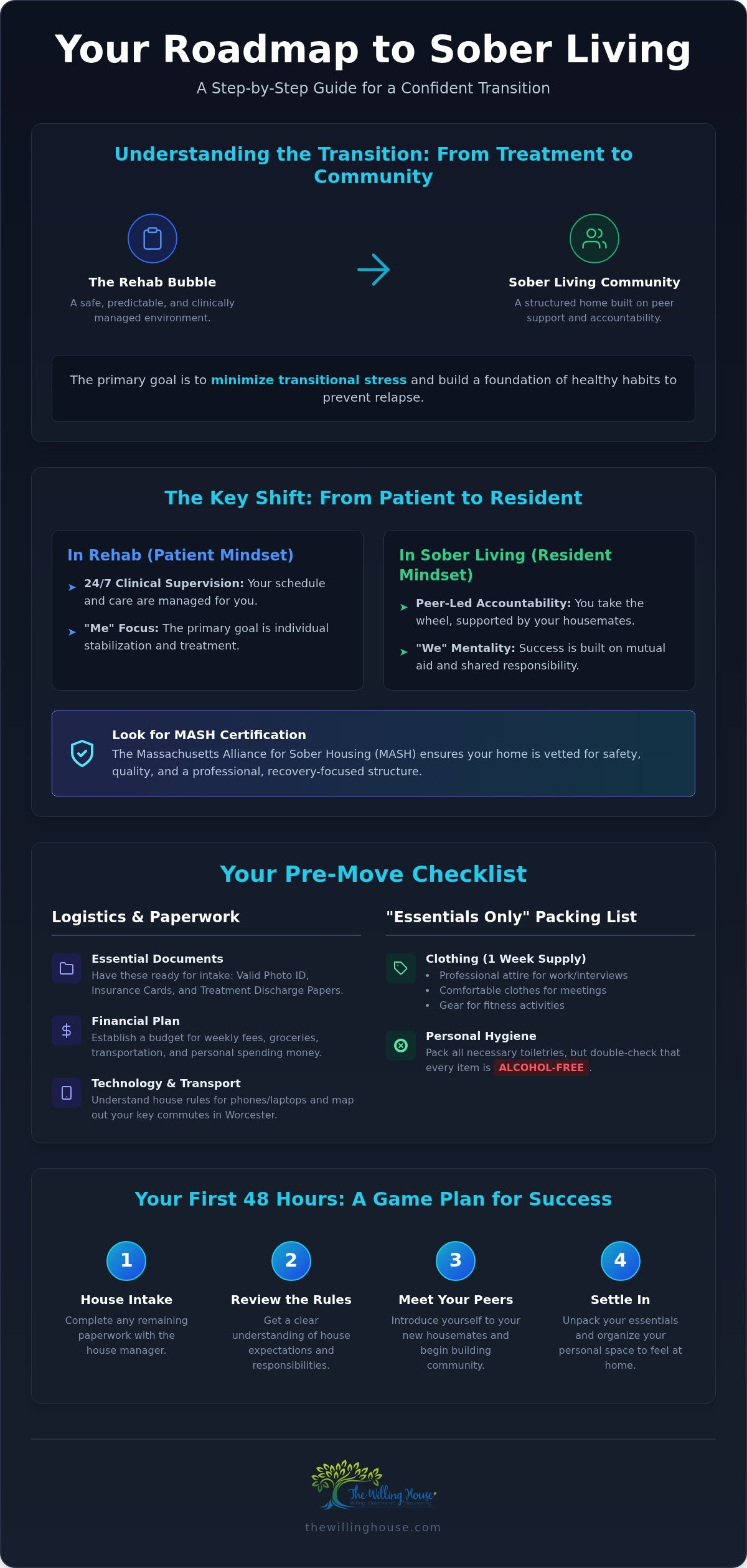
Leaving a clinical setting doesn't mean the work of recovery is over; it means the application of that work has finally arrived. Think of this phase as a "Gap Year for Recovery." It's a deliberate period where you build a foundation of habits and community connections before facing the full weight of independent living. The primary goal during this time is to minimize transitional stress. When the shift from a controlled environment to the outside world is too abrupt, the risk of relapse can spike. Learning how to prepare for sober living ensures that the bridge you walk across is sturdy rather than swaying.
Sober living houses provide the necessary structure to practice new coping skills in a real-world setting. In Massachusetts, the safety and quality of these environments are upheld by the Massachusetts Alliance for Sober Housing (MASH). Choosing a home with this certification ensures you aren't just moving into a house, but into a vetted community that prioritizes your well-being. This preparation isn't just about logistics; it's about giving your brain and spirit the time they need to heal in a protective space.
The Difference Between Rehab and Sober Living
The most significant shift you'll experience is moving from a patient mindset to a resident mindset. In rehab, your schedule is often managed for you with 24/7 clinical supervision. In a structured sober home, you take the wheel. You'll move toward peer-led accountability, where you and your housemates support one another through shared responsibilities and mutual aid. This is why finding MASH certified sober living is vital. It guarantees that while you have more freedom, the underlying structure remains professional, secure, and focused on safety.
Why Worcester is a Hub for Recovery Preparation
Worcester, Massachusetts, has grown into a vital center for individuals in transition. The city offers a unique combination of a dense recovery network and practical opportunity. Residents have access to a vast array of daily 12-step and SMART Recovery meetings, many of which are easily accessible. Beyond support, the local economy and educational institutions provide a clear path for those ready to rebuild their careers or finish their degrees. Because Worcester takes MASH standards seriously, residents can feel confident they're entering a community that values their dignity. Knowing how to prepare for sober living in this specific hub means tapping into these local resources early to ensure a seamless move into your new life.
Logistical Checklist: Packing and Paperwork for Your Move
Move-in day marks a significant shift from clinical care to personal responsibility. Understanding how to prepare for sober living involves more than just packing a bag; it's about setting a logistical foundation for your new life. Start with your documentation. You'll need a valid photo ID, insurance cards, and your discharge paperwork from treatment. This paperwork is vital. It provides the house manager with context for your recovery journey and ensures that any necessary follow-up care is properly documented and supported.
Financial planning is another critical step in how to prepare for sober living. Unlike residential treatment, where costs are often managed through insurance, sober living requires you to manage weekly fees and personal spending money. Establishing a budget for groceries, transportation, and house dues before you arrive reduces stress and helps you focus on your recovery. If you're looking for a community that balances this independence with high accountability, exploring a structured living program in Worcester can provide the foundation you need to ensure a successful transition to sober living.
Technology and transportation also require a plan. While most homes allow cell phones and laptops, they usually come with specific usage rules designed to prevent isolation and ensure you stay engaged with the community. If you're moving to Worcester, map out your commute to work or outpatient meetings. The city is quite accessible, but knowing which bus routes or walking paths to take before your first day will keep you on track and on time.
The "Essentials Only" Packing List
Space in communal living is often limited, so focus on high-utility items. Pack enough clothing for one week, including professional attire for work or interviews, comfortable clothes for recovery meetings, and gear for fitness activities. For personal hygiene, double-check that every item is alcohol-free. Many residents find comfort in bringing their own pillow or a favorite throw blanket, but check with the house first to see if linens and towels are provided. Keeping your space tidy is part of the accountability process; therefore, a "less is more" approach is usually best.
Items to Leave Behind
Safety is the highest priority in a recovery environment. You must leave behind any alcohol-based products, such as mouthwash or certain perfumes, as well as over-the-counter medications that aren't pre-approved. Avoid bringing excessive electronics or high-value jewelry that might serve as a distraction or create unnecessary worry. The prohibited items policy exists as a non-negotiable safety standard to protect the sobriety and peace of mind of the entire household.
Mental and Emotional Readiness: The Resident Mindset
Emotional readiness is the invisible half of your move. While packing clothes is simple, packing a new mindset requires intentional effort. You're moving from a clinical setting where decisions were often made for you to a space where you're an active participant in your own life. Part of learning how to prepare for sober living is realizing that accountability isn't a punishment. Regular drug screens and breathalyzers serve as a collective safety net. They ensure the home remains a sanctuary, protecting your sobriety and the peace of mind of every housemate living alongside you.
The shift from a "me" to a "we" mentality is often the biggest hurdle for new residents. In early recovery, it's easy to focus solely on your own needs, but in a communal home, your actions affect the entire group. Taking out the trash or keeping the kitchen clean isn't just a chore; it's an act of service that builds trust and community. Learning how to prepare for sober living means recognizing that your actions now ripple through an entire household. Reviewing a Going Sober Checklist can help you identify other mental shifts needed before you arrive. Set realistic expectations for your first 30 days. You don't need to have your whole life figured out by week two. Focus on showing up, being honest, and staying present.
Developing a Structured Daily Schedule
Structure is the antidote to the "void" that substance use often leaves behind. When your day is aimless, old habits find room to grow. A successful resident builds a routine that starts with a consistent morning ritual and ends with reflection. Mandatory house meetings are the heartbeat of this structure. They offer a space to resolve issues, share resources, and celebrate wins. Balancing a job or school with these recovery commitments might feel overwhelming at first, but this rhythm eventually becomes your greatest source of stability and hope.
Managing Relationships and Boundaries
Your move into a sober home is the perfect time to reset your boundaries. You'll need to communicate clearly with family and old friends about what you can and cannot do. This often means saying "no" to places or people that threaten your peace. Inside the house, you'll inevitably face friction with housemates. Instead of retreating, use these moments to practice healthy conflict resolution. This peer-led support is the cornerstone of the structured recovery housing Central MA residents rely on for long-term success. Learning to live with others while maintaining your own sobriety is a skill that will serve you for the rest of your life.
Establishing Your Worcester Support Network
Transitioning to a new environment involves more than just a change of address. It's about building a fortress of support around your recovery before the first wave of stress hits. When you're learning how to prepare for sober living, you should spend as much time researching local meetings as you do packing your bags. In those first few weeks, a sponsor or recovery coach becomes your primary guide. They help you translate the lessons of rehab into the daily reality of your new life. Connecting with senior residents or alumni can also provide a "cheat sheet" for success. These individuals have already navigated the specific challenges of the house and can offer practical, peer-led advice that a textbook simply can't provide.
Boredom is a frequent trigger in early recovery, making it essential to identify "sober fun" activities in Central MA. From hiking the trails at Broad Meadow Brook to exploring the local coffee culture, there are countless ways to engage with the world without compromising your sobriety. Finding these outlets early is a vital part of how to prepare for sober living because it helps you rediscover who you are outside of your addiction.
Local Resources in Central Massachusetts
Worcester is widely recognized as a hub for recovery in New England. The city is home to numerous meeting halls that host 12-step and SMART Recovery groups at nearly every hour of the day. For those ready to re-enter the workforce, resources like the MassHire Central Career Center provide tailored support for residents in transition. To stay connected to these resources, residents often rely on the Worcester Regional Transit Authority (WRTA). Its bus routes link most residential neighborhoods to major meeting hubs and employment centers, ensuring that transportation isn't a barrier to your progress.
The Role of Peer Support at The Willing House
At The Willing House, we operate on a "community of peers" model. This means you're living with people who truly understand the weight of the journey because they're walking it alongside you. Peer accountability differs from clinical supervision because it's based on mutual aid and shared experience rather than a doctor-patient dynamic. Your housemates aren't just roommates; they're your front line of defense against isolation. Peer support is the #1 predictor of long-term success in sober living. If you're ready to join a community that values both your independence and your safety, apply for a spot in our Worcester sober living program today.
The First 48 Hours: Setting Up for Success
The first two days in your new home are often the most intense but also the most rewarding. Learning how to prepare for sober living involves visualizing these first 48 hours to reduce the fear of the unknown. Your success starts with five clear steps. First, you'll complete the intake process and tour the facility to understand the layout and flow of the house. Second, you'll meet your housemates and learn the specific house rules that keep the environment safe. Third, you'll unpack and claim your space; this small act of grounding helps you feel like you truly belong. Fourth, you'll attend your first house meeting or a local 12-step meeting within 24 hours to stay in action. Finally, you'll sit down with your house manager to set your schedule for the upcoming week, ensuring you have a clear plan for your time.
These initial steps are designed to move you from the clinical "bubble" of rehab into the rhythm of a supportive, domestic setting. By focusing on these immediate goals, you replace anxiety with a sense of purpose. It's about moving from theory to practice, taking the lessons you've learned and applying them to a real-world environment where you are both supported and held accountable.
What to Expect on Move-In Day
This initial period is about building trust and transparency. During the intake interview, honesty is your greatest asset. It's a time to be clear about your needs and history so the community can support you effectively. You'll also undergo safety protocols, including an initial drug screening and breathalyzer procedure. These aren't just rules; they're the foundation of the trust you're building with your new peers. The Willing House staff works closely with you to ensure you feel welcomed rather than overwhelmed, helping you navigate the transition with dignity and peace of mind.
Commitment to the Process
Once you've settled into your room and put your things away, the real work begins. The first 30 days are the most critical for your long-term success. This is the window where you move from being a guest to being a vital part of the community. You'll learn to embrace the independence of working or attending school while staying firmly tethered to the house and your recovery network. This balance is what makes structured living so effective. Understanding how to prepare for sober living means being ready to show up for yourself and your housemates every single day. If you're ready to take the next step, Apply to The Willing House today.
Taking Your Next Step Toward Lasting Recovery
Transitioning from the safety of clinical treatment to the real world is a brave move that requires both heart and a clear plan. By now, you understand that knowing how to prepare for sober living is about more than just a packing list. It's about aligning your mindset with the accountability of a community and securing your support network in Worcester before you even arrive. You've learned how to manage the logistical hurdles, settle into a resident mindset, and navigate those critical first 48 hours with confidence.
At The Willing House, we provide a foundation built on MASH certified safety standards and an accountability-focused environment. You don't have to navigate this transition alone; our strong peer support network in Worcester is ready to walk beside you. We believe that structure and community are the keys to a life of dignity and peace. Join a community that understands your journey—Apply to The Willing House. Your recovery deserves a stable, supportive place to grow, and we're here to help you bridge the gap to a full, independent life. You've done the hard work of early recovery; now, let us help you protect it.
Frequently Asked Questions
What should I pack for a sober living house?
You should focus on high-utility items when considering how to prepare for sober living. Pack one week of clothing, including professional attire for work and comfortable gear for recovery meetings. Alcohol-free personal hygiene products are mandatory for the safety of the household. Don't forget your photo ID, insurance cards, and discharge paperwork. Bringing a personal pillow or blanket can help you feel grounded while you adjust to your new communal space.
Can I work while living in a sober house in Worcester?
Yes, finding employment is a core component of a structured living program. Worcester is a hub for recovery and economic opportunity, making it an ideal place to re-enter the workforce. Residents are encouraged to seek jobs that fit within their recovery schedule. Local resources like the MassHire Central Career Center can help you find a position, while the WRTA bus system ensures you have reliable transportation to and from your workplace.
How much does sober living in Massachusetts typically cost?
In 2026, the cost for sober living in Massachusetts varies based on the level of structure provided. Standard shared rooms generally range between $800 and $1,800 per month, while peer-run homes often cost between $450 and $1,000 monthly. Since residents pay rent themselves, it's vital to choose a MASH-certified home. This certification ensures that your fees support a safe, vetted environment that meets the high standards required by state referral agencies.
Are cell phones allowed in sober living environments?
Cell phones are generally allowed in most structured sober living homes, but they come with specific guidelines. These rules are designed to prevent isolation and ensure you stay engaged with the house community. You might find that phone use is restricted during house meetings or late at night. These standards help you maintain a healthy balance between your digital life and the real-world connections that are essential for your long-term sobriety.
How long do people usually stay in sober living?
The length of stay varies for every individual, but many residents find that staying for six to twelve months provides the best results. When you think about how to prepare for sober living, it's helpful to view it as a "Gap Year for Recovery." This time allows you to build a stable foundation and practice new habits. You can stay as long as you remain committed to the house rules and your personal growth.
What happens if someone relapses in the house?
Accountability is the cornerstone of a safe recovery environment. If a resident relapses, they are typically required to leave the house immediately to protect the sobriety of the other residents. This policy is handled with dignity and compassion rather than judgment. The staff will often help the individual find a higher level of care, such as detox or residential treatment, so they can stabilize before attempting to return to a sober living setting.
Is a sober house the same as a halfway house?
While they share some similarities, they serve different purposes. Halfway houses are often state-funded and frequently linked to the transitional needs of people leaving the correctional system or clinical facilities. Sober living houses are usually peer-led, residential environments that focus on community and long-term lifestyle changes. They offer a more "home-like" feel with a focus on mutual aid and fellowship rather than just meeting state-mandated clinical requirements.
Do I need to be MASH certified to live at The Willing House?
You do not need a personal certification to live here, but the house itself maintains MASH certification to protect you. The Massachusetts Alliance for Sober Housing (MASH) sets the rigorous standards for safety and management that we follow every day. Choosing a certified home means you're entering an environment that state agencies trust. It provides peace of mind that the structure and accountability we promise are consistently delivered by a professional, peer-led team.


