

A sober house is much more than just a roof and four walls; it's the vital bridge between clinical treatment and a life of lasting independence. When you or a loved one are ready to take that next step, the search for independent recovery housing Massachusetts provides can feel heavy with both hope and anxiety. It's natural to feel concerned about whether a home offers enough structure to prevent relapse or if it provides the genuine community needed to thrive. You deserve a space that honors your dignity while keeping you safe.
We believe that finding the right environment shouldn't be a matter of guesswork or luck. This guide will help you identify high-quality, MASH-certified recovery housing by using a comprehensive evaluation checklist designed for families and individuals. We'll explain the rigorous standards that separate certified homes from unregulated ones, ensuring you understand how accountability and peer support work together to create a stable foundation. You'll gain the clarity needed to find a secure home in Worcester that balances personal freedom with the professional oversight required for true peace of mind.
Key Takeaways
- Understand the vital role of MASH certification in ensuring that recovery homes meet rigorous national safety and ethical standards.
- Learn how to evaluate the physical environment of a home to ensure it provides a "home-like" feel that promotes dignity and safety.
- Discover how to verify accountability measures, such as random drug screenings, when researching independent recovery housing Massachusetts options.
- Identify administrative red flags by demanding a clear, written residency agreement and verifying formal grievance procedures.
- Explore how structured living programs in Worcester help residents balance their personal independence with the support of a peer community.
What is MASH Certified Sober Living in Massachusetts?
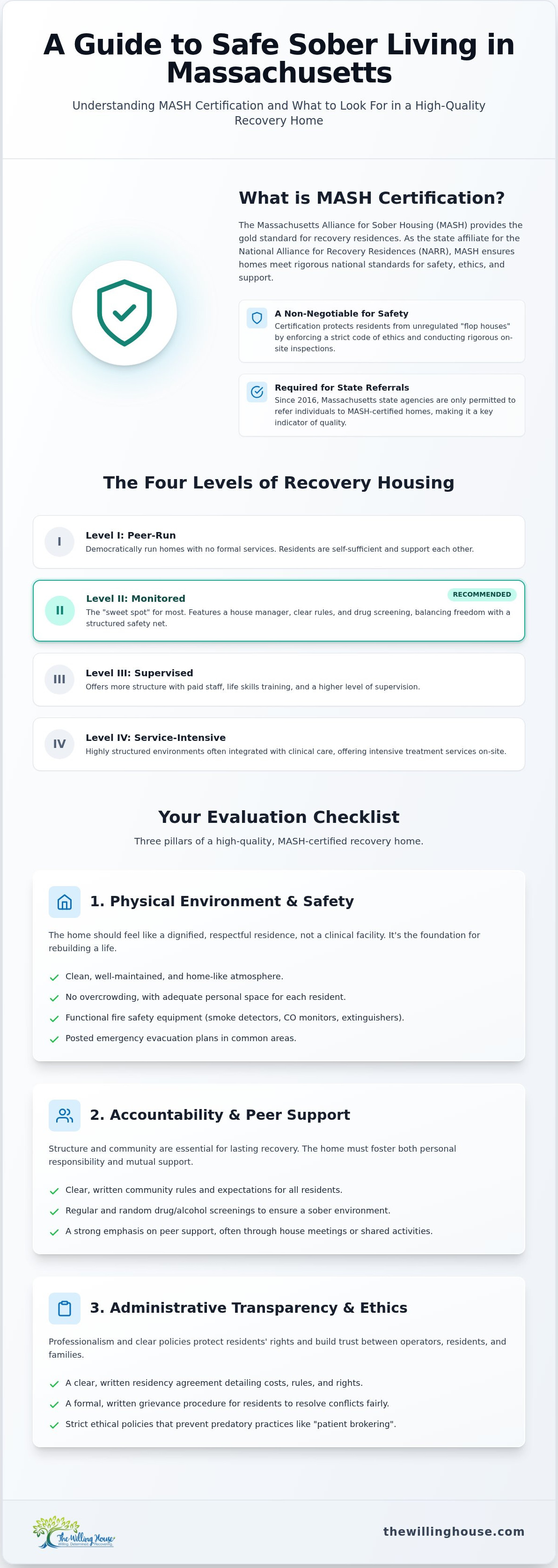
Finding a safe place to land after treatment can feel overwhelming. In Massachusetts, the gold standard for this transition is certification through the Massachusetts Alliance for Sober Housing (MASH). This organization serves as the state affiliate for the National Alliance for Recovery Residences (NARR), ensuring that local homes meet high national standards for safety, ethics, and support. While Sober living houses are not licensed medical facilities, MASH certification provides a layer of oversight that protects residents from the "wild west" of unregulated housing.
It's important to understand that certification is technically voluntary for operators. However, a state law passed in 2014 changed the landscape significantly. As of September 2016, state agencies and their vendors are only permitted to refer individuals to MASH-certified homes. This means that if you are looking for independent recovery housing Massachusetts providers trust, certification is your first indicator of quality. There are currently more than 180 MASH-certified homes across the Commonwealth as of July 2026, offering a wide range of environments for those in transition.
The Four Levels of Recovery Housing
Recovery residences are categorized into four levels based on the intensity of support they provide. Level I homes are entirely peer-run and democratic, while Level IV environments are highly service-intensive and often integrated with clinical care. For most people, Level II (Monitored) housing is the "sweet spot" for long-term success. These homes provide a house manager, clear community rules, and regular drug screening while allowing residents the freedom to work, attend school, and reconnect with family. Choosing MASH certified sober living at Level II ensures you have a structured safety net without the clinical coldness of a hospital setting. It’s about learning to live life again in a supportive, home-like environment.
Why Certification is a Non-Negotiable for Safety
The history of sober housing in Massachusetts includes stories of unregulated "flop houses" where residents were often exploited for rent without receiving any real support. Certification was designed to end these practices. MASH conducts rigorous on-site inspections to verify that every home is clean, safe, and physically sound. More importantly, it enforces a strict code of ethics that prevents "patient brokering," a predatory practice where operators receive kickbacks for referring residents to specific clinical programs. When you choose a certified independent recovery housing Massachusetts community, you're choosing a provider that has opened its doors to outside inspectors to prove they prioritize your well-being over their bottom line. This accountability is what gives families the peace of mind they need during a stressful time.
Checklist Item 1: Physical Environment and Safety Standards
When you step into a potential home, the atmosphere should immediately communicate a sense of peace and worth. High-quality independent recovery housing Massachusetts residents rely on must prioritize a physical environment that feels less like a facility and more like a family residence. This isn't just about comfort; it's about fostering a setting where individuals feel respected and capable of rebuilding their lives. A clean, well-maintained property suggests that the operators are invested in the community's success and the dignity of every person under their roof.
During your visit, pay close attention to how the space is managed. Overcrowding is a major red flag. A certified home will have clear limits on occupancy to ensure that every resident has enough personal space to reflect and rest. There should be a healthy balance between private or semi-private sleeping quarters and communal areas designed for fellowship. These shared spaces are where the "magic" of peer support happens, providing a place for evening meetings, shared meals, and the casual conversations that build lasting bonds.
Fire and Life Safety Requirements
Safety is the non-negotiable foundation of any recovery environment. You should look for posted emergency evacuation plans in common areas and functional fire safety equipment throughout the building. Every room must be equipped with up-to-date smoke detectors and carbon monoxide monitors. Fire extinguishers should be easily accessible and clearly visible in the kitchen and hallways. MASH standards require that all certified homes undergo a rigorous annual safety inspection to ensure these life-saving measures remain in top condition. This commitment to safety is often supported by state initiatives like the Recovery Housing Program (RHP), which emphasizes the importance of secure, quality housing for those in transition.
The "Home-Like" Standard
Recovery is most effective when it happens in the context of real life. Unlike clinical wards that can feel sterile or isolating, a MASH-certified home is usually situated in a quiet residential neighborhood. This allows residents to reintegrate into society while maintaining a supportive home base. A fully functional kitchen and communal dining area are essential features. These spaces aren't just for preparing meals; they're where life skills are practiced and where the fellowship of the community is strengthened. When evaluating a home, look for quality furnishings and a thoughtful layout that encourages interaction. If you're looking for a community that embodies these physical and safety standards, exploring a MASH-certified residence can help you find a space that feels like home while providing the structure you need to thrive.
Checklist Item 2: Accountability and Peer Support Protocols
Accountability isn't about punishment; it's about providing the safety rails that allow for genuine personal growth. When exploring independent recovery housing Massachusetts provides, you should look for specific, written protocols that ensure the environment remains substance-free and focused on wellness. Random drug and alcohol screenings are a cornerstone of this process. These aren't meant to be intrusive or clinical. Instead, they build a baseline of trust among residents, ensuring that everyone is committed to the same collective goal of sobriety. A quality home will also have a designated House Manager or a Senior Peer Lead on-site to provide guidance, manage daily routines, and ensure the community's standards are upheld with compassion.
Structure Without Clinical Confinement
Living in a structured recovery housing environment offers a framework that helps residents transition back to independent life. This often includes daily breathalyzers and sensible curfews that provide a predictable rhythm to the day. Unlike clinical settings, this structure is designed to empower rather than confine. Mandatory house meetings serve as a space to resolve interpersonal conflicts and practice healthy communication skills. Residents are typically required to attend 12-step meetings or engage in external outpatient treatment, ensuring they stay connected to their personal recovery work. This model of independent recovery housing Massachusetts allows individuals to maintain their jobs and family ties while staying rooted in a supportive framework.
The Power of the Peer Community
The true strength of a certified home lies in the "social model" of recovery. This approach relies on the idea that people are more likely to stay sober when they are surrounded by others who share their lived experience. Accountability becomes a mutual act of care rather than a top-down directive. To maintain this positive atmosphere, homes often implement a written Good Neighbor Policy. This document outlines how residents should interact with the surrounding neighborhood, fostering respect and positive community relations. Following the standards of MASH certification, these homes cultivate a "culture of recovery" where residents hold each other to high standards of integrity. This collective commitment transforms a simple living arrangement into a powerful engine for long-term success, proving that we are stronger together than we are alone.
Checklist Item 3: Administrative Transparency and Ethics
Transparency is the foundation of any healthy relationship, especially in a recovery setting. When you're choosing independent recovery housing Massachusetts residents trust, you should expect professional administrative standards from the very first conversation. This begins with a clear, written Residency Agreement. You shouldn't be asked to pay fees or move into a home without first reviewing a document that outlines exactly what's expected of you and what the house provides in return. This agreement acts as a shield, protecting your rights while clearly defining the boundaries of the community.
A reliable operator will also be upfront about their policies regarding medication. Modern recovery often includes Medication-Assisted Treatment (MAT), and a high-quality home will have a clear, safe protocol for residents to access their prescribed medications without stigma. Additionally, make sure to ask about move-out and refund policies. Ethical homes have written procedures for how security deposits are handled and what happens if a resident needs to leave the community unexpectedly. If a home can't provide these details in writing, it may be a sign that they lack the necessary oversight.
Resident Rights and Responsibilities
MASH standards are designed to protect your dignity and your investment in your future. A standard residency agreement should include the following elements:
- Your right to a safe, drug-free environment and the specific steps taken to enforce it.
- A clear schedule of weekly fees and any initial administrative costs.
- The ethical handling of security deposits, including timelines for returns.
- A formal grievance procedure that allows you to report concerns without fear of retaliation.
You have the right to be treated with respect, which includes having a voice in the house through formal feedback channels. If you want to see how these ethical standards are put into practice, contact our team to review our residency policies and learn more about our commitment to resident rights.
Ethical Marketing and Referrals
Be wary of any home that seems too aggressive in its recruitment or offers "finders fees" for new residents. This practice, sometimes called "body snatching," is predatory and strictly forbidden by MASH ethics. You can easily protect yourself by verifying a house’s certification status on the official MASH website before committing. This ensures that the provider has been vetted for both physical safety and ethical business practices. Finally, every MASH-certified home has an ethical obligation to provide a clear transition plan for residents to ensure they have a safe path forward when leaving the community. This commitment to long-term stability is what defines professional independent recovery housing Massachusetts providers.
Choosing The Willing House: MASH Certified Excellence in Worcester
The Willing House stands as a beacon of stability in the heart of Central Massachusetts. We are deeply committed to the rigorous standards of MASH certification, ensuring that every resident enters an environment that is safe, ethical, and conducive to long-term wellness. Our model of independent recovery housing Massachusetts families trust is built on the belief that recovery doesn't happen in a vacuum. It happens when individuals are given the tools to rebuild their lives while being held to a standard of personal accountability. We offer gender-specific environments for both men and women, recognizing that the journey to healing often requires a tailored, supportive space where peers can connect through shared experiences.
Our approach focuses on empowering you to take ownership of your future. We don't provide clinical treatment; instead, we provide the structured living program and peer fellowship that make clinical progress stick. By choosing the independent recovery housing Massachusetts provides through our MASH-certified homes, you're investing in a future rooted in community and self-respect. We act as a reliable protector of your sobriety, ensuring that your home remains a sanctuary where routine and standards are valued.
Our Worcester Recovery Community
Worcester is a unique city for those in transition, offering one of the most robust and diverse recovery fellowship networks in the state. At The Willing House, we leverage this local strength to help our residents bridge the gap between intensive clinical treatment and full, self-sufficient independence. Our houses aren't just places to sleep; they are active communities where peer support is woven into the fabric of daily life. Residents are encouraged to seek employment, attend school, and reconnect with their families, all while having a stable home base to return to each night. This balance of freedom and structure is what allows our residents to practice real-world skills in a safe environment, surrounded by others who understand the challenges of the journey.
Take the Next Step
We know that reaching out for help is often the hardest part of the process. That's why we've designed a straightforward application process that prioritizes clarity and compassion. Whether you're looking for a fresh start for yourself or seeking a safe environment for a loved one, we're here to provide the guidance you need. We invite family members to call us for a tour or to ask detailed questions about what MASH certified sober housing is and how it can benefit your specific situation. Our team acts as a stable foundation for those in transition, offering the kindness of a peer with the authority of a certified expert. If you're ready to move toward a life you can be proud of, Contact The Willing House today to learn more about our current openings and community standards.
Step Into a Life of Lasting Independence
Choosing a sober home is one of the most significant decisions you'll make on the path to wellness. By prioritizing MASH-certified standards, you ensure that your environment isn't just safe but is also built on a foundation of integrity and respect. You've learned how to spot the physical, social, and administrative markers of quality that define a truly supportive community. This knowledge empowers you to find independent recovery housing Massachusetts providers that offer the perfect balance of personal freedom and peer-led accountability.
At The Willing House, we take pride in being a Worcester-based recovery hub that embodies these rigorous standards. Our homes provide a stable, peer-led environment where you can work, reconnect with family, and grow alongside others who share your journey. You don't have to navigate this transition alone. We invite you to Apply to Join The Willing House Community today and experience the peace of mind that comes with MASH Certified Excellence. Your future is waiting; let's build it together with hope and dignity.
Frequently Asked Questions
Is MASH certification required for sober houses in Massachusetts?
MASH certification is technically voluntary for operators, but it's essential for those wishing to receive state-funded referrals. According to Massachusetts law established in 2014, state agencies can only refer individuals to certified homes. This makes certification a practical necessity for any reputable home. It provides residents and families with the assurance that the residence meets national standards for safety and ethics, protecting everyone involved from unregulated or unsafe living conditions.
What is the difference between a halfway house and certified sober living?
The primary difference lies in the level of clinical care provided. Halfway houses are typically licensed by the Department of Public Health and provide on-site clinical services or therapy. Certified sober living, on the other hand, follows a social model of recovery. These homes are peer-led environments that focus on accountability and community support. Residents are expected to be active in their own external treatment while living in a substance-free, home-like setting.
Can I work a full-time job while living in a MASH certified home?
Yes, the independent recovery housing Massachusetts provides is specifically designed to help you return to a productive life. Residents are encouraged to maintain full-time employment, attend school, or participate in volunteer work. This model bridges the gap between intensive treatment and total independence. By working while living in a structured environment, you can practice financial responsibility and time management while still having the safety net of a supportive peer community.
How much does certified sober living in Massachusetts typically cost?
Costs vary depending on the location of the home and the level of amenities provided. Most homes charge a weekly or monthly residency fee that covers housing, utilities, and access to peer support programs. While we don't quote specific prices for our services here, you'll find that certified homes provide a transparent fee structure in their residency agreements. This ensures there are no hidden costs or financial exploitation, giving you and your family total clarity.
Do MASH certified houses allow Medication-Assisted Treatment (MAT)?
Yes, MASH standards require that certified homes accommodate residents who are utilizing Medication-Assisted Treatment (MAT). These houses must have clear, written protocols for the safe storage and self-administration of medications like buprenorphine or naltrexone. This inclusive approach ensures that individuals can pursue the recovery path that works best for them without facing stigma or being excluded from the vital support of a certified recovery community.
What happens if a resident relapses in a certified sober house?
The safety of the entire community is the top priority when a relapse occurs. In a certified home, a resident who returns to use is typically required to leave the house immediately to maintain a substance-free environment for others. However, ethical operators don't simply turn people away. They provide a transition plan, which might include referrals to a higher level of care, such as detox or inpatient treatment, to ensure the individual remains safe.
How do I check if a Worcester sober house is currently MASH certified?
You can verify the status of any home by visiting the official Massachusetts Alliance for Sober Housing (MASH) website. They maintain a public directory of all certified residences throughout the state. Simply search for homes in Worcester to see a current list of providers that have passed rigorous safety and ethical inspections. This is the most reliable way to ensure that the independent recovery housing Massachusetts you're considering meets professional standards.
Are visitors allowed in independent recovery housing?
Most independent recovery houses allow visitors during designated hours to help residents rebuild family ties and social connections. These visits usually take place in common areas rather than private bedrooms to respect the privacy of other residents. Each home has its own specific guest policy, which is outlined in the residency agreement. These rules ensure that the house remains a safe, predictable, and focused environment for everyone living there while still supporting healthy relationships.


