

Imagine standing outside a treatment center on discharge day with your bags packed but no paycheck waiting for you. For many, the fear of homelessness outweighs the joy of sobriety, making the prospect of paying for sober living without a job feel like an insurmountable wall. It's a deeply stressful situation, and it's okay to feel anxious about how you'll maintain your progress without a steady income. You deserve a safe place to land while you find your footing. Your financial status today doesn't have to dictate your safety tomorrow.
This 2026 guide will walk you through practical funding strategies and state-specific resources available right now in Massachusetts. We'll cover how programs like the Residential Assistance Program (RAP) and the latest Recovery Housing Program (RHP) vouchers can bridge the gap. You'll also learn why MASH-certified homes, such as The Willing House in Worcester, offer the accountability and peer support necessary to transition from unemployment to a stable career. We'll outline a clear path toward finding a supportive community that prioritizes your dignity and long-term health over your current bank balance.
Key Takeaways
- Understand the distinction between clinical insurance coverage and room-and-board fees to better plan your financial transition from rehab to independent living.
- Explore Massachusetts-specific aid like the Recovery Housing Program (RHP) and state vouchers that provide a vital safety net for those currently unemployed.
- Learn why choosing a MASH-certified home is essential for accessing certain state grants and ensuring a high standard of safety and peer support.
- Discover practical avenues for paying for sober living without a job, including local non-profit scholarships and structured plans to return to the workforce.
- See how the accountability of a structured environment provides the stable foundation you need to rebuild your career and achieve long-term financial independence.
The Financial Reality of Recovery: Why Sober Living is an Essential Investment
Completing an intensive treatment program is a massive achievement, but it often leaves individuals standing at a crossroads. While clinical settings provide the tools for sobriety, they don't always prepare you for the day-to-day pressures of the real world. Sober living houses (SLHs) serve as the vital bridge between the 24/7 supervision of rehab and the total independence of home life. However, for many, the immediate hurdle is paying for sober living without a job. It's a common anxiety that can overshadow the progress you've made, but understanding the financial landscape is the first step toward securing your future.
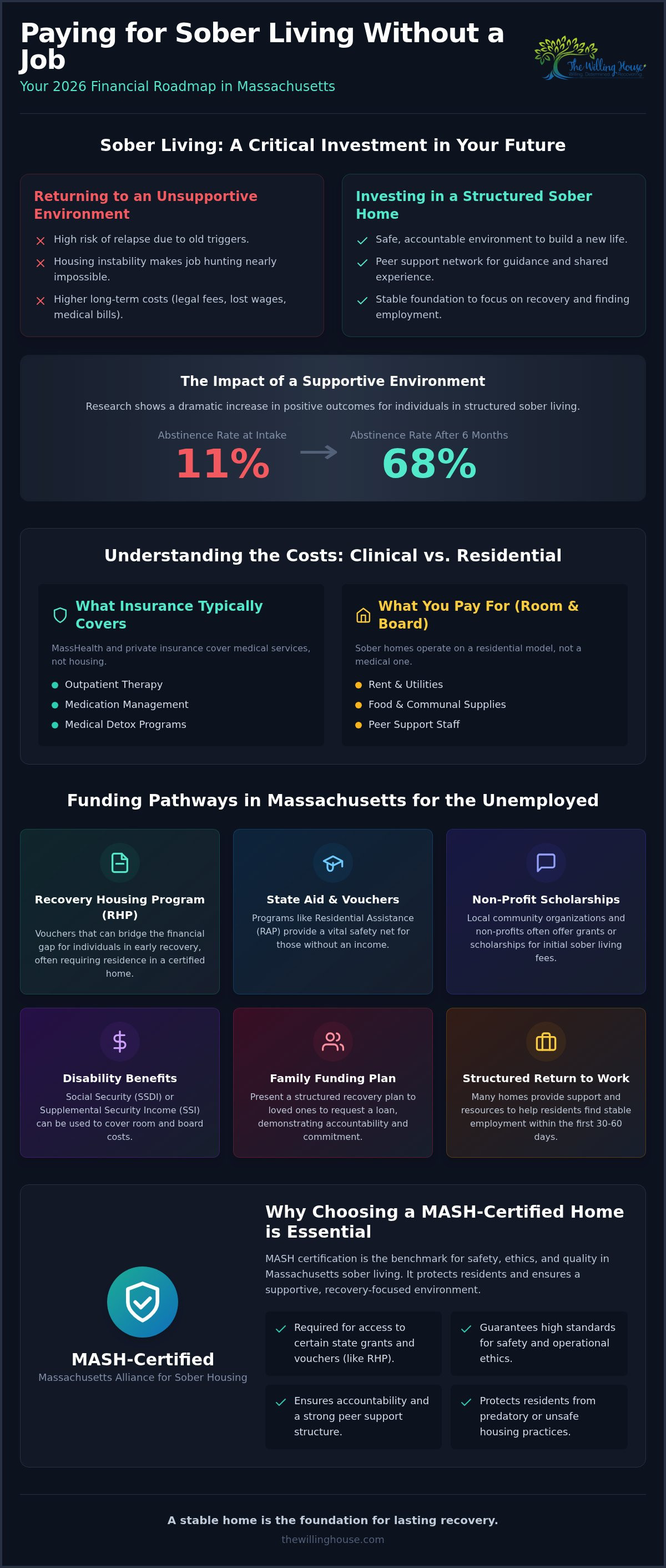
Staying in a structured environment isn't just about having a roof over your head; it's a strategic investment in your long-term health. When you're in early recovery, the risk of relapse is high if you return to an environment filled with old triggers. By choosing a MASH-certified home, you're entering a space that prioritizes safety and accountability. This structure significantly lowers the long-term financial burden of relapse, which often includes lost wages, legal fees, and further medical costs. Research indicates that abstinence rates can jump from 11% at intake to 68% after six months in a supportive living environment.
Clinical vs. Residential Costs
It's vital to distinguish between what your insurance covers and what you're responsible for. In 2026, most private insurance plans and MassHealth cover clinical services like outpatient therapy, medication management, and medical detox. They rarely cover "room and board," which includes your rent, utilities, and food. This is where the confusion often begins. In the recovery context, room and board refers to the cost of maintaining the physical residence and the peer support staff who manage the home.
The typical financial structure of a sober house in 2026 rests on a resident's contribution to the communal living space, while clinical support remains a separate medical expense handled by professional providers. Because these homes aren't medical facilities, they operate on a residential model. This means that while you're paying for sober living without a job initially, you're paying for a community and a safety net rather than medical treatment.
The True Cost of Waiting
Trying to find work while experiencing housing instability is what many call the "unemployment trap." It's nearly impossible to prepare for an interview or maintain a work schedule when you don't know where you'll sleep or if you can take a shower. Returning to a "using" environment because of a lack of funds often leads to a cycle of relapse that is far more expensive than the cost of a sober home.
In Worcester, community support and peer networks act as a safety net during your first 30 days. MASH-certified homes like The Willing House provide a benchmark for financial transparency, ensuring you know exactly where your contributions go. This certification means the house meets rigorous standards for safety and ethics, protecting you from predatory practices while you focus on rebuilding your career and your life.
Insurance, State Aid, and Grants: Who Pays for Sober Living?
Finding the funds to cover your stay can feel overwhelming, but several avenues exist to help bridge the gap. While most sober homes require a weekly or monthly fee, paying for sober living without a job often involves a combination of insurance benefits, state assistance, and community support. In 2026, the landscape of recovery funding has evolved to recognize that stable housing is the foundation of health. Extensive research on sober living shows that residents in structured environments see marked improvements in employment and legal status, which is why more organizations are willing to invest in your initial stay.
If you're unable to work due to a disability, Social Security Disability (SSDI) or Supplemental Security Income (SSI) can be used to cover your room and board. Many residents also use the "Family Funding" model. This involves presenting a clear recovery plan to loved ones and asking for a loan specifically for housing. Approaching family with a structured plan, including the rules of the house you've chosen, demonstrates accountability and a serious commitment to change. This transparency builds the trust necessary for them to support your transition back to independence.
Navigating Insurance in 2026
While insurance rarely pays for "rent" directly, it can often cover the intensive outpatient services or peer support programs that take place within a residence. By covering these clinical costs, your insurance effectively reduces your out-of-pocket expenses for the overall program. If you have MassHealth or private insurance, call your provider to ask about "transitional housing support" or "recovery coaching" benefits. Use this checklist when speaking with a representative:
- Does my plan cover peer recovery support services in a residential setting?
- Are there specific MASH-certified providers in Worcester within my network?
- Can my clinical outpatient benefits be applied to a structured living program?
- Is there a daily stipend available for transitional housing after inpatient rehab?
Grants and Charitable Scholarships
For those in Central Massachusetts, local non-profits and foundations often provide "scholarships" specifically for the first 30 to 60 days of sober living. Organizations and local faith-based groups in Worcester sometimes partner with certified homes to offer emergency housing grants. The application process usually requires proof of completion from a detox or residential program and a commitment to a 12-step or similar recovery path. Choosing a MASH-certified community often makes you more eligible for these funds, as donors want to ensure their money supports a safe, high-standard environment. These grants act as a temporary bridge while you focus on the daily routines that lead back to steady employment.
Massachusetts-Specific Resources for Unemployed Individuals
Massachusetts leads the way in recovery support, offering specific safety nets for residents in transition. When you're concerned about paying for sober living without a job, the state's rigorous certification standards and grant programs provide a structured path forward. Unlike some states with minimal oversight, Massachusetts uses a centralized system to ensure that public funds and vouchers only go to homes that meet high ethical and safety benchmarks. This ensures your recovery isn't just about finding a bed, but about joining a community that protects your dignity and your future.
The ATR and RHP Programs
In 2026, the Massachusetts Access to Recovery (ATR) program serves as a critical bridge to financial independence. While ATR has shifted its focus away from direct rent payments, it remains a powerhouse for those without a paycheck. It provides care coordination, job readiness training, and assistance with transportation or identification. For direct housing assistance, residents now look toward the Recovery Housing Program (RHP). A public hearing in February 2026 confirmed that RHP continues to provide rental assistance for individuals with limited or no income. These government grants for sober living ensure that your focus stays on recovery rather than an immediate financial crisis. To apply in the Worcester area, you typically need a referral from a state-funded treatment provider or the Bureau of Substance Addiction Services (BSAS).
MASH Certification and Financial Safety
The Massachusetts Alliance for Sober Housing (MASH) is the gold standard for recovery residences in the Commonwealth. There are currently 185 MASH-certified homes that adhere to national standards. This certification is more than just a badge; it's a requirement for many state-funded referrals and voucher programs. Predatory sober homes often mishandle resident fees or lack transparency, but MASH-certified residences are held to strict accountability standards regarding resident finances. Every dollar you contribute is tracked, and the house must maintain a clear, ethical policy for fee structures and refund procedures. This level of oversight provides peace of mind during a time when every cent counts.
In Worcester, this standard is embodied by the MASH Certified Sober House in Worcester, Massachusetts. Choosing a certified home means you're entering a community that partners with local workforce development programs. These partnerships are designed to help you build a resume and find local job leads while you're protected by the safety net of state-vetted housing. This combination of oversight and peer support creates a stable foundation where you can stop worrying about the threat of homelessness and start focusing on your career.
The Path to Employment: How Structured Living Supports Your Career
Rebuilding a professional life after treatment is about more than just submitting resumes; it's about developing the internal discipline to keep a job once you find it. While paying for sober living without a job is an immediate hurdle, the structured environment of a certified home is actually your greatest asset in the hiring process. The "Accountability First" model used in these residences mirrors the expectations of the modern workplace. By adhering to a routine of morning chores, house meetings, and curfew, you're practicing the same time management and reliability that employers value most. This daily rhythm builds a foundation of discipline that makes the transition to a 40-hour work week feel like a natural next step.
Beyond personal growth, a sober house provides the logistical essentials for employment. Having a stable, permanent address and reliable access to phone and internet are basic requirements that many people in early recovery struggle to maintain. When you live in a supportive community, you aren't just a number; you're a resident with a home-like base that offers the tranquility needed to prepare for interviews. This stability removes the "unemployment trap" mentioned earlier, allowing you to present your best self to potential employers in Worcester.
Peer Networking for Job Leads
One of the most underrated benefits of communal living is the "inside track" on local employment. Your housemates are often your best recruiters. Many residents are already successfully working in Worcester’s growing industries, such as healthcare, hospitality, and manufacturing. They know which local businesses are recovery-friendly and which managers appreciate the honesty and hard work of those in the program. This informal network provides a steady stream of job leads that you won't find on public job boards. Seeing your peers get up every morning for work provides a powerful psychological boost, proving that a stable career is within your reach.
Vocational Rehabilitation and Support
Living in a MASH-certified home also makes it easier to connect with professional resources like the Massachusetts Rehabilitation Commission (MRC). The MRC offers specialized job training and placement services for individuals overcoming barriers to employment. A structured sober house is designed to accommodate this growth; schedules are often flexible enough to allow for interviews, shift work, and vocational training sessions. Once you secure a position, the psychological benefit of "earning your keep" is immense. Contributing to your own housing costs builds a sense of pride and ownership that reinforces your sobriety. If you're ready to build a life you're proud of, The Willing House provides the peer support and structure to help you get there.
The Willing House: Stability When You Need It Most
When the weight of early recovery meets the reality of an empty bank account, you need more than just a place to sleep. You need a sanctuary that understands the delicate balance between where you've been and where you're going. The Willing House serves as a MASH-certified foundation in Worcester, Massachusetts, specifically designed for those ready to do the work of rebuilding. Our community focuses on helping residents create a life they are actually proud to live, rather than just surviving day to day. We believe that financial barriers should not be the end of your recovery journey, and our Worcester location is strategically chosen to support your return to independence.
Situated in the heart of Central Massachusetts, our homes offer a distinct advantage for those currently job hunting. Worcester is a hub of economic growth, and our residences provide easy access to public transit and major local employers. This proximity means you don't need a vehicle to attend interviews or reach your new workplace. By removing the logistical stress of transportation, we allow you to focus your energy on your career and your sobriety. You're surrounded by people who have walked this exact path, providing a level of shared experience that you won't find in a traditional apartment setting.
Men’s and Women’s Structured Housing
We provide separate, safe environments for both men and women, ensuring that every resident feels secure and respected. Our Structured Living Program is built on a foundation of Peer Support and Fellowship. This isn't a clinical facility; it's a home where accountability is handled with kindness and mutual understanding. While we maintain high standards for safety and sobriety, we also prioritize the independence you need to reconnect with your family and attend outside treatment programs. This balance ensures you have the support of a community while you're paying for sober living without a job during those first critical weeks of transition.
Taking the First Step in Worcester
If you're ready to commit to your future but are worried about your current financial status, the first step is a simple conversation. Our intake process for unemployed individuals is handled with the dignity you deserve. We'll discuss your specific situation and help you explore the state resources and grant options we've covered in this guide. The first 90 days of sobriety are often the most challenging, and having a stable, substance-free environment is the single best way to ensure you make it through. Don't let the fear of paying for sober living without a job keep you stuck in an environment that no longer serves you. Reach out to The Willing House today to learn more about our current openings and how our community can support your transition to a stable, successful life.
Building Your Foundation for a Lasting Recovery
Rebuilding your life is a journey that requires both courage and a stable environment. We've explored how state resources like the Recovery Housing Program and local Worcester scholarships make paying for sober living without a job a manageable reality. By choosing a MASH-certified home, you aren't just finding a bed; you're joining a community that values your dignity and provides the accountability necessary to secure a steady career. The structure you find today becomes the discipline that sustains your success tomorrow.
At The Willing House, we offer dedicated men's and women's communities centrally located in Worcester, Massachusetts. Our MASH-certified residences provide the safety and peer support you need to transition to financial independence. Financial uncertainty should never be the reason you compromise your safety. Start your journey at The Willing House; contact us to learn about our MASH-certified housing in Worcester. You have the strength to change your story, and we are here to provide the stable ground where your new life can take root.
Frequently Asked Questions
Does MassHealth pay for sober living in 2026?
MassHealth generally covers clinical services such as therapy, medication management, and outpatient counseling. It typically does not pay for the room and board costs associated with sober living houses. In 2026, some residents use MassHealth-funded clinical programs to reduce their overall expenses, allowing them to focus their limited personal funds on housing. Always verify current policies, as pilot programs for transitional support can sometimes provide additional financial relief.
Can I get into a sober house with zero dollars in my bank account?
Entering a community with zero savings is difficult but achievable through state-funded vouchers and charitable grants. The Massachusetts Recovery Housing Program (RHP) is specifically designed to help individuals with limited or no income access safe, certified housing. You'll need to demonstrate a strong commitment to your recovery plan and a willingness to engage in job search activities. Contacting a MASH-certified home early allows you to discuss these specific financial pathways.
What is the difference between an ATR voucher and a housing subsidy?
The primary difference lies in what the funds cover. An ATR voucher from the Access to Recovery program provides support for wraparound services like clothing, transportation, and job readiness training. In contrast, a housing subsidy or RHP voucher is designed to pay for your actual rent and living expenses. Both resources are essential when you're paying for sober living without a job, as they tackle different financial barriers simultaneously.
Are there sober living scholarships available in Worcester, MA?
Yes, Worcester has a robust network of non-profits that provide bridge scholarships for individuals transitioning from rehab. These scholarships usually cover the first month of fees to give you time to find employment. Because these organizations value safety, they often prioritize residents moving into MASH-certified homes. You can find these opportunities by reaching out to local recovery centers or asking your discharge planner for a referral to Worcester-based charitable funds.
How long do I have to find a job once I move into a sober house?
While every house has its own rules, most expect you to be actively looking for work within the first 14 days of residency. The goal of a structured environment is to help you return to a productive life, and finding a job is a key part of that process. House managers in Worcester often provide leads and support, ensuring you have the stability needed to attend interviews and secure a position quickly.
Will my insurance cover the drug testing fees at a sober living home?
Insurance coverage for drug testing depends on whether the test is considered a clinical service. If a lab processes the test as part of a doctor's orders for your recovery, it is often covered. However, many sober homes include basic on-site screening in their weekly fees. You should ask the house manager for a breakdown of costs and check with your insurance provider about their specific toxicology screening reimbursement policies for 2026.
What happens if I lose my job while living in a MASH-certified house?
Losing your job doesn't mean you'll be immediately asked to leave a MASH-certified home. These houses prioritize your stability and sobriety above all else. You'll be expected to meet with management to update your recovery and employment plan. This usually involves a commitment to a specific number of job applications per week. The community acts as a safety net, helping you find new leads while you navigate temporary financial challenges.
Is there a limit on how long I can stay in sober living while unemployed?
There isn't a fixed state limit on your stay, but the expectation is that you'll move toward self-sufficiency. Staying in a sober home while unemployed is generally a temporary phase supported by grants or family. Your residency is usually tied to your active participation in a recovery program and your efforts toward paying for sober living without a job through future employment. The focus remains on your progress toward a stable, independent life.


