

Imagine walking down Shrewsbury Street on a Friday night, hearing the clinking of glasses and the roar of a crowd, and feeling like the city you love has suddenly become a place where you no longer belong. It's a common fear for those in recovery, but the reality is that Worcester's heart beats just as strongly in its coffee shops, community centers, and sober living homes. When you're finding sober friends in Worcester, you aren't just looking for people to hang out with. You're looking for a foundation for your new life.
It's natural to feel anxious about your social life after leaving a structured treatment program. You might worry that sobriety means a lifetime of boredom or that you'll have to choose between your health and your friends. This article promises to show you that a vibrant, alcohol-free life is not only possible in Central Massachusetts but is already thriving. We will look at the best local resources, from peer-led recovery centers like Everyday Miracles to activity-based groups like NamaStay Sober, so you can build a reliable list of sober-friendly spaces and find a genuine sense of belonging in our community.
Key Takeaways
- Understand why updating your social circle is a critical step in protecting your sobriety and reducing the stigma of recovery.
- Navigate the local 12-step landscape to find consistent meetings and fellowship in Worcester’s 01602 and 01609 neighborhoods.
- Discover activity-based groups and local hobby hubs that make finding sober friends in Worcester a natural part of your daily routine.
- Master practical techniques for initiating conversations and using service work to build a reliable support network from the ground up.
- Learn how MASH-certified sober housing offers a structured environment that serves as an instant community for those in transition.
The Importance of a Sober Social Circle in Worcester
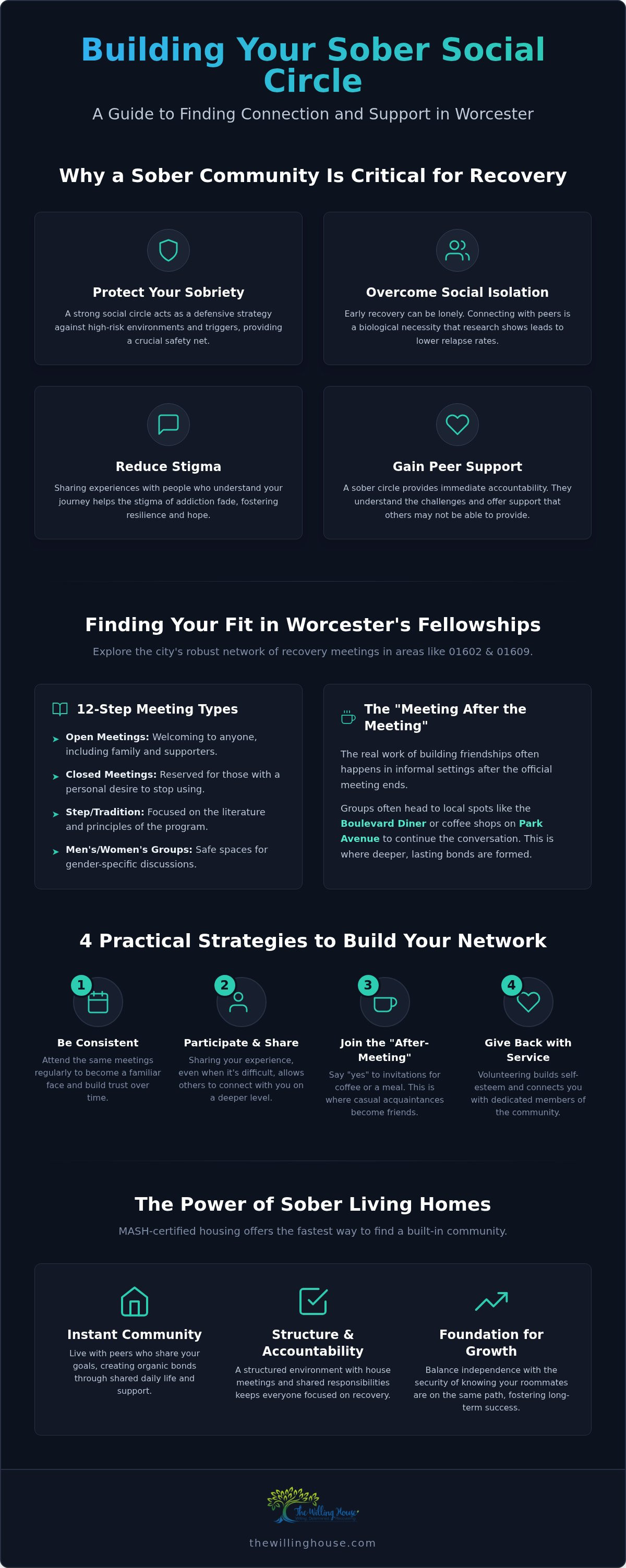
Building a life in recovery in Worcester means remapping your entire social world. You've likely heard the phrase "people, places, and things" many times during treatment. In our city, this concept is a practical reality. If your old routine involved specific bars on Water Street or hanging out in certain parks where substances were present, those locations now represent high-risk environments. Finding sober friends in Worcester isn't just a way to fill your calendar; it's a defensive strategy. A true recovery community offers a level of understanding that those outside the journey often can't provide.
Shared experience is the glue that holds these relationships together. When you're surrounded by people who have faced similar struggles, the stigma of addiction begins to fade. The role of peer support in recovery is well-documented as a way to build resilience and hope. Unlike casual acquaintances who might not understand why you're skipping a party, your sober circle provides immediate accountability. They know the signs of a "dry drunk" or the subtle shift in tone that suggests a craving. This group becomes your safety net during the high-risk times that everyone eventually faces.
Overcoming Social Isolation in Early Recovery
Many people fall into a "loneliness trap" after leaving the high-structure environment of inpatient rehab. Returning to a neighborhood like Main South or even the quieter streets of Tatnuck can feel isolating if your old friends are no longer safe to be around. Social connection is a biological necessity for humans, and in recovery, it's a vital part of staying healthy. Research consistently shows that strong social ties lead to lower relapse rates. Because Worcester is a city of neighborhoods, your local geography often dictates your choices. Staying active in the community helps you avoid the silence that often leads back to old habits.
The Benefits of Independent Sober Living for Socializing
Choosing to live with peers is often the most effective way to jumpstart a new social life. A structured sober living environment provides a home-like feel while maintaining the standards necessary for safety. It's the fastest way to find a built-in group of people who share your goals. These environments foster organic bonds through shared meals, house meetings, and collective accountability. You get to balance your independence with the security of knowing that your roommates are on the same path. This structure makes finding sober friends in Worcester much less intimidating because the community is right outside your bedroom door.
Navigating Worcester’s Recovery Meetings and Fellowships
Worcester offers a robust network of traditional fellowships, but the real work of finding sober friends in Worcester often happens during the "meeting after the meeting." It’s common to see groups heading to local spots like the Boulevard Diner or a coffee shop on Park Avenue to continue the conversation. These informal gatherings are where deep bonds form and where the abstract concepts of recovery become lived experiences. According to research on social support in recovery, these peer connections are vital for building the self-efficacy needed to maintain long-term abstinence.
Traditional 12-Step Meetings in Worcester
The city has a dense landscape of Alcoholics Anonymous (AA), Narcotics Anonymous (NA), and Cocaine Anonymous (CA) meetings. If you’re looking for "Friends of Bill W." in the 01602 and 01609 zip codes, you'll find active groups meeting near Pleasant Street and Salisbury Street. Understanding the meeting types can help you find the right fit:
- Open Meetings: Anyone can attend, including family members and students.
- Closed Meetings: Reserved specifically for those who have a desire to stop drinking or using.
- Step/Tradition Groups: These focus on the literature and the mechanics of the 12-step program.
- Men’s or Women’s Groups: These offer a safe space to discuss gender-specific challenges in recovery.
The Worcester Area Intergroup maintains a 24-hour HALTline and a comprehensive website to help you find specialized meetings that match your schedule. Finding a consistent group to attend these meetings with can make the process feel much more manageable; connecting with a peer-supported community is a great way to find those first few familiar faces.
Non-Traditional and Secular Recovery Groups
Not everyone finds their path through the 12 steps. Worcester also hosts several secular and science-based alternatives. SMART Recovery meetings focus on cognitive-behavioral tools and self-empowerment rather than a higher power. For those interested in mindfulness and Buddhist-inspired recovery, Refuge Recovery groups meet throughout Central MA. Additionally, "All Recovery" meetings have gained popularity. They welcome anyone on any path to sobriety, focusing on the shared goal of wellness rather than a specific set of steps. Online communities, including local Facebook groups and the Worcester subreddit, can also be helpful for finding "sober-curious" meetups or local events that don't revolve around a bar scene.
Activity-Based Sober Groups and Hobby Hubs in Worcester
Recovery isn't just about what you've left behind; it's about what you're building in its place. For many residents, finding sober friends in Worcester starts with identifying "Third Places." These are the social environments that aren't your home or your job. Historically, these spaces were often bars, but our city has a wealth of alternatives where alcohol isn't the focal point. Engaging in a shared hobby or a physical activity reduces the social anxiety that often comes with early sobriety. It gives you something to do with your hands and your mind while you get to know the people around you.
Worcester’s Great Outdoors: Broad Meadow Brook and Beyond
Nature provides a low-pressure setting for making new connections. Broad Meadow Brook Wildlife Sanctuary is a local favorite, offering over five miles of trails that serve as a perfect backdrop for walking groups. These outdoor spaces allow for organic conversation without the intensity of a formal meeting. You might find that a Saturday morning hike at Green Hill Park or a stroll through Elm Park feels more restorative than any indoor gathering. Local fitness groups frequently use these parks for meetups, blending physical wellness with the shared goal of recovery. These groups aren't just about exercise; they're about reclaiming your health alongside people who understand your journey.
Coffee Shops and Creative Spaces as Social Hubs
The local coffee culture in Worcester has evolved into a cornerstone of the recovery community. Shops like those found in the Canal District or along June Street often act as the "new bars" for those in transition. They provide a warm, welcoming atmosphere where you can host an informal book club or simply catch up with a friend. These spaces offer the comfort of a social lounge without the triggers associated with nightlife. Beyond coffee, Worcester’s creative institutions provide unique networking opportunities:
- Worcester Public Library: A quiet hub for workshops, gaming groups, and community education.
- Local Arts Centers: Pottery, painting, and craft classes offer a way to express yourself while meeting others.
- Sober Nights: Keep an eye on community boards at local venues for alcohol-free events designed specifically for the recovery population.
When you focus on a creative pursuit, you're finding sober friends in Worcester who share your passions. This builds a foundation of friendship based on mutual interests, which is often more sustainable than bonds formed solely on shared past struggles. By stepping into these "Third Places," you're creating a life that feels full and rewarding without the need for alcohol.
Practical Strategies for Building Your Network from Scratch
Stepping into a room full of strangers while sober can feel like standing on a stage without a script. Social anxiety is one of the biggest hurdles when finding sober friends in Worcester. To move past the awkwardness, you need a plan that shifts the focus from your own nerves to the needs of the group. One of the most effective tools for this is "service work." By volunteering to make the coffee or help with cleanup after a meeting, you give yourself a specific role. This physical activity provides a natural icebreaker and makes you a visible, helpful part of the community before you even say a word.
Approaching People: A 5-Step Guide for the Shy Recoveree
Arrive ten minutes early and stand near the coffee pot to greet others as they arrive. This simple ritual places you in a high-traffic area where introductions happen naturally. During the meeting, practice active listening to find common interests beyond sobriety. You might hear someone mention a local sports team or a specific hobby. When the meeting ends, follow up with a low-stakes request: "I really liked what you said about your weekend hike. Would you want to grab a coffee at a local cafe sometime next week?" Overcoming the fear of rejection is easier when you realize that this community is built on mutual acceptance. Most people are just as eager to find a new connection as you are.
Setting Boundaries and Protecting Your Peace
Building a new circle also means knowing when to step away from the old one. You'll likely need to say "no" to invitations that involve visiting old Worcester social haunts where triggers are high. It's okay to tell old friends that you value their friendship but cannot be in environments where alcohol is the main event. Communicate these needs clearly to family and non-sober friends so they know how to support you. Finding a healthy balance means prioritizing your recovery routine over the pressure to be social. If you're struggling to find your footing, finding a supportive peer community through structured living can provide the safety net you need while you practice these new social skills.
Beyond recovery-specific groups, Worcester offers countless volunteering opportunities that attract like-minded people. Working at a local food pantry or a community garden connects you with individuals who value service and mutual aid. These environments are naturally sober and provide a fertile ground for genuine friendships. By focusing on a shared mission, you can build a network based on who you are today rather than who you were in the past.
Finding Your Home: The Role of The Willing House in Worcester
Building a social network from scratch is significantly easier when you don't have to return to an empty apartment at the end of the day. For many individuals in transition, finding sober friends in Worcester begins the moment they walk through the doors of a dedicated recovery residence. The Willing House serves as a vital social jumpstart, providing an environment where community isn't something you have to search for; it's something you live in. By choosing MASH-certified housing, you're ensuring that your social circle is built on a foundation of safety, ethics, and shared standards. This certification acts as a guarantee that the home is managed with the professional oversight necessary to protect your peace of mind while you bridge the gap between rehab and permanent independent living.
Peer Support and Accountability: Building Lifelong Bonds
Living in a structured environment means that accountability and fellowship are woven into the fabric of your daily life. The "house family" dynamic is a powerful tool for personal growth. When you share meals, attend house meetings, and navigate the challenges of early sobriety together, you build a level of trust that often leads to lifelong bonds. Our residents support each other through milestones, celebrate personal successes, and offer a listening ear during difficult days. For example, our John Street location for men has a capacity for 15 residents, creating a group size that is large enough for diverse perspectives but small enough to remain intimate and supportive. Daily accountability, including random drug screens and breathalyzers, fosters a culture of honesty. Participating in house-led social events and community outings further strengthens these connections, turning roommates into a reliable support system that extends far beyond the walls of the home.
How to Get Started with The Willing House Community
The Willing House offers structured living programs for both men and women who have already completed an inpatient rehabilitation program. When you move into our Worcester-based sober living environment, you can expect a balance of independence and peer-led support. We don't offer clinical treatment; instead, we provide the stable foundation you need to practice the skills you learned in rehab. The application process is straightforward and designed to help us ensure that every new resident is a good fit for our community of mutual aid. We understand that this transition can be stressful, so we focus on making the move-in process as welcoming as possible. If you're ready to stop feeling isolated and start building a new life, join our community at The Willing House and find the support you need. Finding sober friends in Worcester is the first step toward a sustainable future, and we're here to help you take it.
Building Your New Life in the Heart of Worcester
Recovery is a journey that shouldn't be walked alone. By stepping into the city’s vibrant recovery meetings, exploring our local parks, and engaging in hobby-based groups, you replace isolation with a sense of purpose. Finding sober friends in Worcester is about more than just avoiding old triggers; it's about building a foundation of mutual support and shared joy. Whether you're connecting over coffee in the Canal District or volunteering at a community garden, every new bond strengthens your commitment to a healthier future.
The Willing House is here to provide the structure and safety you need during this transition. Our MASH Certified Excellence ensures a high standard of care, while our safe peer-driven environment offers the fellowship necessary for long-term success. Located in the heart of Worcester, we act as a bridge to your independent life. Start your journey in a supportive Worcester community—Apply to The Willing House today. You have already done the hard work of starting your recovery; now, let us help you find the people who will help you keep it.
Common Questions About the Worcester Recovery Community
Where can I find non-religious sober groups in Worcester?
Worcester offers several secular paths, including SMART Recovery and Refuge Recovery. SMART Recovery focuses on cognitive-behavioral tools and self-empowerment, while Refuge Recovery provides a mindfulness-based approach. Both groups have a presence in Central Massachusetts. These non-religious options are ideal for individuals who prefer a science-based or Buddhist-inspired framework for their recovery journey. You can find their local schedules through their respective websites or community boards.
How do I tell my old friends I am now sober?
Honesty and brevity are your best tools. You can simply say, "I’ve decided to stop drinking for my health, so I won’t be going to the bar tonight." You don't need to provide a deep medical history to justify your choice. Real friends will respect your boundaries without question. If someone pushes back or makes you feel uncomfortable, it's a clear signal that you need to prioritize your safety and peace.
Are there sober-friendly coffee shops in Worcester?
Worcester is home to many coffee shops that serve as perfect "Third Places" for the recovery community. Locations in the Canal District and on June Street offer a welcoming, alcohol-free environment for socializing. These spots are often where the "meeting after the meeting" happens, making them prime locations for finding sober friends in Worcester. They provide the warmth and connection of a social lounge without the risks associated with nightlife.
What is the best way to meet other young people in recovery?
Seeking out "Young People in AA" (YPAA) meetings is a great start. Additionally, activity-based organizations like NamaStay Sober often attract a younger crowd by combining recovery with yoga and fitness. These groups focus on building a vibrant, active lifestyle. Engaging in local sports leagues or creative workshops at the Worcester Public Library can also help you connect with others who are motivated to stay healthy and productive.
Can I find sober friends if I don’t like AA meetings?
Yes, many people build a supportive community without ever stepping into a 12-step meeting. You can meet others through sober fitness groups, community gardening, or volunteering at local food pantries. Peer-led recovery centers like Everyday Miracles also offer recreational activities and social events that are inclusive of all paths. Focus on your interests and hobbies; you'll naturally find others who value an alcohol-free life and share your passions.
How does a sober house help with making friends?
A sober house provides a built-in support system from the day you move in. Living with peers who share your commitment to sobriety reduces isolation and provides immediate accountability. At The Willing House, the house-family dynamic encourages residents to support each other through milestones and challenges. This structured environment allows for organic friendships to grow through shared daily routines, house meetings, and community outings in a safe, drug-free space.
Is Worcester a good city for someone in early recovery?
Worcester is a highly supportive city for early recovery due to its extensive network of resources. The city features multiple MASH-certified sober houses and peer-led support centers that provide a safety net for those in transition. Its diverse neighborhoods offer plenty of "Third Places" like parks and cafes that aren't centered on alcohol. This combination of structure and community makes it a stable foundation for anyone looking to rebuild their life.
What should I do if I feel lonely in my sobriety?
Feeling lonely is a natural response to changing your social circle, but it's a signal to reach out. Attend a new meeting or visit a peer recovery center to find a fresh connection. Finding sober friends in Worcester often starts with a small action, like joining a walking group at Broad Meadow Brook. If you’re struggling, consider the benefits of a structured living environment where peer support is a constant, daily presence.


