

What if the most dangerous moment in your recovery isn't the first day of detox, but the first afternoon you walk back into your old neighborhood alone? It's a common fear for many people transitioning out of intensive care. The clinical safety net is gone, and suddenly, the weight of daily responsibilities feels heavy enough to crack your new foundation. You aren't alone in feeling this way, and exploring the benefits of independent sober living can help you find a path that avoids old triggers while keeping your personal freedom intact.
We're here to show you how a structured, MASH-certified environment offers the scaffold of accountability and community you need to turn early sobriety into a lifelong foundation. This isn't about being locked away; it's about having a safe, home-like space where you can focus on your well-being. This article previews ten key advantages of peer-led communities, from helping you maintain a steady job to building a supportive circle of friends who truly understand the struggle. You'll discover how the right environment provides the stability you need to reclaim your dignity and your future.
Key Takeaways
- Understand why a structured home environment is the essential bridge between intensive care and long-term independence.
- See how daily accountability measures like breathalyzers and drug screens foster a culture of honesty and safety.
- Learn about the power of peer support in breaking the cycle of isolation that often leads to relapse.
- Discover the benefits of independent sober living that allow you to maintain a job while staying grounded in a recovery community.
- Identify why MASH certification is the gold standard for choosing a safe, ethical, and well-managed home in Worcester.
What is Structured Sober Living and Why Does it Matter?
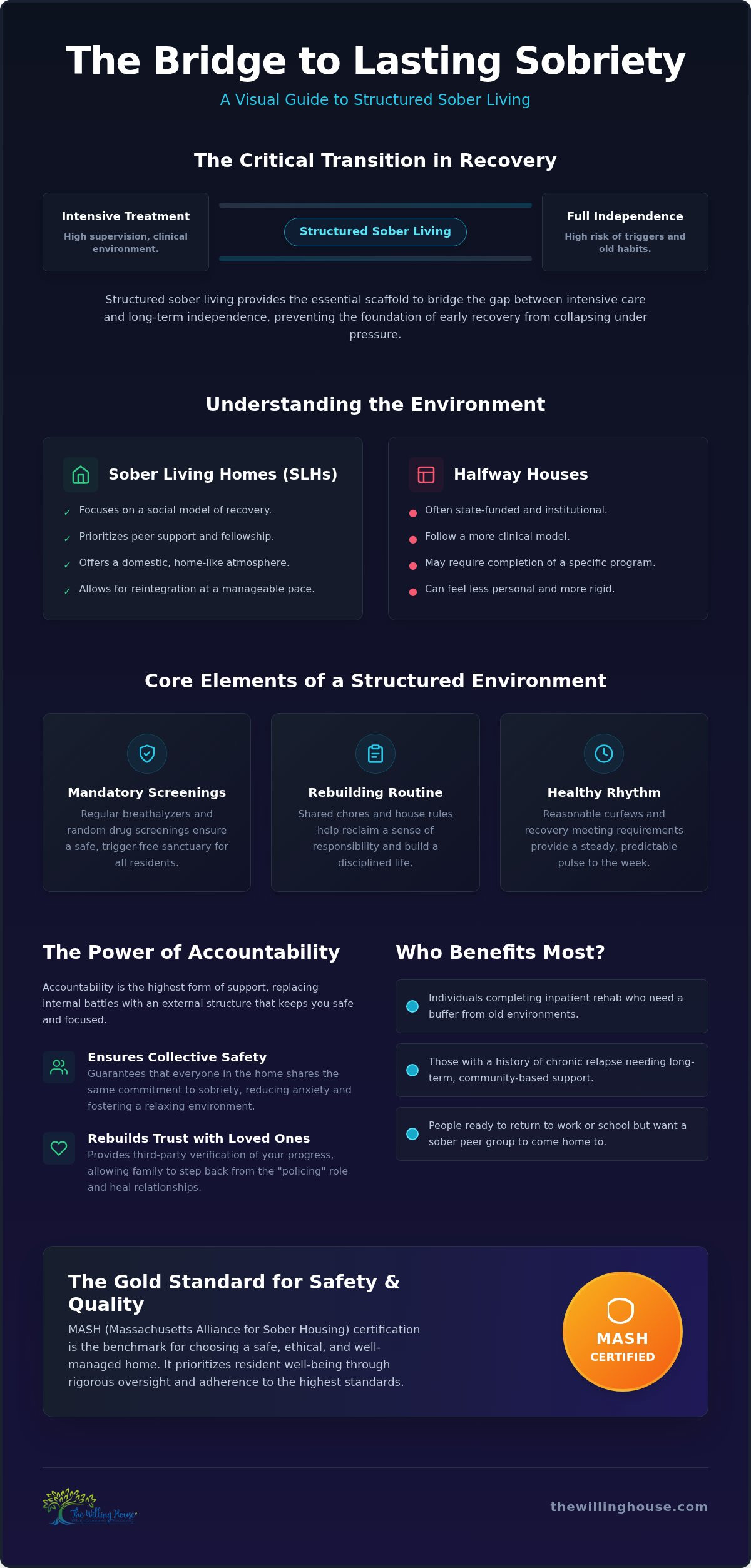
Structured sober living is a residential environment that carefully balances personal freedom with a firm framework of accountability. It acts as the essential bridge between the high supervision of intensive treatment and the total independence of living alone. While you're busy rebuilding the walls of your life, think of this structure as a scaffold. It holds the weight of your daily responsibilities so your new foundation doesn't collapse under the pressure of early recovery.
Many people confuse these environments with halfway houses, but there's a significant difference. Halfway houses are often state-funded and follow a clinical or institutional model, sometimes requiring residents to have completed a specific prison or treatment program. In contrast, Sober living houses (SLHs) focus on the social model of recovery. This approach prioritizes peer support and a domestic, home-like atmosphere. One of the primary benefits of independent sober living is that it allows you to reintegrate into society at a manageable pace without the cold, clinical feel of a medical facility.
The Core Elements of a Structured Environment
A structured home isn't about control; it's about consistency. The environment is designed to protect your peace of mind through several key features:
- Mandatory Screenings: Regular breathalyzers and random drug screenings ensure that the home remains a safe, trigger-free sanctuary for every resident.
- Rebuilding Routine: Basic house rules and shared chores help you reclaim a sense of responsibility. These small, daily tasks are the building blocks of a disciplined life.
- Healthy Rhythm: Reasonable curfews and requirements to attend recovery meetings provide a steady pulse to your week. This prevents the aimlessness that often leads to old habits.
Who Benefits Most from This Transition?
This transition is particularly vital for those who recognize that their old environment is a minefield of triggers. If you've just completed inpatient rehab, going straight back to the places where you used to struggle can be overwhelming. A structured home provides a buffer zone. It's also a powerful tool for individuals who have experienced chronic relapse and need long-term, community-based accountability to stay on track. Finally, it's the perfect fit for those who are ready to return to the workforce or attend classes but still want a supportive circle of peers to come home to at the end of the day.
The Power of Accountability: Protecting Your Sobriety Daily
Accountability is often misunderstood as a lack of trust. In reality, it's the highest form of support a person can receive during the vulnerable early months of sobriety. When you're transitioning back to daily life, your brain is still healing from the chemical changes of addiction. Cravings can strike without warning. One of the primary benefits of independent sober living is that it removes the "choice" to slip up in private. By having clear expectations, you replace the constant internal battle with a simple, external structure that keeps you safe and focused on your goals.
Daily Breathalyzer and Screening Protocols
Routine testing acts as a vital preventative measure. It stops the "slippery slope" before it even begins. If you know a breathalyzer is waiting for you every morning, that thought provides an extra layer of defense when a trigger appears during your workday. This isn't about looking for a reason to punish someone. Instead, screening is a tool for collective safety. It ensures that when you walk through the front door, you're entering a home where everyone is as committed to their sobriety as you are. This shared commitment follows the MASH certification standards, which prioritize resident well-being through rigorous oversight and ethical management. Knowing your housemates are meeting these same standards reduces the underlying anxiety of living in a shared space, allowing you to relax in your own home.
Rebuilding Trust with Loved Ones
Addiction often forces family members into the role of "detectives." They spend their time checking your pupils, smelling your breath, or monitoring your every move, which eventually destroys the emotional bond. Structured living changes this exhausting dynamic. It provides a reliable, third-party verification of your progress. When a family knows a resident is following a structured living program with random screenings, they can finally step back from the "policing" role. This allows them to focus on being your mother, father, or spouse again. Consistent adherence to house rules proves your commitment to a new lifestyle in a way that words alone never could. This transparency is one of the most practical benefits of independent sober living, as it creates a foundation of truth that helps heal fractured relationships and provides your loved ones with the peace of mind they've been missing for years.
Fostering Lasting Recovery Through Peer Fellowship
Isolation is the silent partner of addiction, but fellowship is its most potent antidote. One of the most profound benefits of independent sober living is the immediate access to a community that speaks your language without the need for explanation. Unlike living alone, where a difficult day can quickly spiral into a quiet relapse, a peer-led house ensures you're surrounded by people who recognize the subtle signs of a struggle before you even say a word. This 24/7 empathy creates a protective layer that clinical settings simply can't replicate in a domestic environment.
Living with others who share your goals helps dismantle the deep-seated shame that often lingers after early recovery. When you see your peers successfully navigating their own challenges, it builds your own confidence. By participating in a sober living fellowship Worcester residents trust, you find a safe space where your past doesn't define your future. Instead, your shared history becomes a source of strength that binds the house together.
Finding Strength in Shared Experience
In a peer-led community, the lived experience of your housemates becomes your greatest practical resource. Whether it's advice on how to handle a stressful workplace situation or simply a recommendation for a local meeting, your peers offer insights grounded in reality. This environment allows you to replace old acquaintances who centered their lives around substances with a new "sober circle" that truly values your well-being. Having these positive influences nearby makes the daily commitment to sobriety feel less like a chore and more like a shared mission.
The Role of Peer Accountability
Accountability in this context is less about policing and more about mutual aid. Residents support each other in staying on track with personal goals, such as attending meetings or maintaining employment. This structured interaction also serves as a vital training ground for healthy social skills. Living in a shared home requires constant communication and conflict resolution, which are essential tools for a stable, independent life. These aren't just house rules; they're life skills that help you navigate the world with dignity. The benefits of independent sober living extend far beyond the time you spend in the house, as the friendships formed here often turn into the lifelong support systems that keep you grounded for years to come.
Bridging the Gap: Balancing Structure with Personal Independence
One of the most common fears after leaving a residential treatment program is the sudden loss of a controlled environment. In rehab, every hour is scheduled, but real life doesn't work that way. This is where the benefits of independent sober living become truly apparent. Unlike restrictive institutional settings that can feel like a bubble, a structured home allows you to step back into the world with your dignity intact. You aren't being monitored in a clinical ward; you're living in a community that trusts you to grow while providing the guardrails you need to stay safe.
Structure acts as an enabler of freedom rather than a restriction on it. Without a supportive framework, the sudden influx of choices, responsibilities, and old triggers can feel overwhelming. This "re-entry shock" is a frequent cause of relapse. By choosing a home that balances independence with clear expectations, you give yourself the space to practice your recovery skills in real-time. You have a safe home base to return to every night, which is essential when you're reconnecting with family or navigating the stresses of a new routine.
The Freedom to Work and Reconnect
A primary goal of our community is helping you build a life you don't want to escape from. This process includes finding and maintaining steady employment, which is a cornerstone of self-esteem. Our environment is designed to support a regular work schedule, providing the stability you need to be a reliable employee. Residents are encouraged to pursue vocational training or attend college classes, ensuring they have the tools for long-term financial independence. Because we prioritize your growth, you also have the flexibility to attend outside treatment, therapy, or medical appointments as needed. If you're ready to start this transition, exploring our structured living program can help you find that perfect balance between support and self-reliance.
Developing Essential Life Skills
Independence is a skill that must be practiced. In a structured home, you learn to manage the practicalities of daily life, from budgeting and grocery shopping to maintaining shared living spaces. These chores aren't just about keeping a clean house; they're about rebuilding the sense of responsibility that addiction often strips away. As you demonstrate consistency, the weight of responsibility gradually shifts back to you, preparing you for the day you eventually move into a home of your own. Ultimately, we define independent sober living as freedom with a safety net. You have the liberty to make your own choices, but you're never forced to face the consequences of those choices alone. This supportive framework ensures that as you gain more freedom, you also gain the strength to handle it.
Why MASH Certification is the Gold Standard for Safety in Worcester
Not every sober house operates with the resident's best interests at heart. In an unregulated market, some "sober cowboys" might prioritize profits over safety, leading to overcrowded or unsafe environments. This is why the Massachusetts Alliance for Sober Housing (MASH) is so critical for anyone seeking a fresh start. As the state-level affiliate of the National Alliance for Recovery Residences (NARR), MASH ensures that certified homes meet strict national standards for safety, ethics, and management. Choosing a certified home is one of the most important benefits of independent sober living, as it guarantees you're entering a professional and ethical environment.
MASH certification isn't a one-time rubber stamp; it's an ongoing commitment to excellence. It requires annual recertification and rigorous inspections to ensure compliance with the NARR National Standard 3.0. As of April 2026, there are 185 certified homes in Massachusetts. These homes are the only residences that state agencies can legally refer individuals to, which speaks to the high level of trust placed in the MASH system. When you choose a certified house, you aren't just finding a bed. You're finding a community held to a higher standard of care.
What MASH Certification Means for You
Certification guarantees a baseline of physical safety and cleanliness that every resident deserves. This includes essential fire safety protocols, proper hygiene standards, and ensuring the home provides a domestic, tranquil atmosphere. Beyond the physical space, MASH verifies that the house follows ethical management practices and respects resident rights. This oversight prevents the exploitation that can occur in uncertified homes. The peace of mind that comes with knowing a house is held to state-recognized standards allows you to lower your guard and focus entirely on your personal growth.
Choosing the Right Sober House in Worcester
When you tour a potential home, certification should be the first thing you look for. A reputable house will be transparent about its MASH status and happy to explain how they maintain their standards. Families should prioritize these certified locations to protect their loved ones from predatory operators who lack oversight. The Willing House is a proud MASH-certified community, and we're dedicated to providing a safe, structured, and nurturing environment for every resident. Contact The Willing House today to learn more about our MASH-certified Worcester locations and how we can help you build a lifelong foundation for success.
Build Your Lifelong Foundation Today
Choosing the right environment after intensive care is one of the most critical decisions you'll make for your future. You've seen how a structured home provides the necessary scaffold to support your growth while you rebuild essential life skills. By embracing the benefits of independent sober living, you gain more than just a safe place to sleep; you step into a community that values your dignity and your need for personal freedom.
From the daily accountability of breathalyzers to the deep bonds of peer fellowship, every element of a certified house is designed to protect your progress. You don't have to face the transition back to work or family life alone. Instead, you can rely on a proven framework that balances your independence with a protective safety net. This structure isn't a restriction; it's the very thing that makes your long-term success possible.
If you're ready to take that next step in a safe, MASH-certified environment, we're here to help. Start your journey to lasting recovery at The Willing House and join a community dedicated to your long-term success. You have the strength to build a life you're proud of, and we have the foundation to help you get there.
Frequently Asked Questions
What is the difference between a sober house and a halfway house in Massachusetts?
In Massachusetts, a halfway house is typically a state-funded facility that provides clinical supervision and medical oversight. A sober house, such as The Willing House, focuses on the social model of recovery. These homes prioritize a domestic, peer-led environment rather than a medical one. One of the benefits of independent sober living is that it offers a bridge to long-term independence in a home-like setting rather than an institutional one.
How long do people typically stay in a structured sober living home?
There is no universal timeline for recovery, but most residents stay between six and twelve months. This duration allows enough time to rebuild financial stability, establish a new social circle, and practice daily sobriety in a real-world setting. Some stay longer if they feel they need continued accountability. The goal is to ensure you feel fully confident in your foundation before transitioning to a completely independent apartment or a home of your own.
Are breathalyzers and drug tests mandatory at The Willing House?
Yes, daily breathalyzers and random drug screenings are mandatory for all residents at The Willing House. These protocols are not designed to be punitive. Instead, they serve as a vital tool for community safety and individual peace of mind. Knowing that every person in the house is meeting the same high standards of accountability helps reduce the underlying anxiety that often accompanies the early stages of a successful recovery journey.
Can I work a full-time job while living in a structured sober house?
You are absolutely encouraged to maintain a full-time job while living in our community. One of the primary benefits of independent sober living is the freedom it provides to reintegrate into the workforce while having a stable home base. Our structure is designed to support your professional goals, helping you balance your work responsibilities with house meetings and personal recovery milestones. This helps you build a life you're proud of.
Is MASH certification required for all sober living homes in Worcester?
MASH certification is voluntary, but it's the only way a sober home can receive referrals from state agencies. As of April 2026, there are 185 MASH-certified homes in Massachusetts. While any operator can open a house, choosing a certified location in Worcester ensures the home meets the NARR National Standard 3.0 for safety and ethics. This certification protects residents from sub-standard living conditions and ensures the home follows professional management standards.
What happens if someone relapses in a structured sober living environment?
If a resident relapses, the safety and sobriety of the entire community must come first. Because we maintain a trigger-free environment, the individual is usually required to leave the home immediately. However, this is handled with empathy. We work to ensure the person has a safe plan for a higher level of care, such as detox or inpatient services. Our priority is always protecting the recovery of the other residents in the house.
Do I need to have completed rehab before moving into a sober house?
While completing an inpatient rehab program isn't always a strict requirement, it's highly recommended for most residents. Having a period of professional stabilization makes the transition into a structured sober home much more successful. If you haven't attended rehab, we'll discuss your specific situation to ensure that our independent living environment is the right level of support for where you are currently in your own recovery process.
How does peer support differ from clinical therapy in a sober living setting?
Peer support is based on shared lived experience and mutual aid among residents. It focuses on fellowship, community, and domestic life skills. In contrast, clinical therapy involves medical professionals and formal treatment plans. The Willing House provides a peer-led Structured Living Program but does not offer clinical addiction treatment or medical services. We act as a supportive residential foundation that complements any outside clinical therapy or outpatient programs you may attend.


