

What if the rules that feel the most rigid are actually the ones keeping you the safest? It's completely natural to feel a sense of anxiety when you're transitioning into a new environment, especially when your housing feels tied to your sobriety. You might worry that one mistake could leave you back on the street without a safety net. You've worked hard to build a foundation for your new life, and the fear of losing your home can be overwhelming during an already stressful time.
We understand that you need to know exactly where you stand. In this guide, we'll answer the pressing question: can you get evicted from a sober living home? You'll learn the vital differences between a standard legal eviction and a structured discharge, helping you navigate the transition to independent living with confidence. We'll also explain how MASH certification protects your dignity and why strict house rules are a form of mutual aid for every resident. This clarity will help you understand the safety reasons behind these policies and how they protect your recovery journey and long-term housing stability.
Key Takeaways
- Learn the legal distinction between a standard court-ordered eviction and a program discharge, which is designed to maintain the safety of the entire recovery community.
- Gain clarity on the specific program violations and safety protocols that determine if you can you get evicted from a sober living home.
- Understand how MASH certification protects your rights by requiring clear grievance procedures and ethical standards for every resident.
- Discover the importance of structured transition plans that prioritize your well-being and help coordinate higher levels of care if a discharge becomes necessary.
Eviction vs. Discharge: Understanding the Legal Difference
When you're trying to rebuild your life, the word "eviction" carries a heavy weight. It sounds like a legal battle or a permanent mark on your record. However, when people ask, "can you get evicted from a sober living home," they're usually looking for clarity on how their residency works. In the world of recovery, we rarely use the word eviction. Instead, we talk about "discharge." This isn't just a semantic difference; it's a legal and structural one designed to keep the entire house safe.
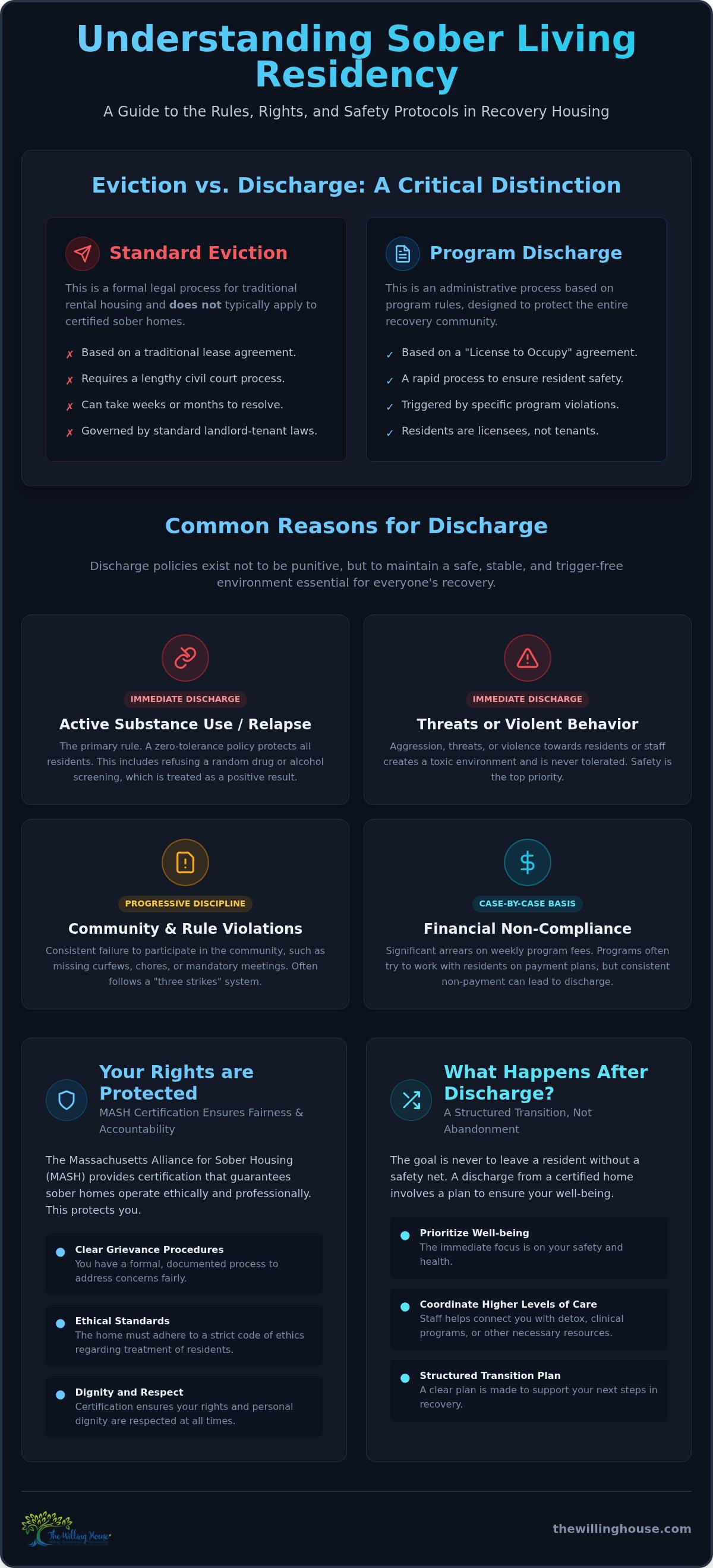
Most sober living houses operate using a "License to Occupy" rather than a traditional lease. A lease gives you specific property rights that can take months to resolve in a civil court. A license, however, is a permission to stay that depends on following specific rules. This is where the "Good Neighbor" policy comes in. It's an agreement that you'll respect the peace of the community and the sobriety of your peers. If those conditions aren't met, the license can be revoked much faster than a standard rental agreement.
Why Traditional Tenant Rights Are Different Here
Recovery housing is classified differently than standard apartments in Massachusetts. This is because the primary purpose isn't just providing a roof; it's providing a specific, drug-free environment. Your residency agreement includes a "sober contingency," which means your right to live there is directly tied to your commitment to stay substance-free. Under Massachusetts law, residents of certified sober living homes are classified as licensees rather than tenants, meaning their right to occupy the premises is contingent upon adhering to the house's recovery standards.
The Purpose of Rapid Discharge
You might wonder why a discharge can happen so quickly. It isn't about being heartless; it's about protecting the 10 or 12 other people in the house who are also fighting for their lives. When you ask if you can you get evicted from a sober living home, it's vital to realize that the process is built around safety. Maintaining a trigger-free environment is a therapeutic necessity, not a suggestion. A single person using substances in a shared space can jeopardize everyone else's progress. We distinguish between a "behavioral discharge," which might involve aggression or breaking house rules, and a "relapse discharge," which specifically addresses active substance use. Both are handled with care, but the priority is always the safety of the community.
Common Reasons for Discharge from a Sober Home
Understanding the boundaries of a recovery community helps reduce the anxiety about whether you can you get evicted from a sober living home. Most discharges occur because the safety or the recovery focus of the house is being compromised. It's helpful to view these rules not as restrictions, but as the scaffolding that holds your new life together. When someone breaks these core agreements, it creates a crack in the foundation that can affect everyone living under the same roof.
Relapse and Zero-Tolerance Policies
Active substance use is the most frequent reason for immediate discharge. In a home certified by the Massachusetts Alliance for Sober Housing (MASH), maintaining a drug-free environment is non-negotiable. To ensure this, houses use random drug screenings and breathalyzers. This "Safety First" approach isn't meant to be punitive. It's a therapeutic necessity because one person using puts every other resident at risk of a relapse. If a resident refuses a drug screen, it's typically treated as a positive result, leading to a swift discharge to protect the community's integrity.
Behavioral and Community Violations
Living in a shared recovery space requires more than just staying sober; it requires active participation. Consistent failure to follow the house structure, like missing curfews, skipping chores, or avoiding mandatory house meetings, can lead to discharge. While many homes use a "three strikes" system for minor infractions, certain behaviors trigger immediate removal. Threats of violence or aggressive behavior toward peers or staff are never tolerated. Toxic behavior disrupts the peace that everyone else relies on for their growth.
Financial non-compliance is another reality that residents must manage. Weekly program fees cover the costs of maintaining a safe, high-quality environment. While many programs try to work with residents during temporary hardships, significant arrears can eventually lead to a loss of your spot. At The Willing House, we focus on clear accountability from day one so that every resident knows exactly what is expected to keep their housing stable. By adhering to these standards, you aren't just following rules; you're contributing to a foundation that supports your whole house. When you follow the structure, you're telling your peers that their recovery is just as important as your own.
MASH Certification and Resident Rights in Massachusetts
In Worcester, the quality of recovery housing varies significantly, which is why looking for certification is the most important step you can take to protect your stability. The Massachusetts Alliance for Sober Housing (MASH) sets rigorous standards that every certified home must follow. These standards aren't just about clean rooms; they are about your rights as an individual. When people ask, "can you get evicted from a sober living home," they're often really asking if they have any protection against unfair treatment. In a MASH-certified home, you aren't just at the mercy of a manager's whim. You're protected by a framework of ethical discharge and fair notice policies.
Certification acts as a shield against predatory practices. In the past, some uncertified homes in the area might have operated without oversight, leading to sudden displacements. MASH-certified homes must provide clear, written house rules and a resident agreement before you even move in. This ensures you know exactly what's expected and what the consequences are for violations. As of April 2026, there are 185 MASH-certified sober homes in Massachusetts, each committed to these higher standards of resident care and transparency.
The Grievance Process
Every resident in a certified home has the right to a written grievance procedure. If you feel a decision was made unfairly, you don't have to just accept it. You have the right to appeal a discharge decision within the organization first. Certified house managers are required to maintain detailed documentation of all violations and meetings. If the internal process doesn't resolve the issue, or if you believe your fundamental rights were violated, you can contact MASH directly. They serve as an objective third party to ensure homes are living up to the standards they promised. This accountability creates a safer, more respectful environment for everyone involved.
Financial Transparency and Refunds
Financial exploitation is a serious concern in the recovery industry, and MASH standards require homes to be completely transparent about their fees. This includes clear policies on what happens to your security deposit or prepaid program fees if you are discharged. Typically, a certified home will have a pro-rated refund policy for prepaid fees, ensuring you aren't financially stranded. This level of accounting prevents homes from profiting off a resident's struggle or relapse. By choosing a home that values financial integrity, you're choosing an environment built on mutual respect rather than exploitation. It's about ensuring that your focus remains on your growth, not on whether you're being treated fairly.
What Happens After Discharge? The Transition Plan
A discharge from a sober living home is a moment of crisis, but it doesn't have to be a moment of abandonment. When you're asking if you can you get evicted from a sober living home, the focus should be on the safety protocols that trigger a transition to a higher level of care. Ethical discharge practices are the hallmark of a responsible community. If a resident is no longer able to maintain the house standards, the goal shifts from communal living to individual safety and stabilization. This process is handled with the same care and respect as the initial intake, ensuring that no one is left without a plan for their next step.
Safe Placement Protocols
At The Willing House, we believe in the dignity of every individual, even during their most difficult moments. We work closely with local Worcester resources to find appropriate placement for anyone transitioning out of our care. This might mean coordinating a bed at a local detox center or a Clinical Stabilization Service (CSS) facility. Our staff doesn't just provide a list of numbers. We assist with transportation to a safe destination or treatment facility. Our emergency contact notification protocols ensure that a resident’s support system is informed and ready to help, preventing the isolation that often fuels a relapse. We also maintain clear procedures for the collection of personal belongings within a specific timeframe, ensuring your property is protected while you focus on your health.
Returning to the Community
Is a discharge always the end of the road? Not necessarily. A temporary discharge can sometimes save a life by providing a necessary wake-up call and removing the person from an environment they aren't currently able to respect. The re-entry process is a path back for those who demonstrate a renewed commitment to their sobriety. To return, a resident must typically complete a recommended level of care and show they are ready to follow the house structure again. This process protects the integrity of the community while leaving the door open for those who are truly ready to do the work. If you have questions about our discharge policies or need to learn more about our Structured Living Program, we are here to provide the clarity you need.
Choosing a Safe, Accountable Sober Living Home in Worcester
Choosing where to live during your transition is one of the most critical decisions you'll make. It's about finding a place where you feel protected yet challenged to grow. Many people worry about the stability of their new environment and ask, "can you get evicted from a sober living home" without warning. This is why certification should be your first priority. A certified home isn't just a house; it's a vetted community that follows strict ethical standards to ensure every resident is treated with dignity. When a home is held accountable by an outside organization, you can rest easier knowing your housing is based on clear, fair rules rather than someone's mood.
Accountability and empathy aren't opposites. In a high-quality home, they work together to create a sanctuary. Accountability provides the structure that keeps you safe, while empathy ensures you're supported if you struggle. Peer support plays a massive role in this balance. When you're surrounded by others who share your journey, they help you spot the warning signs of a relapse before it leads to a discharge. This community-led prevention is the best way to maintain your spot and your sobriety. It's much easier to stay on track when you have a group of peers who truly understand what's at stake.
Questions to Ask Before You Move In
Don't be afraid to interview the house manager during your tour. You deserve to know exactly how the community is managed before you commit. Ask for a copy of the Resident Agreement and House Rules upfront. You should also inquire about the specific steps taken if a resident relapses. A safe home will have a clear, compassionate plan already in place that prioritizes safety without abandoning the individual. For more details on what to look for in a provider, check out our guide to finding a sober house Worcester Massachusetts.
The Willing House Difference
At The Willing House, we take our role as a MASH-certified community seriously. We don't just provide a room; we provide a foundation for your future. Our structured living program is designed to build the habits you need for long-term success, from meeting attendance to daily accountability. We balance the gravity of recovery with a warm, home-like atmosphere where every resident feels like they belong. By following MASH standards, we ensure that every discharge is handled ethically and that our community remains a safe haven for everyone. If you're looking for a place that values your dignity as much as your sobriety, we are here to help. Contact The Willing House for a safe, certified recovery environment.
Securing Your Future in a Community of Support
Building a new life requires a stable foundation and a clear understanding of the environment that supports you. By learning the differences between a legal eviction and a recovery-focused discharge, you can move forward with less anxiety and more focus on your personal growth. Remember that MASH certification isn't just a label; it's your guarantee that your rights are respected through ethical standards and transparent grievance procedures. These rules exist to protect not just your spot, but the safety and sobriety of every peer walking this path alongside you.
If you're wondering if can you get evicted from a sober living home, the answer lies in the mutual commitment between you and the community. Choosing a certified home ensures that any transition is handled with dignity and care. Located in the heart of Worcester, MA, our community provides the structure you need to thrive. Apply for a spot at The Willing House today to join a MASH-certified, peer-supported recovery community dedicated to your long-term success. You don't have to navigate this transition alone. We're here to provide the stability and fellowship you deserve as you take these next brave steps toward a brighter future.
Frequently Asked Questions
Can a sober house kick you out with no notice?
Yes, immediate discharge is possible if you violate core safety rules, such as active substance use or aggressive behavior. Since these homes operate under a license to occupy rather than a traditional lease, the priority is the safety of the entire community. In a MASH-certified environment, staff will work to ensure you have a safe destination, like a detox center, rather than simply letting you leave with no plan.
Do I have 30 days to move out of a sober living home?
No, the standard 30-day notice required for traditional apartments does not apply to recovery housing. Because the "sober" contingency is a requirement for residency, a violation of that agreement can lead to a much faster exit. This is a common point of confusion when people ask can you get evicted from a sober living home. The faster timeline is necessary to maintain a trigger-free environment for others.
What happens to my stuff if I get discharged from a sober house?
If you are discharged, you are typically allowed to pack your essential belongings immediately. For anything left behind, certified homes have a specific storage policy, usually holding items for 24 to 72 hours. It's your responsibility to coordinate a time to pick up your property. If items aren't collected within the timeframe specified in your resident agreement, the house may dispose of them to clear space for new residents.
Can I be evicted for not paying my weekly program fees?
Yes, consistent failure to pay your weekly program fees is a valid reason for discharge. These fees cover the essential costs of maintaining a structured, safe, and certified environment. While many houses in Worcester try to work with residents who are facing temporary employment hurdles, persistent non-payment disrupts the program's operations. Clear financial communication with your house manager is the best way to prevent a discharge for financial reasons.
Is it legal for a sober house to require daily breathalyzers?
Yes, it is entirely legal and a standard practice in certified sober living environments. When you sign your residency agreement, you consent to random or scheduled drug screenings and breathalyzers as a condition of your stay. These tools aren't meant to be intrusive; they are the primary way the house maintains its integrity as a substance-free sanctuary. Refusing a test is usually treated with the same weight as a positive result.
What should I do if I feel I was unfairly discharged from a MASH-certified home?
Your first step should be to follow the written grievance procedure provided when you moved in. This allows you to appeal the decision to the organization's leadership. If the internal process doesn't resolve your concerns, you can reach out to the Massachusetts Alliance for Sober Housing (MASH). They oversee certified homes to ensure they follow ethical standards, providing an extra layer of accountability for every resident in the state.
Can a sober house kick me out for taking prescribed medication (MAT)?
No, certified sober homes cannot discharge you simply for being on Medication-Assisted Treatment (MAT), provided it is prescribed by a doctor. Under the Fair Housing Act, individuals in recovery are protected from discrimination. However, you must follow house protocols for storing and self-administering your medication safely. It's vital to be transparent about your prescriptions during the intake process to ensure the house can support your specific recovery path.
How does a sober house handle a resident who relapses but wants help?
When a resident relapses but expresses a desire for help, the house manager's priority shifts to finding a safe level of care, such as detox or a stabilization program. While the resident must still leave the home to protect the community's sobriety, the discharge is handled with empathy. Many programs allow for a re-entry process after the individual has successfully completed treatment and demonstrated a renewed commitment to the house's structured living standards.


