

A sober living home is only as strong as the person who holds the keys. When you're searching for a safe place to transition after treatment, the fear of a "party house" with zero oversight can be overwhelming. You want more than just a room; you're looking for a community that values your dignity and protects your hard-won progress. It's completely normal to feel anxious about the risk of relapse or to feel confused about how these homes actually function day to day.
The role of a house manager in sober living is the vital link that turns a residence into a sanctuary of recovery. These leaders aren't just landlords; they're peer mentors who've walked this path and understand the delicate balance between independence and accountability. You'll discover how a house manager provides the essential structure and peer support needed for lasting change. We'll look at how MASH-certified standards in Worcester ensure that every resident has a stable foundation, giving families the peace of mind they deserve while residents focus on building a life they can finally be proud of.
Key Takeaways
- Understand how a dedicated leader acts as a vital bridge, helping residents transition from the high structure of clinical treatment to the rewards of independent living.
- Learn about the specific role of a house manager in sober living when it comes to maintaining the rigorous accountability protocols that keep the entire community safe.
- Discover the unique value of peer-led mentorship and how having a leader who has "walked the walk" fosters a culture of mutual respect and long-term hope.
- Explore why MASH certification is a critical benchmark for safety and how it ensures house managers are trained to uphold the highest professional standards.
- Gain insights into the key qualities to look for in house leadership during your search to ensure a balance of firm boundaries and genuine compassion.
Defining the House Manager: More Than Just a Supervisor
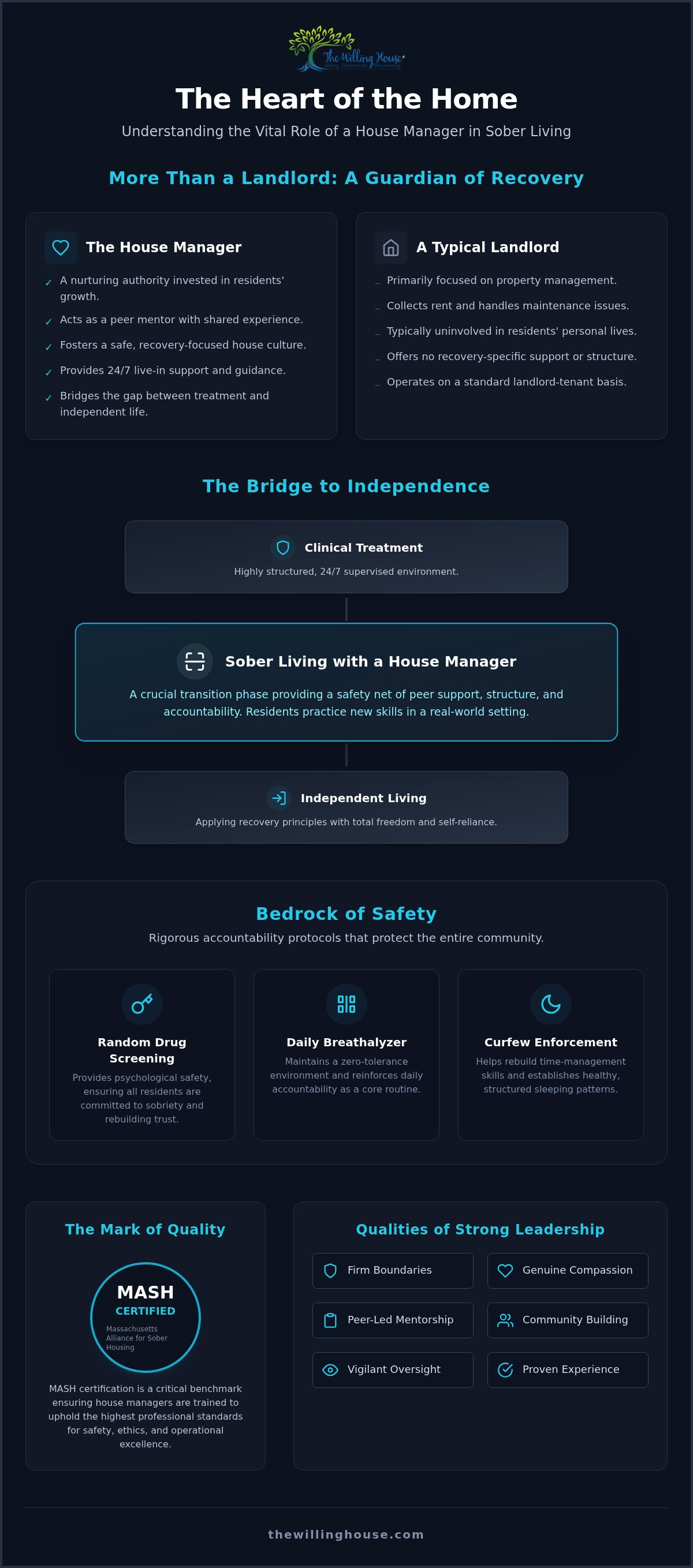
The role of a house manager in sober living is often misunderstood as merely administrative or custodial. In reality, this person serves as the primary point of contact and the ultimate authority within the home, ensuring that the daily environment remains conducive to healing. A house manager is a nurturing authority who maintains the home's recovery-focused atmosphere by balancing firm boundaries with genuine empathy. While a landlord simply collects rent and fixes leaks, a house manager is deeply invested in the sobriety and personal growth of every resident. They are the guardians of the house culture, making sure that the space remains a sanctuary rather than just a place to sleep.
Understanding this role requires looking at how Sober living houses (SLHs) operate. These environments are designed to be alcohol and drug-free, but they require active leadership to remain that way. The manager doesn't just watch over the property; they watch over the people, fostering a sense of shared responsibility that is essential for long-term success. They act as a bridge, helping individuals move from the tight control of a clinical setting to the eventual freedom of independent life.
The Bridge Between Treatment and Independence
Transitioning from the 24/7 supervision of a clinical rehab facility to the total freedom of the real world is often the most dangerous time for someone in recovery. It's a high-risk period where old habits can easily resurface. The house manager provides the necessary scaffolding of support during this phase. They help residents navigate the benefits of independent sober living while providing a safety net if things get difficult. This structure allows individuals to practice new coping skills in a real-world setting without feeling completely alone or unsupported.
Live-In Support vs. Professional Oversight
There is a significant difference between professional staff who work shifts and a live-in house manager who shares the recovery experience. Having a 24/7 presence in the home dramatically reduces anxiety for both the residents and their families. It means there's always someone available to address a crisis, resolve a conflict, or offer a word of encouragement at any hour. This peer-led leadership model is powerful because it removes the "us versus them" dynamic often found in clinical settings. When the person in charge has been in your shoes, the accountability feels like mutual respect rather than a punishment.
Maintaining Safety Through Rigorous Accountability Protocols
Accountability is the bedrock of any successful recovery environment. Without it, a residence quickly loses the structure necessary for residents to thrive. The role of a house manager in sober living is to act as the primary enforcer of these standards, ensuring the home remains a sanctuary free from the triggers and substances that could derail progress. By maintaining consistent rules, they prevent the "slippery slope" where one person's lapse can impact the collective sobriety of the entire group. This isn't about being restrictive; it's about creating a predictable, secure space where everyone can breathe easier.
Implementing a Random Drug Screening Sober House Policy
Many people view drug testing with apprehension, but in a structured environment, it's a tool for protection rather than punishment. A random drug screening sober house policy provides an immense psychological benefit. It allows residents to rest easy, knowing that every person they share a meal or a living room with is equally committed to staying clean. Managers handle these logistics with a focus on both accuracy and dignity. They ensure the process is professional and respectful, reinforcing that the goal is always the safety of the community. This level of oversight removes the guesswork and helps rebuild trust among peers.
Daily Breathalyzer and Curfew Enforcement
Routine is a powerful ally in early recovery. Managers use curfews to help residents rebuild time-management skills and establish healthy sleeping patterns. Coupled with this is the use of daily testing. Understanding how daily breathalyzer protocols work is essential for anyone entering a program. These tests maintain a zero-tolerance environment where accountability is constant. Randomness is a key factor here; it prevents anyone from trying to "time" or bypass the system. This unpredictability isn't about catching people doing something wrong, but about keeping the environment consistently safe. It provides a clear boundary that residents can rely on during moments of temptation.
Through these rigorous protocols, the role of a house manager in sober living shifts from being a simple overseer to a guardian of the recovery process itself. This oversight creates the peace of mind residents need to focus entirely on their growth. If you're looking for a community that prioritizes this level of safety, exploring the structured living programs at The Willing House can provide the clarity you need.
The Power of Peer Mentorship and Community Building
Recovery isn't just about what you stop doing; it's about the new life you choose to build. While rules and drug testing provide a necessary frame, the heart of a successful home is found in the relationships between residents. The role of a house manager in sober living is to act as the primary architect of this community. Most managers are individuals in long-term recovery themselves, which gives them a unique "I've been there" perspective that clinical staff simply can't replicate. They don't just tell residents how to live; they show them by modeling a successful, joy-filled life in sobriety every single day. By guiding residents through daily challenges and celebrating collective milestones, the manager transforms a group of individuals into a cohesive sober living fellowship.
Modeling Sobriety in Real-Time
For someone in early recovery, the idea of handling a stressful day without a drink or a drug can feel impossible. This is where the visibility of a house manager becomes a powerful tool. Residents watch how the manager handles conflict, manages their own stress, and navigates the ups and downs of life with grace and transparency. This real-time modeling provides a roadmap for residents to follow. When a manager is open about their own journey and values, it builds a foundation of trust. It proves that a life of dignity and purpose isn't just a promise made in a brochure; it's a tangible reality they can achieve for themselves.
Facilitating Conflict Resolution
Living in a community of people who are all navigating the raw emotions of early recovery can lead to natural friction. Minor issues like unwashed dishes or noise levels can quickly escalate into major resentments if left unaddressed. The role of a house manager in sober living involves acting as a neutral mediator who teaches residents how to communicate their needs healthily. They help the house navigate these "growing pains" by ensuring that chores and shared responsibilities are handled fairly. This prevents the buildup of resentment and teaches residents essential life skills such as boundary-setting and respectful confrontation. By maintaining a fair and balanced environment, the manager ensures that the home remains a place of peace rather than a source of stress. This focus on mutual aid and shared responsibility helps every resident feel like a valued member of a team, working toward the common goal of lasting recovery.
Operational Excellence and MASH Certification Standards
Operational excellence isn't an accident; it's the result of rigorous standards and dedicated leadership. At The Willing House, we adhere strictly to the Massachusetts Alliance for Sober Housing (MASH) guidelines for all our operations. This certification serves as a guarantee that the home meets high safety and ethical benchmarks. The role of a house manager in sober living involves much more than just being present. These leaders are trained in emergency response and crisis management, ensuring they can act decisively if a resident's safety is at risk. They also maintain strict ethical boundaries, which is essential for creating a professional yet domestic atmosphere where residents feel both respected and protected.
Beyond personal support, the manager is the guardian of the physical property. They manage everything from fire alarm readiness to routine maintenance schedules. By overseeing these details, they remove the stress of property management from the residents, allowing them to focus entirely on their personal growth. A well-maintained home signals to everyone inside that their recovery is worth the effort and that they deserve a high-quality living environment. It reinforces the idea that the space they inhabit is a direct reflection of the new life they're building.
Ensuring a Safe and Healthy Living Environment
A clean, organized home is a powerful tool for emotional regulation. Managers conduct regular inspections of bedrooms and common areas to ensure the residence remains a life-affirming space. This focus on physical standards helps residents rebuild habits of self-discipline and self-care. When the environment is tranquil and orderly, it directly supports a stable mental state. It's much easier to practice new coping skills when you aren't distracted by a chaotic or neglected living situation. Managers coordinate with owners to ensure that every corner of the house promotes a sense of peace and pride.
Administrative Duties and Resident Intake
The administrative side of the role is equally vital for the health of the community. Managers lead the interview process for prospective residents, carefully vetting each individual to ensure they'll contribute positively to the house culture. They also manage the documentation required for MASH compliance, including incident reports and participation logs. Perhaps most importantly, they act as a bridge between the resident and the outside world. They serve as a reliable liaison for family members and clinical providers, providing updates that offer peace of mind to loved ones. If you are ready to experience the benefits of a professionally managed environment, you can learn more about our MASH certified sober housing in Worcester.
Choosing a Sober Living Community with Strong Leadership
Choosing the right home is a high-stakes decision. While the physical layout and location are important, the role of a house manager in sober living is the single most critical factor in determining your success. A beautiful house can become a "party house" overnight without strong leadership. Conversely, a modest home led by a dedicated manager can become a life-saving sanctuary. You're looking for a culture of "accountability with heart," where rules aren't just enforced for the sake of control, but out of a deep commitment to your well-being.
What to Look for During Your Tour
When you tour a potential residence, pay close attention to the atmosphere. Is the manager present and engaged, or do they seem like an absentee landlord? An approachable, professional manager should be able to answer your questions clearly and without hesitation. Observe how they speak about the current residents. You want to hear respect and empathy in their tone, not judgment or coldness. If the house feels chaotic or unsupervised, it's a sign that the leadership is lacking. Don't be afraid to dig deeper into their operational style.
Consider asking these specific questions to gauge the quality of leadership:
- What is the manager's personal recovery background and how long have they been in this role?
- What specific training have they received regarding emergency response and ethical boundaries?
- How do they handle a situation where a resident is struggling but hasn't relapsed?
- What does a typical day of oversight look like in this home?
The Willing House Difference in Worcester
We believe that empowerment begins with the right environment. The Willing House focuses on helping residents regain their independence through structured recovery housing in Central MA. Our managers aren't just supervisors; they're active participants in the Worcester recovery community. They understand the local resources, the local challenges, and the local fellowship because they live it every day. They provide the stability you need during this transition.
Our commitment to MASH standards ensures that our leadership team operates with the highest level of professionalism. We choose our managers based on their dedication to peer-led support and their ability to foster a nurturing yet disciplined home. They act as the reliable protectors we've discussed throughout this article, bridging the gap between care and total freedom. If you're ready to see how the role of a house manager in sober living can change your trajectory, we invite you to meet our team. The next step is a simple conversation to see if our community is the right fit for your journey toward a life you can be proud of.
Step Into a Supportive Future
Transitions are difficult, but you don't have to navigate them alone. We've explored how the role of a house manager in sober living provides the essential structure and peer mentorship needed to bridge the gap between treatment and true independence. By combining rigorous safety protocols with a heart for community, these leaders ensure your home remains a sanctuary where growth is possible. MASH certified excellence means you can trust the standards of care and oversight provided in our Worcester community. You deserve a recovery environment that values your dignity while keeping you grounded in your daily goals. It's time to move past the fear of the unknown and embrace a structured path forward with people who understand your journey. Our commitment to structured peer support creates a foundation where lasting change isn't just a hope; it's a daily reality. You have worked hard to reach this point, and you deserve a home that protects that progress with professional integrity and genuine compassion.
Build a life you are proud of at The Willing House—Apply Today
Your journey toward a lasting recovery starts with a single step into a community that truly cares about your success.
Frequently Asked Questions
What is the difference between a house manager and a recovery coach?
A house manager focuses on the safety, structure, and community culture of the residence, while a recovery coach typically provides one-on-one goal setting and personal recovery planning. Managers oversee the physical home and group accountability to ensure a stable environment. In Worcester, MASH-certified managers ensure the daily atmosphere is conducive to growth, whereas a coach works with you individually to navigate specific personal hurdles outside the home context.
Does a house manager live at the sober living home 24/7?
Yes, a live-in manager is a standard feature of a structured sober living environment. This 24/7 presence ensures there is always a nurturing authority available to resolve conflicts, handle emergencies, and maintain accountability. Having a manager who shares the living space fosters a deeper sense of fellowship and security for everyone in the home. It provides a constant safety net during late-night or weekend hours when residents might feel most vulnerable.
How often does a random drug screening sober house conduct tests?
The frequency of testing is random to ensure the highest level of safety and community integrity. A random drug screening sober house policy means tests can occur several times a week or at any moment when oversight is necessary. This unpredictability prevents residents from trying to time substances and provides peace of mind to the entire community. It confirms that the environment remains 100% drug and alcohol-free for everyone's protection.
Can a house manager help me find a job or attend treatment?
While house managers don't provide clinical treatment, they offer peer support to help you manage your daily schedule. The role of a house manager in sober living includes helping you balance your independence with house requirements. They can often point you toward local Worcester resources for employment or outpatient services. They act as a knowledgeable peer who understands the local landscape and can help you navigate the transition back into the workforce.
What happens if a resident breaks a rule or relapses according to the manager?
Accountability is handled with a firm focus on community safety. If a resident relapses, the manager must act immediately to protect the sobriety of the other residents, which typically involves the individual leaving the home. For minor rule violations, managers use these moments as opportunities for growth and healthy communication. However, consistent patterns of behavior that disrupt the house culture result in a loss of housing to maintain the home's integrity and safety.
Is the house manager responsible for providing my meals or transportation?
No, residents are responsible for their own food and transportation. This is a core part of the independence aspect of our program. House managers encourage residents to develop essential life skills like grocery shopping, meal preparation, and navigating Worcester's public transit system. This structure helps individuals rebuild the practical habits necessary for a successful, self-sufficient life. It ensures that residents are prepared for the responsibilities of living on their own after they transition.
What qualifications should a MASH-certified house manager have?
A MASH-certified house manager must demonstrate a strong understanding of recovery principles and ethical boundaries. They receive specific training in emergency protocols, including overdose reversal and fire safety. Most importantly, the role of a house manager in sober living is usually filled by someone in long-term recovery. This combination of professional certification and lived experience ensures they can lead with both authority and genuine empathy while maintaining high operational standards.
Can I contact the house manager if I am a family member of a resident?
Yes, family members can generally contact the house manager, provided the resident has signed the necessary consent forms. Managers often serve as a vital link, offering families peace of mind by verifying that the home is safe and that their loved one is participating in the community. This communication helps rebuild the trust that is often damaged during active addiction. It creates a supportive network that benefits the resident's long-term recovery journey.


