

What if the structure you fear most is actually the very thing that sets you free? It's completely natural to feel anxious about what a typical day in a sober living house actually entails when you're transitioning from clinical care. You might worry that rigid rules will stifle your independence, or perhaps you're terrified that without constant supervision, a relapse is just around the corner. Finding that middle ground is often the most challenging part of the journey. You want to work and rebuild your life, but you also need to know that your home is a safe, drug-free sanctuary where your dignity is always prioritized.
By understanding this daily rhythm, you can begin to see how MASH-certified standards provide a supportive scaffolding rather than a cage. We'll explore how a predictable routine of morning check-ins, professional work hours, and evening peer fellowship creates a comforting rhythm of accountability. This guide will help you visualize a life that feels both productive and protected. You'll discover how the right balance of oversight and personal responsibility prepares you for the transition to full, sustainable independence.
Key Takeaways
- Understand how MASH certification ensures high safety standards and a reliable environment for your recovery journey.
- Learn how a typical day in a sober living house balances early morning accountability protocols with the freedom to pursue your career or education.
- Discover the "Productive Day" requirement and how it helps you rebuild professional habits and personal independence.
- Explore the role of evening peer fellowship in creating a safe haven that prevents isolation and fosters a sense of belonging.
- See why structured living acts as a vital bridge, helping you transition smoothly from intensive treatment to a life of full autonomy.
The Purpose of Structure in a MASH Certified Sober House
Transitioning out of a high-intensity clinical setting can feel like stepping into a vacuum. Suddenly, the 24/7 supervision is gone, and the weight of daily choices returns. Understanding the purpose of this structure is the first step in imagining a typical day in a sober living house. Unlike inpatient rehab, sober living houses aren't medical facilities. Instead, they serve as a residential bridge centered on peer support and mutual accountability. While you won't find doctors or nurses on-site, you'll find something equally vital: a community of individuals who are all striving for the same goal of sustainable sobriety.
The Science of Routine in Early Recovery
Recovery is a physical and neurological process. After months or years of substance use, the nervous system is often in a state of high alert or total exhaustion. Consistent daily patterns act as a soothing balm for this dysregulation. By following a predictable schedule, you significantly reduce "decision fatigue." When you don't have to wonder what time you'll wake up or how you'll spend your evening, your brain can focus its energy on healing rather than managing stress. These repeated, healthy habits eventually form new neural pathways, making sobriety feel less like a chore and more like a natural way of life.
What MASH Certification Means for Your Safety
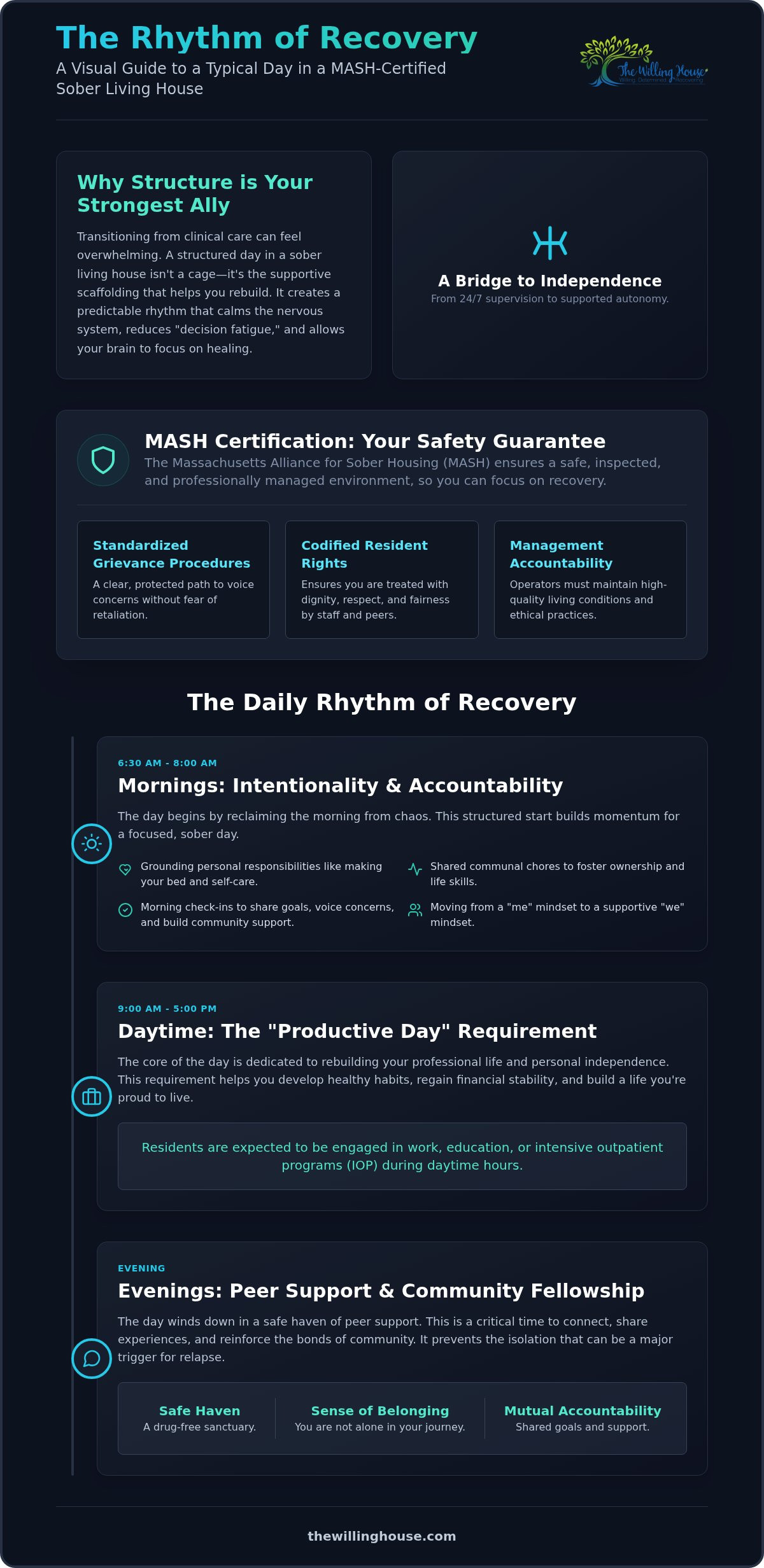
In Massachusetts, the gold standard for these environments is certification from the Massachusetts Alliance for Sober Housing (MASH). For those looking at Worcester sober houses, this certification is a promise of quality. It means the property has passed rigorous health and safety inspections and adheres to the National Alliance for Recovery Residences (NARR) standards. This isn't just about fire sprinklers or clean kitchens; it's about ensuring a professional level of oversight that protects your recovery.
MASH certification protects residents through several key mechanisms:
- Standardized Grievance Procedures: Residents have a clear, protected path to voice concerns or report issues without fear of retaliation.
- Resident Rights: Your dignity is codified in the house rules, ensuring you're treated with respect and fairness by both staff and peers.
- Management Accountability: House operators must maintain high-quality living conditions and ethical business practices to keep their certified status.
Knowing these standards are in place allows you to focus entirely on your growth. When you visualize a typical day in a sober living house, you can do so with the peace of mind that your home is safe, inspected, and professionally managed. This structure isn't about control; it's about creating a stable foundation where you can finally breathe and rebuild.
Mornings: Building Intentionality and Accountability
A typical day in a sober living house starts with the sunrise. It's the moment where the quiet resolve of the house meets the practical needs of a life in transition. Most residents wake up between 6:30 and 8:00 AM. This early start isn't meant to be punitive. It's a deliberate choice to reclaim the morning from the chaos that often defines active addiction. You start with simple, grounding acts of personal responsibility: making your bed, attending to hygiene, and practicing self-care. These small victories build the momentum you need to stay focused. Visualizing a typical day in a sober living house helps demystify the process and highlights the importance of these intentional early hours.
Beyond your own room, you'll likely have a communal chore. Whether it's wiping down a kitchen counter, organizing the communal coffee station, or taking out the recycling, these tasks serve a dual purpose. They maintain a high-quality, tranquil home environment and help you relearn the life skills necessary for independent living. These small acts of service foster a sense of ownership and pride in your shared space.
The Morning Check-In and Intentions
Before heading out for work or treatment, residents gather for a brief check-in. This is a time to share daily goals and foster transparency among the community. If you're feeling a bit shaky or anticipating a stressful meeting at work, this is the safe space to voice it. Building this sense of belonging early on ensures you don't face the day's challenges in isolation. It's about moving from a "me" mindset to a "we" mindset, where your intentions are supported by those living alongside you.
Accountability as an Act of Love
Safety is the cornerstone of a healthy recovery environment. This is why daily breathalyzer protocols and random drug screenings are standard. These aren't "gotcha" moments. Instead, they provide a powerful psychological barrier against cravings. As noted in a study on sober living houses, this level of peer-driven accountability is a significant factor in long-term success. Accountability is a community-wide safety net that protects the sobriety of every person under the roof. By removing the "option" of using through consistent monitoring, you gain the mental space to focus on your professional and personal growth. If you're ready to start your morning in a space that values both your dignity and your safety, explore how we support your journey.
Daytime: Balancing Independence with Recovery Goals
Once the morning check-in concludes, the focus of a typical day in a sober living house shifts toward the broader community. This is where the "Productive Day" requirement comes into play. Between roughly 9:00 AM and 5:00 PM, residents are expected to be out in the world, actively participating in life. This might mean working a job, attending school, or volunteering. For those in the early stages of transition, it often involves attending Intensive Outpatient Programs (IOP) at local clinics in the Greater Worcester area. This period is the bridge where you practice the tools of recovery in real-world situations while knowing you have a safe home to return to.
Managing your time effectively during these hours is a skill that develops with practice. House management doesn't dictate your every move, but they provide a framework that ensures your daytime activities align with your long-term goals. They act as a steady, encouraging presence, helping you navigate the logistics of a busy life without losing sight of your sobriety. It's a balance of trust and accountability that makes this environment so effective for those moving toward full autonomy.
Employment and Vocational Growth
Finding a job that respects your journey is a major milestone. Worcester offers a variety of opportunities, and house management can often offer guidance on identifying work environments that support a sober lifestyle. Financial independence isn't just about paying your weekly fees. It's about reclaiming your dignity. When you earn a paycheck and contribute to your own living expenses, you're reinforcing the belief that you can thrive. This sense of purpose fills the gaps where cravings once resided, providing a healthy outlet for your energy and ambition.
Attending Treatment and Support Meetings
Many residents balance their work schedules with clinical treatment or support groups. Since MASH-certified homes focus on the living environment rather than medical care, you'll travel to off-site providers for therapy or specialized services. This requires careful scheduling, but it also helps you build a robust external support network. You might meet with a sponsor at a local coffee shop or attend a noon meeting at one of Worcester's many recovery halls. According to research on sober living houses, this integration of peer support and external treatment is a cornerstone of long-term stability. Utilizing these local resources ensures that your typical day in a sober living house is grounded in both professional guidance and community fellowship.
Evenings: Peer Support and Community Fellowship
Returning to the house after a long day in the outside world is a pivotal moment in a typical day in a sober living house. As you step through the door, the noise of the Greater Worcester community fades, replaced by the familiar sounds of a supportive home. This is your safe haven. Evening is when the communal aspect of the house truly shines. Shared meals often become the heartbeat of the residence, where men and women in recovery swap stories about their day, offer advice, and simply enjoy the presence of those who understand their path. This shared experience breaks the isolation that so often fuels addiction.
Curfew protocols are another essential layer of this evening structure. While it might feel restrictive at first, a set return time provides immense peace of mind for everyone involved. You know that every member of the house is safe and accounted for by a certain hour. This predictability reduces anxiety and ensures that the home remains a tranquil environment for rest and reflection. It's about creating a stable boundary that protects your individual progress and the integrity of the entire community. This predictable rhythm is a hallmark of a typical day in a sober living house that prioritizes long-term success over short-term convenience.
The Power of the House Meeting
Mandatory house meetings are the engine of accountability. These gatherings aren't just about reviewing rules or checking chore lists; they're about learning how to live with others in a healthy way. Residents practice communication and conflict resolution in real time. If a kitchen dish was left unwashed or a boundary was crossed, it's discussed openly and respectfully. More importantly, these meetings are a space to celebrate wins. Hearing a peer share about a successful job interview or a week of clean time reinforces the hope that recovery is possible for everyone. It turns a group of individuals into a cohesive unit focused on mutual aid.
External Recovery Meetings and Fellowship
Most evenings involve attending an external recovery meeting, whether it's a 12-step group or an alternative peer-support program. This requirement ensures you're building a network beyond the walls of the house. Finding sober living fellowship in Worcester is easier than you might think, as Central Massachusetts has a vibrant and welcoming recovery community. These meetings are where you find sponsors, mentors, and friends who will walk with you long after you leave structured housing. If you're looking for a community that prioritizes this level of connection and safety, reach out to learn more about our homes.
Choosing The Willing House: Your Path in Worcester
The transition from a clinical facility to the real world is often the most vulnerable period in a person's life. At The Willing House, we've carefully designed an environment that honors your need for independence while providing the MASH-certified structure necessary to stay safe. We understand that a typical day in a sober living house shouldn't feel like a continuation of rehab; it should feel like the beginning of your new life. Located in the heart of Worcester, MA, our homes offer proximity to career opportunities, educational institutions, and a thriving recovery community, making it the ideal setting to rebuild your foundation.
By choosing a residence in Central Massachusetts, you gain access to a robust network of support that is difficult to find elsewhere. Worcester is a city that understands recovery, and our houses are positioned to help you take full advantage of local resources. Whether you're returning to the workforce or continuing your education, the balance of accountability and freedom we provide ensures you don't have to navigate these challenges alone. We act as a steady bridge, helping you move from the intensive care of inpatient treatment toward a life of full, sustainable autonomy.
A Supportive Community of Peers
One of the most significant advantages of our program is the move away from a sterile, clinical setting. We prioritize a home-like atmosphere where dignity and mutual respect are the standard. Living in a community of peers who have walked a similar path is a powerful antidote to the isolation that often triggers relapse. When you share your morning coffee or evening meal with others who understand your journey, you're building a brotherhood or sisterhood that extends far beyond house rules. This is why MASH certified sober living after rehab is widely considered the safest and most effective transition for those serious about long-term sobriety. You aren't just a resident; you're a vital part of a community dedicated to collective success.
How to Join The Willing House Community
Taking the next step is straightforward but intentional. Our process begins with an application and an interview to ensure that our community is the right fit for your specific needs. We look for individuals who are ready to embrace accountability and contribute to the positive energy of the house. Once accepted, we provide clear guidance on what to pack and how to prepare for your first 24 hours. We recommend bringing comfortable clothing, personal hygiene items, and a mindset ready for growth. Every typical day in a sober living house at The Willing House is an opportunity to prove to yourself that a life of freedom is within reach. If you're ready to see how our structured living program can support your recovery, contact us today to schedule a tour of our Worcester homes. We're here to help you bridge the gap between treatment and a life of full, sustainable independence.
Embrace the Scaffolding of Your New Life
A typical day in a sober living house is designed to be the reliable foundation for your future. It replaces the isolation and chaos of the past with a predictable, supportive rhythm that fosters both personal growth and professional stability. By choosing M.A.S.H. certified excellence, you aren't just following house rules; you're participating in a peer-led support community that values your dignity as much as your sobriety. You've seen how morning accountability, productive daytime goals, and evening fellowship work together to create a safe haven within our structured Worcester locations. This balance of oversight and freedom is the bridge that leads to a life of full autonomy. You don't have to navigate the transition from intensive treatment to independent living alone. We're here to provide the stability and compassion you need to thrive during this pivotal season of your recovery journey.
Start your journey to a life you are proud of at The Willing House. Your future is waiting, and we're ready to walk beside you every step of the way.
Frequently Asked Questions
Is there a curfew in a sober living house?
Yes, curfews are a vital part of our safety protocols in Worcester. They ensure that every resident is accounted for and that the home remains a tranquil environment for rest. While specific times may vary based on your progress within the program, having a set return time reduces anxiety for the entire community. It's a boundary that protects your recovery while helping you build the discipline needed for long-term independent living.
Can I work a full-time job while living at The Willing House?
We strongly encourage residents to maintain full-time employment, as it's a core component of a typical day in a sober living house. Rebuilding your career provides a sense of dignity and the financial independence required to sustain your new lifestyle. Our house management supports your vocational goals while ensuring your work schedule doesn't interfere with essential house meetings or your personal recovery plan. This balance is key to your successful transition.
What happens if someone relapses in the house?
To protect the sobriety and safety of the entire community, a resident who relapses must leave the home immediately. This is a difficult but necessary boundary that maintains our "safe haven" environment. While we don't provide clinical treatment ourselves, we'll help the individual connect with appropriate medical services or detox programs in the Worcester area. Our priority is always the well-being and security of the residents who are maintaining their recovery.
Do I have to attend meetings every day?
Most residents attend between three and five recovery meetings per week. While you might not be required to go every single day, consistent attendance at 12-step or alternative peer-support groups is essential for building a network outside the house. These meetings provide the fellowship and external accountability that complement your life at The Willing House. Engaging with the broader Worcester recovery community ensures you have support long after you move on.
Are visitors allowed in a sober living home?
Visitors are generally allowed in common areas during specific hours, provided they are pre-approved and supportive of a sober lifestyle. To maintain the privacy and security of all residents, we don't allow overnight guests or unannounced visitors. This policy ensures that the home remains a protected sanctuary for everyone. Respecting these boundaries helps foster a sense of mutual trust and keeps the focus on your shared journey toward independence.
How long do people typically stay in sober living?
There is no fixed timeline, but many residents stay between six and twelve months to build a solid foundation. Recovery is a personal journey, and some individuals may need more time to achieve their vocational or educational goals. A typical day in a sober living house helps you practice the skills needed for the real world, and we encourage you to stay until you feel fully confident in your ability to maintain sobriety independently.
Is sober living the same as a halfway house?
Sober living houses are different from halfway houses because they are peer-led and focus on independent living rather than clinical supervision. Halfway houses are often state-funded and include medical or therapeutic services on-site. The Willing House provides a residential community centered on fellowship and accountability, acting as a bridge for those who have already completed formal treatment and are ready to reintegrate into the Worcester workforce and community.
How does MASH certification protect me as a resident?
MASH certification ensures that our homes meet rigorous national standards for safety, health, and ethical management. It protects you by guaranteeing that the property has been inspected and that there are clear procedures for resolving grievances. This certification is a mark of quality that distinguishes professional recovery residences from unregulated housing. It provides you and your family with the peace of mind that your recovery environment is stable, safe, and professionally managed.


