

What if the missing piece of your sobriety isn't more willpower, but a better-designed environment? Many people find that building a support system in recovery is the only way to bridge the gap between clinical care and the real world. You might feel isolated or worried that old social circles will pull you back into habits you've worked so hard to break. It's a heavy burden to carry alone; you shouldn't have to.
We understand that a true support network is about more than just having a few phone numbers to call when things get tough. It's about engineering a life that prioritizes your safety and dignity. This guide will teach you the exact steps to surround yourself with the accountability and community needed to maintain long-term sobriety. We'll explore how to find a reliable circle of sober peers, establish practical boundaries with non-sober friends, and find a safe living environment that provides the structure you need to thrive. By the end, you'll have a clear roadmap for transitioning from the intensity of care to a life of lasting independence.
Key Takeaways
- Discover why connection is the most powerful tool against relapse and how to transition from isolation to a life of shared experience.
- Learn the specific steps for building a support system in recovery by identifying the four essential pillars of a healthy, reliable network.
- Use a simple framework to audit your current social circle, helping you set firm boundaries with high-risk triggers and old habits.
- Establish a daily routine and a substance-free environment that provides the structure necessary to maintain your progress after clinical care.
- Find out how MASH-certified sober living communities offer a protective bridge toward independence through peer-led accountability and fellowship.
Why Building a Support System in Recovery is Your Best Defense Against Relapse
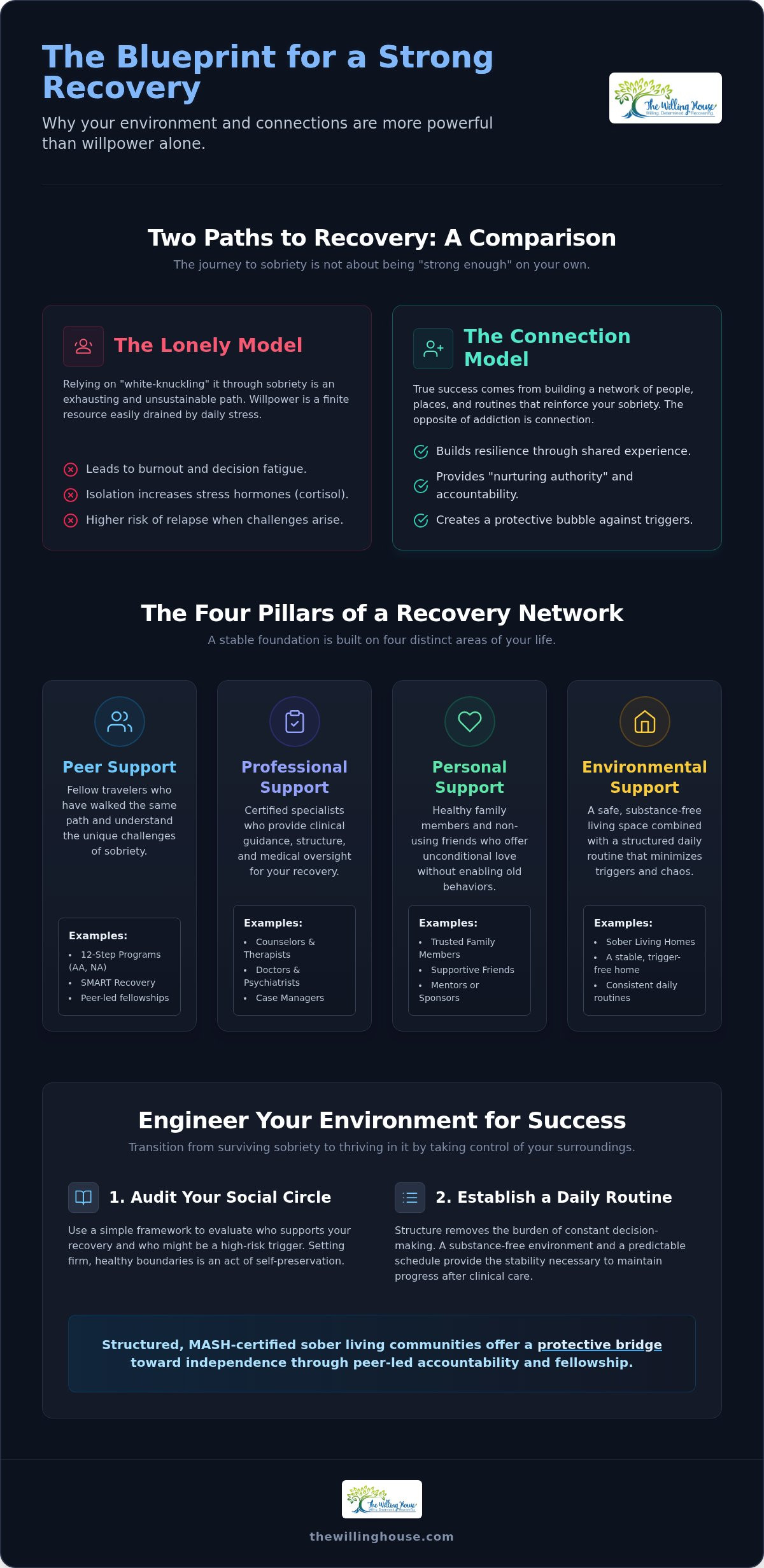
A recovery support system is much more than a list of emergency contacts. It's a deliberately built network of people, places, and routines that consistently reinforce your decision to stay sober. When we talk about building a support system in recovery, we're discussing the creation of a protective bubble that shields you from the chaos of early sobriety. For many, the greatest challenge isn't a lack of desire to change, but the crushing weight of isolation. There's a powerful understanding in the recovery community that the opposite of addiction isn't just sobriety; it's connection.
Many people enter this journey believing that willpower is the only tool they need. They think that if they're just "strong enough," they can resist any craving. However, willpower is a finite resource that's easily drained by a bad day at work or a stressful family interaction. Relying on grit alone often leads to a "white-knuckled" existence that's exhausting and unsustainable. True success comes through "nurturing authority," a balance where you're held to high standards of accountability by people who deeply care about your well-being and dignity.
The Science of Social Connection in Sobriety
Human beings are biologically wired for community. When you're isolated, your body often produces higher levels of stress hormones like cortisol, which are known to trigger intense cravings. Engaging with others in a safe environment helps regulate these chemicals, providing a natural sense of calm. This is where Peer Support in Recovery becomes essential. By observing others who are successfully managing their sobriety, your brain utilizes mirror neurons to learn and replicate healthy behaviors. Peer-led recovery is a non-clinical, community-based approach to growth that focuses on shared lived experience rather than medical intervention.
Moving Beyond "White-Knuckling" Your Sobriety
The "lonely" model of recovery is a recipe for burnout. Without a team, every single choice, from what to eat to who to call, becomes a potential tipping point. This leads to decision fatigue, where your brain eventually takes the path of least resistance because it's tired of fighting. Structure and community remove that burden. When you're part of a group, the routine is already established, allowing you to focus on your growth rather than just survival. The benefits of independent sober living include a built-in safety net that catches you before a small slip becomes a full relapse. It's about building a life that's easier to stay sober in, rather than just trying to survive a life that's working against you.
Identifying the Four Essential Pillars of Your Recovery Network
Successful long-term sobriety is rarely a solo achievement. It requires a stable foundation built on four distinct areas of your life. When you're building a support system in recovery, you must look beyond just having someone to call during a crisis. You need a comprehensive network that addresses your emotional, physical, and environmental needs. Understanding The Pillars of Your Addiction Recovery Support System helps you identify where your current network is strong and where it might need reinforcement.
When you begin this process, categorize your contacts and environments into these four pillars:
- Peer Support: Fellow travelers who have walked the same path and understand the unique challenges of maintaining sobriety.
- Professional Support: Certified counselors, doctors, and case managers who provide clinical guidance and oversight.
- Personal Support: Healthy family members and non-using friends who offer unconditional love without enabling old behaviors.
- Environmental Support: A safe, drug-free living space combined with a structured daily routine that minimizes triggers.
Finding Your Peer Fellowship in Worcester
Worcester offers a vibrant recovery community with diverse options for finding your tribe. You might find a home in traditional 12-step programs like AA or NA, which are widely available throughout the city. If you prefer a different approach, alternative fellowships like SMART Recovery focus on cognitive-behavioral tools. Local resources, such as the Central Massachusetts Intergroup, provide up-to-date meeting schedules to help you get started.
Peer accountability is often misunderstood. It isn't about "telling on someone" or acting as a monitor. Instead, it's a mutual agreement where you and your peers watch out for one another's safety. It's a shared commitment to the truth, ensuring that no one has to face a difficult day in silence. If you are looking for a community that prioritizes this level of connection, exploring a structured sober living program can provide the immediate fellowship you need.
The Role of Professional and Personal Boundaries
Vetting the people in your life is a difficult but necessary part of growth. Not everyone from your past can be part of your future support system. You must set firm boundaries with family members who may be well-meaning but unsupportive of your new lifestyle. Integrating clinical care with your daily life ensures that you have expert guidance while you practice new coping skills in the real world. MASH-certified housing acts as a bridge between professional care and independence, providing the "nurturing authority" required to stay on track.
Evaluating Your Current Circle: Who Stays and Who Goes?
One of the most challenging aspects of building a support system in recovery is the realization that your old social circle might not fit into your new life. It's a process of pruning. Just as a garden needs clearing to grow, your recovery requires space free from the "people, places, and things" that fueled your addiction. This isn't about being judgmental or unkind; it's about protecting your progress and prioritizing your well-being. It's time to be honest about who truly supports your growth and who represents a high-risk trigger.
A "Sober Support Audit" is a simple framework for vetting your contacts. Ask yourself: Does this person respect my boundaries? Do they use substances in my presence? Do I feel energized or drained after spending time with them? You may find that some individuals are "enablers." These are often well-meaning friends or family members who hurt your progress by shielding you from the consequences of your actions or minimizing the severity of your journey. Moving forward requires surrounding yourself with people who are genuinely proud of the life they're building. When your peers value their own dignity, they'll naturally respect yours.
Recognizing Triggers in Your Social Network
Triggers aren't always obvious. A major red flag is a friend who minimizes your recovery by saying things like, "It's just one drink," or "You weren't that bad." These comments are dangerous because they invite complacency. On the other hand, green flags include people who ask how they can support you and respect your boundaries without question. Protective social circles are groups that prioritize safety and fellowship over temporary fun. They provide a buffer against the world, making it easier to navigate stressful situations without feeling the need to escape.
Setting Firm Boundaries with Family and Friends
Scripting your conversations can reduce the anxiety of setting boundaries. You might say: "I value our relationship, but I can't be in environments where people are using right now. I hope you understand that I'm doing this to stay healthy." It's natural to feel guilt when distancing yourself from old friends, but remember that your primary responsibility is your own stability. Choosing a sober house Worcester Massachusetts provides a natural, physical boundary. It gives you a safe space where visitors are vetted and substances are prohibited, allowing you to focus on your routine without the constant pressure of outside influences.
How to Create an Environment That Supports Sobriety
Your physical surroundings act as a silent partner in your journey toward wellness. When you're building a support system in recovery, you must look closely at the space where you sleep, eat, and spend your downtime. An environment that lacks structure often invites chaos, making it difficult to maintain the mental clarity needed for long-term sobriety. Creating a safe haven requires a methodical approach to your living situation and daily habits.
To transform your environment into a foundation for growth, follow these practical steps:
- Step 1: Remove every trace of substances and paraphernalia from your immediate space. This includes items that may trigger memories of past use.
- Step 2: Establish a rigid daily routine. Set specific times for waking up, working, attending meetings, and resting to eliminate the idle time where cravings often surface.
- Step 3: Choose a living situation that mandates high levels of accountability. This should include regular, random drug testing and breathalyzers to ensure the safety of everyone in the home.
- Step 4: Engage in community chores and shared responsibilities. Contributing to the upkeep of your home builds a sense of ownership and mutual respect with your peers.
Why Your Living Situation is the Foundation of Recovery
Returning to the same house where you used is one of the most significant risks in early sobriety. Those walls hold memories and patterns that can trigger a relapse before you even realize it's happening. Choosing independent sober living allows you to start over with a clean slate in a new location. This physical distance from your past provides a psychological break, letting you focus on the person you are becoming rather than the person you used to be. It balances your need for freedom with the essential safety of a drug-free zone.
The Power of Structured Sober Living
Structure isn't about restriction; it's about protection. In a peer-led community, random drug screenings and breathalyzers serve to protect the integrity of the entire house. They provide a sense of security, knowing that everyone under the roof is committed to the same standard of honesty. House meetings further strengthen this bond by teaching you how to communicate your needs and resolve conflicts without turning to old habits. This level of oversight reduces the "white noise" of daily life, giving you the quiet confidence to focus entirely on your personal growth. If you're ready to find a home that prioritizes your safety and long-term success, consider the structured living program at The Willing House.
Building Your Future at The Willing House: A Community-First Approach
Choosing the right environment is the final, most decisive step in building a support system in recovery. At The Willing House, we provide more than just a place to stay; we offer a MASH-certified haven for men and women in Worcester who are ready to transition from clinical care to independent living. Our community is built on the belief that recovery shouldn't be a period of waiting, but a time of active construction. We focus on helping every resident build a life they're genuinely proud of, grounded in the dignity of work, the warmth of fellowship, and the security of a stable home.
When you join our community, you gain an instant support system. You're surrounded by peers who understand the weight of your journey because they're walking it alongside you. This peer-driven model ensures that accountability is a shared value rather than an outside pressure. You have the independence to maintain your job, attend outside treatment, and reconnect with family, all while staying anchored by the structure of a community that values your success as much as you do.
What MASH Certification Means for Your Safety
Choosing a sober home can feel overwhelming, but MASH certification provides a clear "gold standard" for safety and quality. The Massachusetts Alliance for Sober Housing sets rigorous standards that every certified home must meet. This oversight ensures that your living environment is not only drug-free but also professionally managed and ethically operated. For us, certification is a promise. It reflects our commitment to providing a space that prioritizes your safety, maintains high standards of cleanliness, and fosters an atmosphere of mutual respect. It's the difference between a simple rental and a dedicated recovery community.
Joining the Worcester Recovery Community
Worcester is a city with deep recovery roots, offering a wealth of resources, meetings, and sober activities that make it an ideal place to start over. Recovering here means you're part of a larger, vibrant network of people who value resilience and growth. You don't have to navigate the complexities of early sobriety in isolation. Whether you're looking for a fresh start or a protective bridge to your next chapter, we're here to help you lay the foundation. You don't have to do this alone; a life of purpose and connection is within your reach. Contact The Willing House today to learn more about our community and how we can support your long-term success.
Taking the Next Step Toward Lasting Independence
Recovery isn't a destination you reach alone; it's a life you build with the help of others. You've learned that connection is the strongest defense against relapse and that vetting your social circle is essential for your safety. By establishing firm boundaries and choosing an environment that prioritizes accountability, you create the space needed for genuine growth. Building a support system in recovery is about more than just finding friends; it's about surrounding yourself with a community that values your dignity and your future.
At The Willing House, we provide the MASH-certified foundation you need to thrive. Our peer-driven community in Worcester, MA, offers a safe and structured environment for both men and women to transition toward independent living. You don't have to navigate the challenges of early sobriety in isolation. We're here to offer the guidance and fellowship necessary to maintain your progress. Start building your support system at The Willing House—apply today. You've worked hard to get here, and you deserve a home that supports the person you're becoming.
Frequently Asked Questions
How do I start building a support system if I feel completely alone?
Start by reaching out to local Worcester resources like meeting groups or peer-led housing. You don't need a massive network right away; you just need one person who understands your journey. Building a support system in recovery often begins within a structured living environment where fellowship is a natural part of your day. These safe spaces provide an instant community of peers who are also focused on accountability, safety, and personal growth.
Can I keep my old friends if they promise not to use around me?
It's often necessary to take a break from old social circles, even if friends promise to stay sober around you. Triggers are frequently tied to people and places from your past, making it difficult to maintain focus. True friends will understand that your health comes first. Prioritize building new connections with people who are already living the life you want, ensuring your environment remains entirely safe and supportive.
What should I do if my family doesn’t believe in my recovery?
Rebuilding trust with family takes time and consistent action. If your relatives are skeptical, focus on your daily routine and your commitment to your peer-led community in Worcester. You can't control their beliefs, but you can control your own progress. Lean on your sober housemates and mentors for the encouragement your family may not be ready to give yet. Your sobriety must be for you, regardless of their current perspective.
How is a sober living community different from a halfway house?
Sober living communities, like The Willing House, provide a bridge to independent living with a focus on peer fellowship and domestic comfort. Unlike many halfway houses, which may feel institutional, MASH-certified homes in Worcester prioritize a home-like atmosphere. Residents have the independence to work and attend treatment while benefiting from structured living programs. This model balances personal freedom with the professional oversight and accountability needed to ensure everyone’s safety and long-term success.
Do I need a sponsor to have a successful support system?
A successful network requires accountability, but that doesn't always have to come from a formal sponsor. You might find this support through a peer mentor or the structured accountability found in a sober living program. The key is having a reliable person or group that understands the nuances of building a support system in recovery. What matters most is that you have a nurturing authority in your life to keep you grounded during stressful times.
What if I am an introvert and struggle with group settings?
Introverts often thrive in smaller, structured settings like a peer-led sober house. You don't have to attend massive rallies to find connection; simple, daily interactions during shared chores or house meetings can build strong bonds. Focus on quality over quantity in your relationships. By living in a community that values routine and tranquility, you can find support that feels protective and encouraging without being socially overwhelming or draining.
How long should I stay in a structured sober living environment?
Most residents stay in a structured environment until they feel fully confident in their ability to maintain their routine without daily oversight. This often takes several months of consistent work and community involvement in Worcester. There is no rush to leave a safe space that is working for you. Staying until you have a stable job and a solid external support network ensures that your transition to independent living is successful and permanent.
What are the red flags to look for when joining a recovery group?
Avoid groups that lack clear structure or fail to prioritize resident safety and dignity. Red flags include a lack of random drug testing, poor maintenance of the living space, or a community that feels cliquey and exclusionary. In Worcester, the most reliable way to vet a home is to check for MASH certification. This ensures the environment meets rigorous standards for professional oversight, providing you with the security and peace of mind you deserve.


