

What if the very structure you fear will limit your freedom is actually the foundation that finally sets you free? It's common to feel a deep sense of anxiety when moving away from the constant oversight of clinical treatment. You likely want your independence back, yet the thought of facing daily triggers without a safety net feels overwhelming. You aren't alone in feeling torn between the desire for autonomy and the fear of a sudden relapse.
In this guide, you will discover how a structured sober living accountability program bridges the vital gap between intensive care and total independence. We will show you how this model provides the protective architecture necessary for long-term recovery without the cold, clinical feel of a hospital. We'll explore the importance of MASH-certified standards, the power of meaningful peer connections, and how a steady routine creates the tranquility you need to thrive. By the end, you'll understand how a supportive living environment offers a clear, disciplined path toward a life of lasting dignity and self-reliance.
Key Takeaways
- Learn how a sober living accountability program helps you transition from the "enforced" sobriety of clinical treatment to a lifestyle of "chosen" sobriety.
- Understand why MASH certification serves as a vital mark of safety and quality, ensuring your home adheres to high standards of oversight and peer support.
- Discover the way structure and independence coexist, giving you the freedom to work and rebuild family ties while maintaining a firm safety net.
- Identify the "red flag" behaviors that often precede a relapse and see how a community of peers provides the early intervention needed for success.
- Explore how daily protocols and a steady routine foster the habit-building required to navigate the challenges of the real world with confidence.
What is a Sober Living Accountability Program?
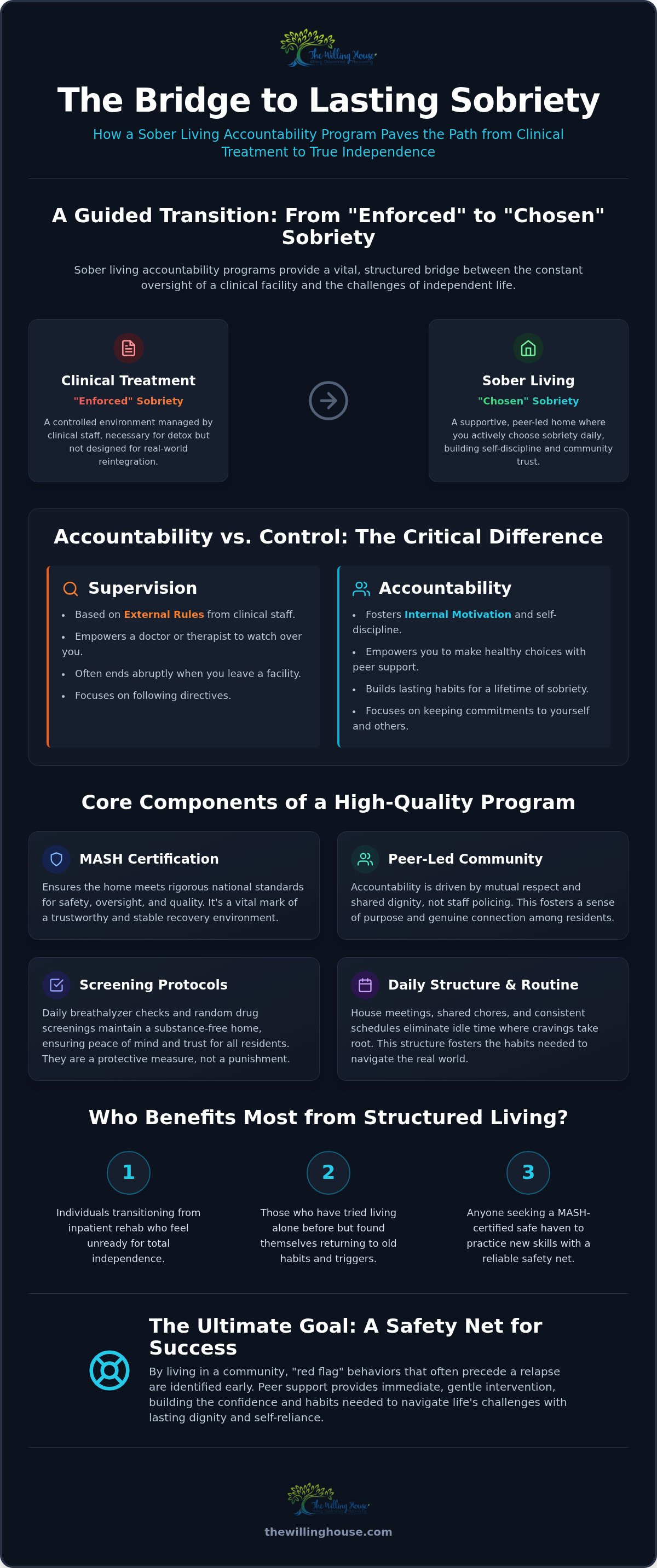
A sober living accountability program is a structured residential environment designed to help you maintain your recovery while you begin the process of reintegrating into daily life. It's more than just a place to stay; it's a framework for living that emphasizes personal responsibility and mutual respect. Sober living houses (SLHs) serve as a vital bridge between the high level of care found in rehab and the total independence of living on your own. The core philosophy here is a gentle but firm shift from "enforced" sobriety, where your environment is controlled by clinical staff, to "chosen" sobriety, where you make the daily decision to stay clean alongside others who share your goals.
Structure is often the most effective tool you have against the triggers that appear in early recovery. When you have a routine that includes house meetings, shared chores, and regular drug screenings, you eliminate the idle time and isolation where cravings often take root. This environment fosters a supportive community where every resident is held to a high standard. You aren't just living with roommates; you're living with a peer group that values your dignity and success as much as their own. In a sober living accountability program, the focus is on building a life that you don't want to escape from.
The Difference Between Accountability and Supervision
Clinical supervision usually ends when you leave a medical facility. While that oversight is necessary for detox, it doesn't always teach you how to handle the stresses of a job or family life. Accountability is different because it empowers you to make healthy choices independently. Instead of a doctor watching your every move, your peers and house leads encourage you to keep your commitments. This shift from external rules to internal motivation is what creates lasting change. It's the difference between following a directive and developing the self-discipline needed for a lifetime of sobriety.
Who Benefits Most from Structured Living?
This model is ideal for individuals transitioning from inpatient rehab who feel unready for the silence and potential loneliness of an empty apartment. If you've tried "living alone" before and found yourself returning to old habits, a structured environment can provide the missing piece of the puzzle. For those seeking MASH certified sober living in Central MA, these programs offer a safe haven to practice new skills. It's for the person who wants their independence but understands that a reliable safety net is the best way to ensure they never have to start over again.
Core Components of Accountability in Massachusetts Sober Housing
In Massachusetts, the safety of a recovery environment is often measured by its MASH (Massachusetts Alliance for Sober Housing) certification. This isn't just a label; it's a commitment to rigorous national standards that prioritize your well-being. While some homes rely solely on digital apps or journals, a true sober living accountability program uses physical safety protocols to ensure the integrity of the home. This certification ensures that the residence is managed with high standards of oversight, providing a stable foundation where you can focus on personal growth without the distraction of safety concerns.
Accountability in this setting is peer-led rather than staff-policed. When you see your housemates following the same rhythm, it creates a shared sense of purpose. This peer-driven model encourages you to uphold house standards because you care about the community, not because you fear a clinical authority figure. It's about mutual aid and shared dignity. Living in a drug-free environment allows for a return of mental clarity, giving you the space to identify your goals and address the underlying behaviors that led to substance use in the first place.
Drug and Alcohol Screening Protocols
Maintaining a substance-free home is essential for everyone's success. We use daily breathalyzer protocols to establish a consistent rhythm of safety and trust. Random drug screenings are also used, not as a form of punishment, but as a protective measure for the entire household. These tools give residents peace of mind, knowing that everyone in the home is equally committed to their sobriety. It removes the guesswork and allows you to build genuine connections with those around you, knowing the environment remains secure.
House Rules and Shared Responsibilities
Routine is the backbone of lasting recovery. Curfews are implemented to help you establish healthy sleep hygiene, which is often disrupted during active addiction. The house manager plays a vital role in this process, acting as a supportive guide who ensures these standards are met while offering peer-level encouragement. Daily chores and weekly house meetings foster a sense of ownership over your living space. During these meetings, you'll participate in peer goal-setting, helping you stay focused on your path toward independence. If you're ready to find a place that balances this structure with a home-like feel, joining a certified community might be your next best step.
Accountability vs. Control: Finding the Balance in Independent Living
Many people confuse accountability with control. In a clinical setting, your choices are often limited for your own safety. However, a sober living accountability program operates on a different premise. It's designed to be a training ground for real-world independence. Instead of locked doors, we provide a "nurturing authority" model. This approach combines firm, non-negotiable boundaries with deep empathy. It's about creating a protective container where you can safely practice making your own decisions without the fear of falling through the cracks.
One of the most rewarding benefits of independent sober living is the steady growth of self-esteem. When you manage your own schedule and meet house expectations, you begin to trust yourself again. You aren't being policed; you're being supported as you step back into your roles as a professional, a parent, or a friend. This balance ensures that you don't feel stifled, but you also don't feel abandoned. It's a shared journey where the structure exists to serve your growth, not to limit your potential.
Working and Attending Treatment While in Sober Living
Recovery doesn't happen in a vacuum. You need the freedom to maintain a job, attend school, or participate in outpatient treatment programs. A structured environment provides the flexibility to pursue these goals while keeping your recovery as the priority. Within a sober living accountability program, we support your professional reintegration. We offer a stable home base where you can process the stresses of a workday without turning to old coping mechanisms. You learn to balance a busy external schedule with the internal work of staying sober, all within a community that understands the pressure you face.
Building Life Skills Through Structure
True independence requires more than just staying clean. It requires the ability to manage the practicalities of life. Structure helps you develop these essential skills through daily practice. Financial accountability, such as managing weekly fees and personal expenses, helps rebuild a sense of fiscal responsibility. Social accountability is equally vital. Living with peers means learning how to resolve conflicts and communicate needs effectively. Finally, time management through a consistent routine of house meetings and chores creates a predictable rhythm that reduces daily stress. By focusing on these areas, you aren't just following rules. You're building the muscle memory for a successful, independent life.
How Accountability Programs Prevent Relapse and Build Success
The process of healing the brain from substance use depends heavily on the science of habit formation. When you join a sober living accountability program, you're placing yourself in an environment where healthy routines become second nature. This isn't just about following rules; it's about rewiring your mind to find stability in a predictable, drug-free rhythm. Within this space, it becomes much easier to identify and address "red flag" behaviors before they ever lead to a relapse. Subtle shifts, such as skipping house meetings, becoming dishonest about small things, or isolating in your room, are quickly noticed by those who know you best. This early intervention is the safety net that prevents a temporary struggle from becoming a full setback.
There is a deep sense of psychological safety that comes from knowing every person in your home is on the same path. You don't have to explain your triggers or defend your boundaries because your housemates already understand them. This shared experience creates a protective atmosphere that allows you to focus on your personal growth. Peer support acts as a mirror, showing you your strengths when you're feeling low and gently reflecting back the areas where you need to do more work.
The Role of Peer Fellowship
Recovery is rarely a solo journey. The power of the group often provides the strength that an individual cannot find alone. In our community, peer fellowship serves as a constant deterrent to isolation, which is one of the most dangerous states for someone in early recovery. By developing a local Worcester recovery network, you're surrounding yourself with people who can offer practical help and emotional support at a moment's notice. These connections turn a house into a home and a group of residents into a family.
Measuring Progress in Early Recovery
We believe in the power of micro-goals to rebuild self-worth. Whether it's maintaining a job for a month or consistently contributing to house chores, these small achievements add up to significant change. Celebrating sobriety anniversaries and milestones isn't just a formality; it's a way to acknowledge the hard work you're putting into your new life. Recovery capital is the accumulation of internal and external resources that provide the necessary foundation for long-term sobriety. Every day you spend in a structured environment, you're investing in this capital. If you're looking for a community that prioritizes your safety and success, contact us to learn more about our structured living programs.
Choosing the Right Structured Environment in Worcester: The Willing House
Selecting a sober living accountability program is one of the most important decisions you'll make in your early recovery journey. It's the difference between finding a place that simply provides a bed and joining a community that provides a foundation for a new life. At The Willing House, we believe that MASH certified sober living in Central MA is the safest choice for those who prioritize quality and oversight. This certification means we've met rigorous national standards for drug screening, house management, and environmental safety. When you tour a potential home, look for signs of a thriving community. The space should feel clean and dignified, and you should see a clear presence from the house manager who maintains the standards of the home.
Our approach centers on three pillars: community, safety, and growth. We don't just offer housing; we offer a Structured Living Program that helps you rebuild your life with the support of peers who truly understand your journey. By fostering an atmosphere of mutual aid and shared responsibility, we ensure that you have the protective architecture needed to thrive. A healthy home should feel tranquil yet disciplined, providing a sense of hope from the moment you walk through the door.
A Home-Like Atmosphere in Worcester
The physical environment plays a massive role in your mental well-being during transition. We take pride in maintaining a safe, clean, and dignified living space because we believe your surroundings should reflect the respect you have for your own recovery. Choosing a sober house Worcester Massachusetts location offers unique strategic advantages. You're positioned in the heart of a vibrant recovery community with easy access to local support groups, employment opportunities, and public transportation. This proximity allows you to build a local network that will sustain you long after you move toward total independence.
Next Steps: Joining The Willing House Community
Starting the application process is a straightforward but thorough journey designed to ensure your success. It begins with an initial screening where we get to know your story and ensure our sober living accountability program is the right fit for your recovery goals. During intake, you'll learn about our house protocols and meet the peers who will be walking alongside you. The first 30 days are a vital transition period where you'll focus on settling into the house rhythm and establishing your recovery routine. We're here to guide you through every step of this transition, providing the nurturing authority you need to feel secure. If you're ready to take the next step, contact us today for a private consultation.
Building a Foundation for Your Future Independence
Transitioning from a clinical environment to the real world is a significant step that requires more than just willpower. It requires a supportive architecture where safety and personal growth go hand in hand. A sober living accountability program provides this vital structure, ensuring that your journey toward independence is never a solitary one. By choosing a community that values MASH Certified Excellence and peer-driven accountability, you're investing in a future where sobriety is a daily, sustainable choice rather than a constant struggle.
You've already shown incredible strength by beginning this journey. Now, you can lean into a safe Worcester community that understands your path and honors your dignity. This environment allows you to practice real-world skills while maintaining the protective boundaries needed for lasting success. If you're ready to move forward with confidence, we're here to walk beside you every step of the way. You don't have to navigate this transition alone when a dedicated fellowship is ready to welcome you home.
Find Your Path to Lasting Recovery at The Willing House. Your new life is waiting, and it starts with the right foundation.
Frequently Asked Questions
What is the main difference between sober living and a halfway house?
The primary difference lies in the level of clinical oversight and the funding source. Halfway houses are often state-funded and linked to the correctional system, providing more intensive, government-monitored supervision. In contrast, a sober living accountability program is a peer-led residential community. These homes focus on long-term success through shared responsibility and personal growth, offering a home-like atmosphere while you maintain your career and family life.
Do I have to be in a treatment program to live in an accountability-based sober house?
While you don't necessarily have to be in an inpatient facility, many residents are concurrently enrolled in outpatient treatment. Living in a structured sober home works best when you have a comprehensive recovery plan in place. This combination of external clinical support and internal house accountability creates a strong safety net. It allows you to practice the skills you learn in therapy while living in a supportive, drug-free environment.
What happens if someone in the house relapses?
Safety and the integrity of the recovery environment are the top priorities. If a relapse occurs, the individual is usually required to leave the home immediately to protect the sobriety of the other residents. However, this is handled with empathy and dignity. We work to ensure the person is referred to a higher level of care, such as detox or inpatient rehab, so they can safely restart their journey without compromising the community.
How much independence will I have to go to work or see my family?
You'll have a high degree of independence to pursue your professional and personal goals. Our residents are encouraged to maintain employment, attend school, and reconnect with their loved ones. While there are curfews and house meetings to attend, the program is designed to support your reintegration into society. This balance helps you build a stable life in Worcester while staying grounded in your daily recovery commitments.
Is MASH certification required for sober houses in Massachusetts?
MASH certification is voluntary, but it's a vital indicator of a home's commitment to safety and ethical standards. State agencies and reputable providers typically refer individuals to MASH-certified homes because they adhere to national quality standards. Choosing a certified sober living accountability program ensures that the residence follows strict drug screening protocols and maintains a resident-to-bathroom ratio that promotes a healthy, dignified, and professional living environment.
How long do people typically stay in a sober living accountability program?
There's no set time limit, as recovery is a deeply personal process. Most residents find that staying between six months and one year provides the stable foundation needed for long-term success. This duration allows enough time to build new habits, secure steady employment, and establish a local support network in Worcester. We encourage you to stay as long as you need to feel fully confident in your independence.
Are there separate houses for men and women at The Willing House?
Yes, we provide gender-specific housing to ensure a safe and focused environment for all our residents. Having separate houses allows for more targeted peer support and a deeper sense of comfort within the community. Whether you're in a men's or women's home, you'll find the same high standards of accountability and the same welcoming, home-like atmosphere that defines our approach to recovery in the Worcester area.
Can I bring my own car to a sober living house in Worcester?
Yes, residents are generally allowed to have their own vehicles. Having a car can be a significant asset for maintaining employment and attending meetings across the Worcester area. We do ask that vehicles are properly registered and insured. This privilege comes with the responsibility of following house parking rules and ensuring that your independence doesn't interfere with the collective safety and steady rhythm of the sober living community.


