

What if the most heartfelt apology you've ever given isn't the key to opening your family's front door again? It's a painful reality that many in recovery face; you've changed, but the people who love you most are still waiting for the other shoe to drop. The feeling of being constantly watched or "policed" creates a cycle of shame and isolation that can make you wonder if things will ever go back to normal. Learning how to regain trust from family after addiction is less about the things you say and more about the verifiable patterns you establish every single day.
You likely want nothing more than to join the holiday celebrations or move back home without the heavy cloud of suspicion hanging over every interaction. We understand that this journey requires a balance of patience and rigorous honesty. In this guide, you'll learn the practical, accountability-based steps to mend broken relationships and prove your commitment to long-term recovery. We'll explore how to create a foundation of safety through structured living and clear communication. This helps you provide the visible accountability your loved ones need to feel secure while you rebuild your life.
Key Takeaways
- Understand the concept of "trust bankruptcy" and why consistent actions must replace verbal promises to ease your family's hyper-vigilance.
- Discover a practical framework for how to regain trust from family after addiction by focusing on radical transparency and verifiable daily routines.
- Learn why structured sober living serves as a vital safety buffer that provides your loved ones with peace of mind during your transition.
- Implement a "no-surprises" communication policy and a 12-step approach to making sincere amends that prioritize the needs of your family.
- Explore how MASH-certified housing in Worcester provides the professional oversight and peer support necessary to demonstrate your long-term commitment.
Acknowledging the Impact: Why Trust is Fragile After Addiction
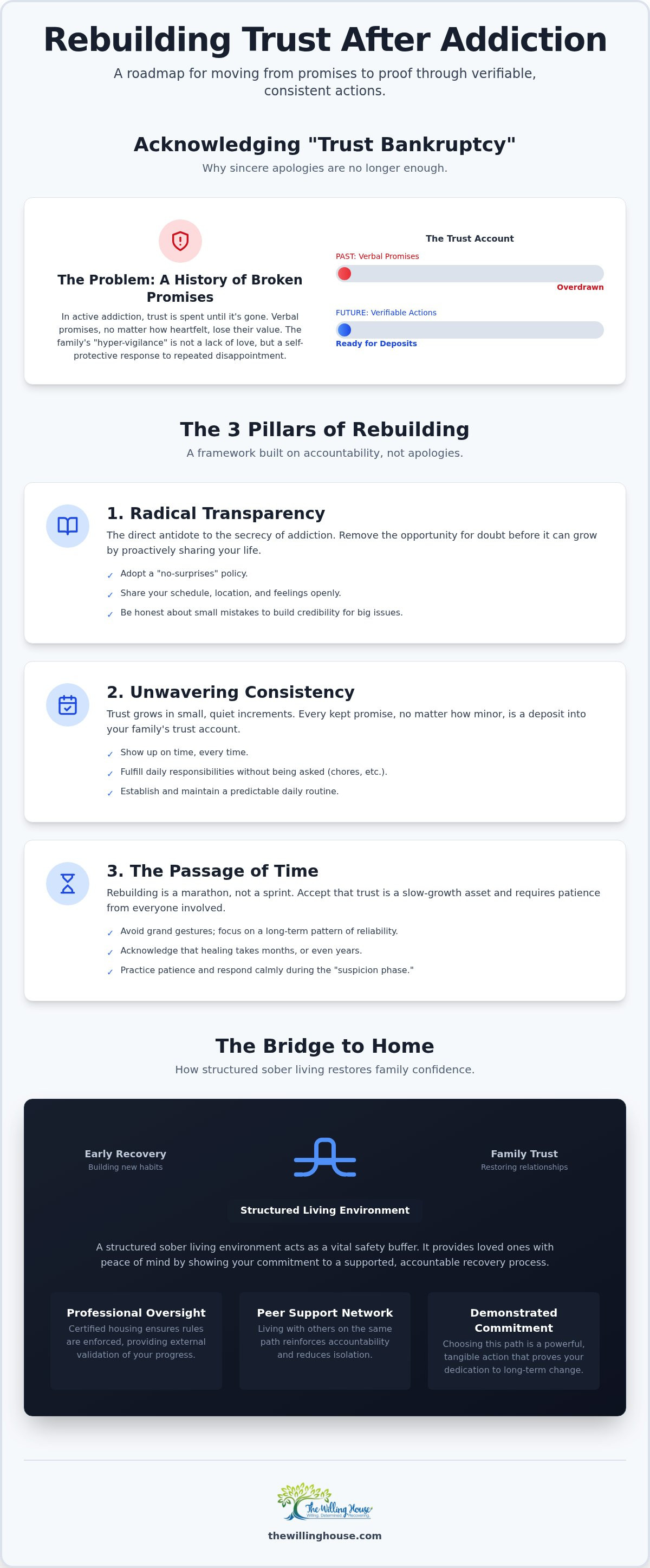
Trust isn't just a feeling; it's a form of currency. When you're in active addiction, you often spend that currency until you reach what we call "Trust Bankruptcy." This is the point where your words, no matter how sincere they feel to you, no longer have value to the people around you. Understanding how to regain trust from family after addiction starts with accepting that your verbal promises are currently overdrawn. Your loved ones aren't being "mean" or "controlling" when they doubt you; they're simply responding to a long history of broken expectations.
From the family's perspective, they've spent months or years in a state of hyper-vigilance. They've learned to look for the subtle signs of a relapse, like a specific tone of voice or a late arrival home. This "waiting for the other shoe to drop" is a survival mechanism. It's their way of protecting their own hearts from another round of disappointment. Validating this skepticism is a crucial first step. When you recognize that their doubt is born of past pain rather than a lack of love, it becomes easier to respond with patience instead of defensiveness. You must move from seeking emotional repair to providing behavioral evidence.
The Psychology of Betrayal in the Family Unit
Addiction creates a devastating cycle of hope and heartbreak for parents and siblings. Every time you promised to get clean, they allowed themselves to hope, only to have that hope shattered. This repeated trauma often leads to complex dynamics, including the need for understanding codependency and how it shapes family interactions. Trust is a slow-growth asset. It doesn't return in a single grand gesture. Instead, it grows in small, quiet increments. It's built through months of showing up when you say you will and doing exactly what you promised, even when it feels like no one is noticing.
Accepting the 'Suspicion Phase' Without Resentment
The "suspicion phase" is one of the hardest parts of early recovery. You might feel like you're being policed. Your parents might check your eyes or ask for a detailed itinerary of your day. While this feels intrusive, it's a natural consequence of the past. Shifting your mindset is key here. Instead of seeing their questions as an attack, view them as an opportunity to provide behavioral evidence of your growth. Staying calm when you're questioned proves that you're no longer hiding anything. It shows that you value their peace of mind more than your own ego. This patience is a powerful tool for anyone learning how to regain trust from family after addiction.
The Pillars of Rebuilding: Moving from Promises to Accountability
Rebuilding a life after addiction is a marathon that requires more than just staying sober. It demands a complete overhaul of how you interact with the people you've hurt. While apologies are a starting point, they don't carry much weight when trust is low. Instead, you need a framework built on radical transparency, unwavering consistency, and the passage of time. Learning how to regain trust from family after addiction means accepting that you're starting from a deficit. You aren't just proving you're sober today; you're proving that you're a person who can be relied upon for the long haul.
Consistency starts with the small things that seem insignificant but speak volumes to a skeptical family. Doing the dishes without being asked, waking up at a set time every morning, and communicating your plans clearly are all "deposits" into your trust account. These daily habits show that you're respecting the household and your own recovery. Honesty also plays a vital role here. If you make a small mistake, like forgetting a chore or being five minutes late, own up to it immediately. By being honest about the small things, you build the credibility needed for your family to believe you when you talk about the big things.
Radical Transparency in Daily Life
Radical transparency means removing the opportunity for doubt before it even arises. It involves sharing your schedule, your location, and even your "bad days" with your family without them having to pry. If you feel a trigger or had a difficult meeting, talk about it. This openness prevents the secret-keeping that often precedes a relapse. Radical transparency acts as the direct antidote to the secrecy and isolation that defined active addiction. By keeping your life an open book, you lower the anxiety levels of those around you, allowing them to relax their guard over time.
Setting and Respecting Healthy Boundaries
Reconciliation is a two-way street, and your family has every right to set the pace. They might not be ready for you to attend every holiday or move back into your old room immediately. Respecting their "No" without pushback is a profound way to show growth. You can find excellent guidance on navigating these dynamics through SAMHSA's family resources, which help both you and your loved ones understand the healing process. When you show up exactly when you said you would and honor their requests for space, you demonstrate that you value their comfort as much as your own recovery. Sometimes, proving this commitment is easier in a structured sober living environment where you can practice these skills daily before fully reintegrating into the family home.
The Bridge to Home: How Structured Environments Restore Confidence
Transitioning directly from a clinical treatment facility to the family home often feels like jumping into the deep end of a pool before you've learned to swim. For your loved ones, this sudden return can be equally overwhelming. They want to believe in your progress, but the familiar setting of the family house is often filled with old triggers and painful memories. This is why a structured environment acts as a vital "safety buffer." It provides a neutral ground where you can demonstrate growth without the immediate emotional pressure of domestic life. Understanding how to regain trust from family after addiction often involves choosing a path that offers third-party peace of mind.
Exploring the benefits of independent sober living reveals how a structured home base allows you to rebuild your life while providing your family with verifiable proof of your sobriety. Instead of your parents or spouse having to "police" your behavior, a professional residence handles the oversight. House protocols, such as daily breathalyzers and random drug screenings, serve as objective evidence of your commitment. When your family knows that you're thriving in a community that values routine, their anxiety naturally begins to subside.
MASH Certification: A Badge of Trust for Families
In Massachusetts, the gold standard for recovery residences is certification by the Massachusetts Alliance for Sober Housing (MASH). For a home to be MASH-certified as a Level II residence in 2026, it must adhere to a strict code of ethics and maintain clear, written policies regarding fees and relapse. This certification is a powerful signal to your family that you're in a safe, professional environment. It removes the burden of monitoring from your siblings or parents. They can stop being your "wardens" and start being your family again. This shift is essential because it allows your relationships to heal through positive connection rather than constant suspicion.
Sober Living as a 'Trial Run' for Independence
Living in a community like those found in Worcester allows you to practice real-world skills while maintaining a secure home base. You can hold a job, attend meetings, and manage a social life while your family watches from a healthy distance. This "trial run" period is invaluable. It shows your loved ones that you can handle the responsibilities of daily life without returning to old habits. Many residents find that providing regular updates on their house chores or peer support activities helps reassure distant family members. You're moving from the intensive care of a clinical setting toward a life of independence, proving your reliability one day at a time.
Practical Steps: A Daily Roadmap for Mending Relationships
Learning how to regain trust from family after addiction requires a shift from words to work. While you may feel a deep urge to explain yourself, your family is likely exhausted by explanations. They need a roadmap of specific, repeatable actions that demonstrate your change. This process starts with a structured daily routine and ends with a long-term commitment to personal growth that exists independently of their immediate approval. By following a clear sequence of steps, you can slowly replace their anxiety with a sense of security.
Mastering the Art of the Living Amends
In many recovery circles, there's a vital distinction between an apology and an amends. An apology says, "I'm sorry for what I did," while an amends asks, "How can I make this right?" and then follows through with behavioral change. If your addiction caused financial strain, an amends involves a consistent repayment plan. If it caused emotional chaos, it involves being a steady, calming presence. A living amends is a daily commitment to a new way of life that proves your transformation through action rather than just words. It's about showing up for the small moments so you can eventually be trusted with the big ones.
To support this new way of living, you must establish a "no-surprises" communication policy. This means proactively letting family know where you are and when you'll be home. If your meeting runs late or your work schedule shifts, send a text before they have to ask. Combined with a rigid routine of work, support meetings, and household responsibilities, this transparency removes the mystery that often fuels family suspicion. You should also provide objective proof of your sobriety through regular screenings. Voluntarily sharing these results isn't about being "policed"; it's about offering your loved ones the data they need to sleep better at night.
Leveraging Peer Support for Family Success
One of the biggest fears families have is the "lone wolf" mentality. They worry that if you're left to your own devices, you'll return to old patterns. You can ease this fear by actively engaging with a sober community and letting your family see that engagement. Use your peers to vet your decisions before you act on them. When your family knows you have a network of people holding you accountable, the pressure on them to be your sole monitors begins to lift. You can even invite them into your world by attending open meetings or recovery-focused events together, showing them that your life is now built on a foundation of mutual aid.
Finally, you must focus on your own growth even when the reconciliation process feels slow. There will be days when you do everything right and your family is still skeptical. During these times, lean on your structure and your peers. If you're ready to start this journey in a community that values these standards, contact The Willing House today to learn more about our structured living programs. Long-term healing is possible when you prioritize your recovery as a stable foundation for everyone involved.
Finding Support in Worcester: The Willing House Approach
Rebuilding a life and a reputation is a heavy task to carry alone. While the internal work of recovery belongs to you, the environment where you live can either hinder or accelerate your progress. The Willing House provides a community designed specifically for growth, reconnection, and the restoration of personal dignity. Finding a sober house Worcester Massachusetts location that prioritizes both individual independence and collective accountability is a turning point for many families. Our homes act as a stable foundation, allowing you to focus on your daily actions while we provide the structure that gives your loved ones peace of mind.
When exploring how to regain trust from family after addiction, it's vital to have a third-party partner that maintains the high standards your recovery deserves. Our structured living programs in Central Massachusetts are built on the belief that accountability is a form of love. By removing the "policing" role from your family members and placing it into a professional, peer-supported framework, we allow your domestic relationships to heal naturally. You get to be a son, daughter, or spouse again, while we handle the rigorous oversight that early recovery requires.
Accountability You Can Count On
Our commitment to safety is reflected in our daily protocols. We utilize daily breathalyzers and random drug screenings to ensure a secure environment for every resident. This isn't about punishment; it's about providing you with the "receipts" of your sobriety. When your family knows you're in a MASH-certified home with 24/7 accountability, their hyper-vigilance begins to fade. We balance this structure with a focus on peer fellowship, where men and women in recovery support one another through shared experiences. This community prevents the isolation that often leads to relapse, replacing it with a sense of belonging and mutual aid.
Start Rebuilding Today
The path to a restored home life begins with a single, courageous step toward a new environment. Joining a MASH-certified community in Worcester means choosing a life of transparency and purpose. Our admissions process is designed to be straightforward and supportive, ensuring you feel welcomed from the moment you call. We encourage potential residents and their families to tour our properties and meet the community members who make The Willing House a home. To learn more about our current availability or to discuss our program requirements, contact our intake line at (774) 239-7819. Trust is possible, and with the right foundation, you can build a life that you and your family are truly proud of.
Rebuilding Your Future One Action at a Time
Healing a fractured family dynamic requires moving beyond the "trust bankruptcy" of the past and into a life defined by visible accountability. You've learned that apologies are only the beginning; the real work lies in the daily consistency of your actions and the willingness to respect healthy boundaries. By choosing a path that prioritizes radical transparency, you provide your loved ones with the security they need to eventually lower their guard. Learning how to regain trust from family after addiction is a marathon of small, honest moments that eventually form a new foundation of reliability.
A safe, structured environment in Worcester can serve as the essential bridge between clinical care and independent living. Through M.A.S.H. Certified sober housing and peer-led accountability, you can prove your commitment to recovery in a way that is verifiable and steady. This transition allows you to grow with dignity while your family finds peace of mind through professional oversight and community support. Start your journey to a life you and your family are proud of; explore The Willing House today. Healing takes time, but with the right structure and a supportive fellowship, a restored home life is within your reach.
Common Questions About Rebuilding Family Trust
How long does it take to regain trust from family after addiction?
Regaining trust is a long-term process that often takes months or even years of consistent, verifiable change. There isn't a specific calendar date when trust suddenly returns. Instead, it's built through daily deposits into your trust account. Learning how to regain trust from family after addiction requires you to accept that your words have lost value; your focus must remain entirely on your actions and your commitment to a structured lifestyle.
What should I do if my family refuses to talk to me in early recovery?
If your family isn't ready to communicate, the best thing you can do is respect their boundaries without pushback. Use this time to focus intensely on your own recovery and personal growth. By showing that you can stay sober and responsible even without their immediate approval, you're providing the behavioral evidence they need. Over time, your consistent living amends may open the door for a healthy reconnection when they feel secure enough to reach out.
How can a sober living house help my family trust me again?
A sober living house provides your family with third-party peace of mind by handling the oversight they previously felt forced to provide. When you live in a structured environment with daily breathalyzers and random drug screenings, your family no longer has to play the role of policeman. This professional accountability allows your relationship to shift back toward emotional connection rather than constant suspicion, which is a vital step in how to regain trust from family after addiction.
Is it better to live at home or in a sober house after rehab?
While the desire to return home is natural, a sober house in Worcester often provides a much-needed safety buffer for everyone involved. Returning home too early can trigger old patterns and overwhelm family members who are still healing. A structured sober living environment allows you to practice real-world skills and maintain a job while staying in a safe, peer-supported community. This gradual transition often leads to more successful and permanent family reconciliations.
What are 'living amends' and how do they work?
Living amends are a daily commitment to a new way of life that addresses the specific harms caused by your past actions. Unlike a verbal apology, which is a one-time event, a living amends is an ongoing practice of reliability and honesty. It means showing up for responsibilities, contributing to the household, and maintaining sobriety day after day. It's the most powerful way to prove that your transformation is genuine and lasting for those who love you.
How do I handle family members who keep bringing up my past mistakes?
It's natural for family members to reference the past when they're still feeling the pain of previous betrayals. When this happens, acknowledge their feelings without becoming defensive or bringing up their mistakes. You might say, "I understand why that still hurts you, and I'm working hard to make sure it doesn't happen again." By staying focused on your present growth and maintaining your routine, you slowly replace those old memories with new, positive experiences.
What is MASH certification and why does it matter to my parents?
MASH certification stands for the Massachusetts Alliance for Sober Housing, which ensures a residence meets high standards for safety, ethics, and accountability. For parents, this certification is a badge of trust because it means the home follows a rigorous code of conduct and has professional oversight. Knowing their loved one is in a MASH-certified Level II residence in Worcester gives parents the security of knowing there are clear rules and peer-led support in place.
How can I prove I'm sober without being defensive?
The best way to prove your sobriety without defensiveness is to practice radical transparency. Volunteer information about your schedule, your meetings, and your daily activities before your family has to ask. If you're living in a structured program, share your drug screening results or house updates willingly. When you make your life an open book, you remove the secrecy that once defined your addiction, which naturally lowers the anxiety and suspicion of your loved ones.


