

What if the most expensive part of your recovery isn't the monthly rent, but the devastating cost of a relapse caused by an unstable living environment? For many, the transition from a clinical setting back into the real world feels like hitting a financial wall. You've likely felt the sting of sticker shock when looking at monthly fees, especially since health insurance typically won't cover housing costs. It's frustrating to realize that while you are ready for the next step, your bank account might not feel the same way. Understanding how to pay for sober living in Massachusetts is the first step toward securing your foundation without the constant weight of financial anxiety.
We know that finding a safe, structured home is a necessity, not a luxury. You deserve a place that values your dignity while keeping you accountable to your goals. This guide provides practical ways to fund your journey, from state-level resources like the RAFT program to private scholarships from organizations like Power Forward and Rise Again. We will also explore why choosing a MASH-certified home in Worcester offers a unique balance of affordability and high-standard peer support. You'll gain a clear understanding of your payment options and the vital difference between state-funded halfway houses and private-pay sober living environments.
Key Takeaways
- Understand the distinction between clinical insurance coverage for outpatient services and the private-pay nature of room and board in recovery housing.
- Learn the practical steps on how to pay for sober living in Massachusetts by exploring state-funded vouchers and scholarship opportunities reserved for MASH-certified homes.
- Discover how to leverage the robust Worcester job market to build financial independence and fund your own stay in a structured, supportive environment.
- Identify why MASH certification is a vital protection for your financial investment, ensuring the home meets rigorous safety and accountability standards.
- Explore how to utilize family support through "Recovery Contracts" that establish clear financial boundaries and foster mutual trust during your transition.
Navigating the Transition: Recovery Housing After Detox in Massachusetts
The days following inpatient detoxification are some of the most critical in a person's life. While detox clears the body of substances, it doesn't automatically rewire the habits or the environment that led to substance use in the first place. This is why recovery housing after detox in Massachusetts is often described as the "missing link" for long-term success. It serves as a vital bridge between the sterile, clinical world of a hospital and the unpredictable nature of daily life. Without this middle ground, the sudden return to old surroundings can feel overwhelming, making the risk of a setback much higher.
The "Next Step" Reality After Inpatient Care
Returning home too early is a common mistake that often leads to expensive clinical re-admissions. When you leave a facility, you might feel strong, but the old triggers at home haven't changed. Focusing on maintaining sobriety after treatment within a residential community allows you to practice new coping skills in real-time. You move from a clinical mindset to a community-based recovery mindset. In this setting, peer support and daily routines replace medical monitors. Many individuals find that learning how to pay for sober living in Massachusetts is a small price to pay for the security of a structured environment that prevents the revolving door of hospital stays.
Why Sober Living Fees Differ from Rehab Costs
It's helpful to understand that Sober living houses are not medical facilities. You aren't paying for doctors, nurses, or clinical procedures. Instead, you are investing in a safe environment that provides structure, utilities, and constant accountability through peer fellowship. This distinction is the main reason insurance providers often cover the high costs of clinical rehab but decline to cover the "room and board" for residential housing.
When families begin researching how to pay for sober living in Massachusetts, they often experience a bit of shock at the out-of-pocket costs. However, these fees should be viewed as "rent with a safety net." By paying for a structured environment, you are actively reducing the long-term financial burden of potential relapses. A single emergency room visit or a return to detox can cost significantly more than several months of stable, supportive housing. Choosing a MASH-certified home ensures that your investment goes toward a facility that meets rigorous safety and peer-support standards, providing a stable foundation for your new life.
Does Insurance Cover Sober Living? Understanding the Financial Landscape
One of the most common questions families ask is whether MassHealth or private insurance like Blue Cross Blue Shield will cover the cost of a sober house. In Massachusetts, the short answer is usually no. Most insurance providers categorize sober living as "room and board" rather than clinical treatment. Since these homes don't provide medical detoxification or intensive therapy on-site, they aren't viewed as a medical necessity by traditional health plans. This creates a hurdle for those figuring out how to pay for sober living in Massachusetts, but it doesn't mean your insurance is useless during this phase of recovery.
While your insurance won't pay your rent, it remains a vital tool for covering the clinical side of your journey. Many residents in recovery housing attend external programs while living in a community setting. This allows you to utilize your insurance for what it does best: paying for professional medical and psychological care while you live in a safe, drug-free environment. If you're feeling overwhelmed by these logistics, looking into certified sober living options can provide clarity on how to balance these two worlds.
The Role of Outpatient Treatment (IOP/OP)
Living in a structured environment makes it much easier to stay consistent with your medical appointments. Choosing MASH certified sober living after rehab provides the accountability you need to attend Intensive Outpatient Programs (IOP) or standard outpatient therapy. Your insurance covers the therapy, drug screenings, and doctor visits at the clinical facility. Meanwhile, the sober house provides the peer support and stable roof that make attending those sessions possible. This hybrid approach is a smart way to manage costs while ensuring every aspect of your health is supported.
Vouchers and State Assistance
For individuals with limited income, Massachusetts offers specific programs to bridge the financial gap. The Recovery Housing Program (RHP) is a state-level initiative designed to provide financial assistance for those who meet certain eligibility requirements. Additionally, the Bureau of Substance Addiction Services (BSAS) often works with certified houses to provide housing vouchers. These vouchers are typically reserved for homes that maintain high standards of oversight. If you are researching how to pay for sober living in Massachusetts, checking your eligibility for these state-funded vouchers should be a top priority. These programs prioritize safety and dignity, helping you transition into a life of independence without the immediate pressure of full market-rate rent.
The Financial Value of MASH Certification: Protecting Your Recovery Investment
When families research how to pay for sober living in Massachusetts, they often focus solely on the monthly fee. However, the certification status of a home is a critical factor that protects both your physical safety and your financial investment. The Massachusetts Alliance for Sober Housing (MASH) sets rigorous standards for safety, resident rights, and peer support. Beyond safety, there is a major financial incentive to choose a certified home: MASH certification is a mandatory prerequisite for most state-funded housing vouchers and scholarships. Without this seal of approval, you may be ineligible for the very financial aid programs designed to help you stay afloat.
Understanding the different Substance Addiction Services Descriptions provided by the state helps clarify why these standards exist. While uncertified houses might offer lower upfront costs, they often lack the oversight necessary to ensure a stable environment. Choosing a house that lacks MASH certification means you are taking a gamble with your recovery funds. Some predatory operators collect fees but provide zero accountability or drug screening, leading to a high-risk environment where relapse is almost inevitable.
Accountability as a Financial Safeguard
Accountability isn't just about rules; it's a way to protect your livelihood. One of the primary benefits of independent sober living is the structure it provides through random drug screenings and daily breathalyzers. While these measures might seem strict, they serve as a financial safeguard. By maintaining a sober lifestyle, you significantly lower the risk of job loss or legal expenses associated with a relapse. MASH-certified homes must also provide fee transparency, ensuring you aren't hit with hidden costs or sudden price hikes that could derail your budgeting plans.
MASH vs. Uncertified Houses in Worcester
In a city like Worcester, the options for recovery housing are plentiful, but they aren't all equal. Opting for the cheapest available bed often means sacrificing the very oversight that keeps you safe. When you look at how to pay for sober living in Massachusetts, consider the "return on investment" for your recovery. MASH-certified houses in Worcester, like The Willing House, provide a high-accountability environment that justifies every dollar spent. Before paying a deposit or signing an agreement, you should always verify a house's status on the official MASH website. This simple step ensures that your money is supporting a home that values your dignity and long-term success rather than just filling a bed.
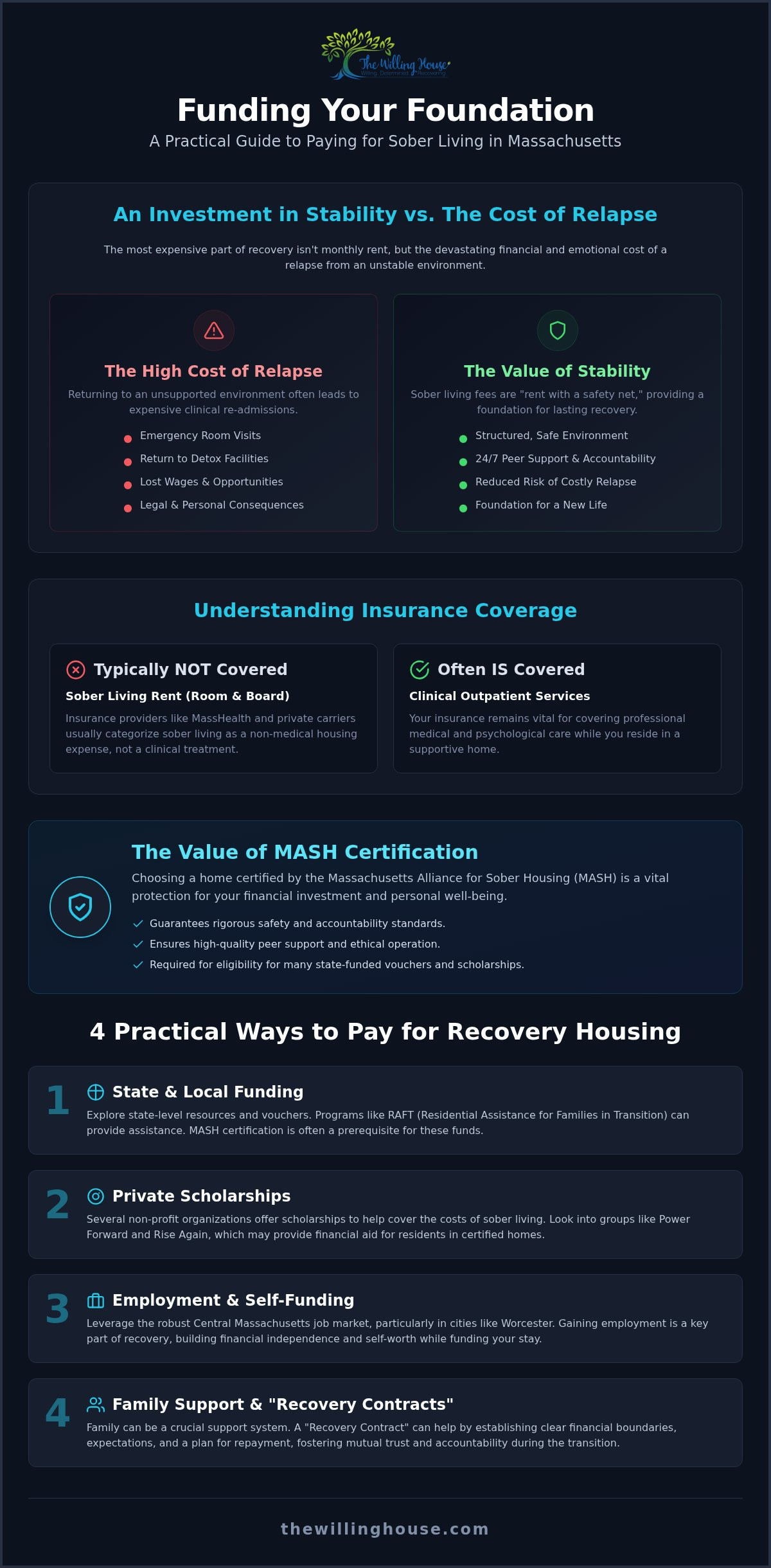
4 Practical Ways to Pay for Recovery Housing in Central Massachusetts
Securing a spot in a supportive environment is a brave step toward a new life, but the financial logistics can feel heavy. If you're wondering how to pay for sober living in Massachusetts, the answer often lies in a multi-layered approach. While state vouchers and insurance play their part, many residents find success by combining personal effort with community resources. This blend of funding not only covers the rent but also reinforces the sense of ownership and accountability that is so vital for long-term sobriety.
Balancing Work and Recovery
One of the greatest advantages of independent sober living is that it encourages you to re-enter the workforce. Worcester’s local economy is a massive resource for those in early recovery. The city is home to a diverse job market, ranging from healthcare and education to retail and trades. By securing employment, you can use your first few paychecks to establish a sustainable budget. Many residents find that working full-time provides a healthy routine that complements their recovery. It’s helpful to view your weekly fee as a primary living expense, much like a traditional apartment, but with the added benefit of a built-in support system. If you're ready to start this transition, applying for a MASH-certified home in a job-rich area like Worcester can make all the difference.
For those who cannot work immediately, Social Security Disability (SSDI) or Supplemental Security Income (SSI) can provide a stable foundation. These fixed incomes are frequently used by residents to cover their housing costs while they focus on their health or attend outpatient programs. Because sober living fees are often more manageable than traditional market-rate apartments, these benefits can go much further in a shared environment.
Community Resources and Grants
You don't have to carry the financial burden alone. Central Massachusetts has a variety of non-profit organizations dedicated to helping individuals sustain their recovery housing. The RIZE Massachusetts Mosaic matching grants, for example, are designed to support equitable access to recovery resources. Additionally, many treatment providers offer "Transition Grants" or one-time scholarships to help bridge the gap between rehab and your first month in a sober house.
Family support is another common path, but it works best when paired with a "Recovery Contract." This is a formal agreement where family members provide financial assistance in exchange for the resident meeting specific goals, such as attending 12-step meetings or passing drug screens. This creates a transparent relationship built on trust rather than enabling. Finally, 12-step fellowships often have informal networks that can help with temporary assistance or lead you toward local scholarships that aren't widely advertised. When you look at how to pay for sober living in Massachusetts, remember that your community is often your strongest financial ally.
Finding Sustainable, Affordable Sober Living at The Willing House in Worcester
Finding a home that feels safe while remaining affordable is the ultimate goal for anyone transitioning out of treatment. At The Willing House, we provide MASH-certified sober living in Worcester that bridges the gap between clinical care and total independence. We understand the financial strain that comes with early recovery, which is why we've designed our fees to be as transparent and sustainable as possible. Residents aren't just paying for a bed; they're investing in a Structured Living Program that includes peer support, accountability through regular drug screens, and a community that truly understands the journey. Whether you're a man or a woman seeking a fresh start, our houses offer a home-like warmth that is grounded in the discipline required for long-term success.
Why Worcester is an Ideal Recovery Location
Worcester serves as a premier backdrop for this transition. The city's layout offers easy access to public transportation and a wealth of clinical providers, making it simple to attend the outpatient programs your insurance covers. Perhaps most importantly, the proximity to a robust job market allows residents to apply the strategies they've learned about how to pay for sober living in Massachusetts by earning their own way. A sober house Worcester Massachusetts provides more than just shelter; it places you in the heart of a vibrant recovery community where resources like 12-step meetings and peer fellowship are available around every corner. By choosing a location with such high walkability and transit access, our residents can quickly find employment to sustain their residency and build a life they're proud of.
Taking the Next Step with The Willing House
We know that the logistics of funding recovery can be daunting for families. Our team is here to help you navigate the various paths, whether you're looking into state vouchers or setting up a personal budget. We encourage family members to reach out for a guided conversation. We can discuss your specific situation and provide clarity on how to pay for sober living in Massachusetts within our community. Our intake process is straightforward and designed to reduce stress during what is already a challenging time. We believe that financial confusion shouldn't be a barrier to safety. Contact The Willing House today to discuss our MASH-certified recovery housing options.
Securing Your Foundation for a New Life
Choosing the right environment after treatment is one of the most significant decisions you'll make for your long-term success. We've explored how MASH certification protects your investment by ensuring high safety standards and opening doors to state-funded vouchers. You now have a clearer picture of how to balance clinical outpatient care with residential fees and how the local Worcester job market can provide a sustainable path forward. Finding clarity on how to pay for sober living in Massachusetts is the first step toward a life defined by stability rather than uncertainty.
At The Willing House, we combine MASH Certified Excellence with peer-driven accountability to create a home where you can truly thrive. Our Worcester-based support system is designed to help both men and women navigate the transition into independent living with dignity. You don't have to figure out these financial logistics alone. Our team is ready to help you explore your options and welcome you into a community that values your growth. Join a Supportive Community: Apply to The Willing House Today and take the next step toward a bright, substance-free future. You've worked hard to get here, and you deserve a safe place to call home.
Common Questions About Funding Recovery Housing
Does MassHealth pay for sober living houses?
No, MassHealth generally does not pay for room and board in a sober living environment. While it covers outpatient therapy and medical services, sober living is considered a residential service rather than clinical treatment. You can still use your MassHealth benefits for external clinical care while living in a certified house. This allows you to focus your personal funds on the residential fees while your insurance handles the medical side of your recovery.
What is the average cost of a sober house in Massachusetts?
In Massachusetts, the cost for sober living typically ranges from $900 to $2,500 per month. Many homes in the state average around $275 per week. These fees vary based on the location and the level of structure provided. Understanding how to pay for sober living in Massachusetts involves looking at these costs as an investment in a safe, drug-free environment that provides the accountability necessary to prevent expensive clinical relapses in the future.
Can I use my SSI or SSDI check to pay for recovery housing?
Yes, you can absolutely use your SSI or SSDI benefits to cover your housing costs. Many residents in Worcester-based recovery communities rely on these fixed incomes to maintain their residency while focusing on their health. Since sober living environments are often more affordable than market-rate apartments, these federal benefits can provide a stable foundation. Our team can help you understand how to budget these monthly checks to ensure your stay remains sustainable and stress-free.
Is there a difference between a halfway house and a sober house regarding payment?
Yes, the primary difference lies in funding and clinical oversight. Halfway houses are typically state-funded and provide clinical services, meaning they often have lower out-of-pocket costs but longer waitlists. In contrast, sober houses like The Willing House are independent, private-pay environments that prioritize peer support and personal accountability. While you are responsible for the fees in a sober house, you gain more independence to work and attend external treatment programs of your choosing in Worcester.
How do I apply for a MASH housing voucher?
Applying for a voucher usually starts with a referral from a licensed clinical treatment provider or the Bureau of Substance Addiction Services (BSAS). Programs like the Recovery Housing Program (RHP) have specific eligibility requirements based on income and recovery status. It is important to note that these vouchers are almost exclusively accepted by MASH-certified homes. Our staff can guide you through the current 2026 eligibility requirements to see if you qualify for these state-level financial resources.
What happens if I lose my job while living in a sober house?
If you lose your job, the most important step is to communicate openly with the house management. In a structured environment, we prioritize your stability and will often work with you to create a plan. This usually involves increasing your attendance at recovery meetings and dedicating specific hours each day to a new job search. Since our homes are located near Worcester’s active job market, most residents are able to find new employment quickly to maintain their financial standing.
Are there scholarships available for sober living in Worcester?
Several non-profit organizations provide scholarships for individuals seeking recovery housing in the Worcester area. Programs like Power Forward and the Sabrina Best Foundation’s Rise Again scholarship offer one-time grants to cover the first few weeks of rent in a MASH-certified home. These resources are designed to bridge the gap for those transitioning from inpatient care. We encourage you to research these local options as part of your plan for how to pay for sober living in Massachusetts.
Can my family pay for my stay at The Willing House directly?
Yes, family members can pay for your stay directly, and this is a very common arrangement. We suggest setting up a "Recovery Contract" between you and your family to ensure everyone is on the same page regarding expectations. This contract establishes clear financial boundaries and links the support to your continued progress in the program. Our intake team is happy to have a transparent conversation with your family members to discuss the payment process and our community standards.


