

What if the very boundaries you fear will take away your freedom are actually the tools that will finally set you free? It's completely natural to feel a sense of hesitation when you think about living under someone else's roof again. You might worry that sober living house curfews and rules will feel restrictive or that a simple misunderstanding about a schedule could jeopardize your housing. We understand that anxiety because we've seen how much you value the independence you're rebuilding.
This guide will show you how these shared standards act as a protective bridge, offering the stability you need to stay grounded while you pursue work and reconnect with family. You'll learn how structure prevents relapse and how curfews work for residents with professional responsibilities. We'll walk through what it looks like to find a supportive community that values your dignity as much as your sobriety. By the end, you'll know exactly what to expect before moving into a M.A.S.H. certified environment.
Key Takeaways
- Understand how a structured environment reduces decision fatigue, providing a stable foundation that protects you from the triggers of early recovery.
- Discover how zero-tolerance policies and regular drug screenings create a secure, substance-free sanctuary for every resident.
- Explore how sober living house curfews and rules balance personal accountability with the freedom to maintain a job and rebuild family connections.
- See how participating in house meetings and shared responsibilities fosters a sense of belonging and peer support within the community.
- Learn why M.A.S.H. certification is a critical benchmark for safety and ethical management in the Worcester recovery community.
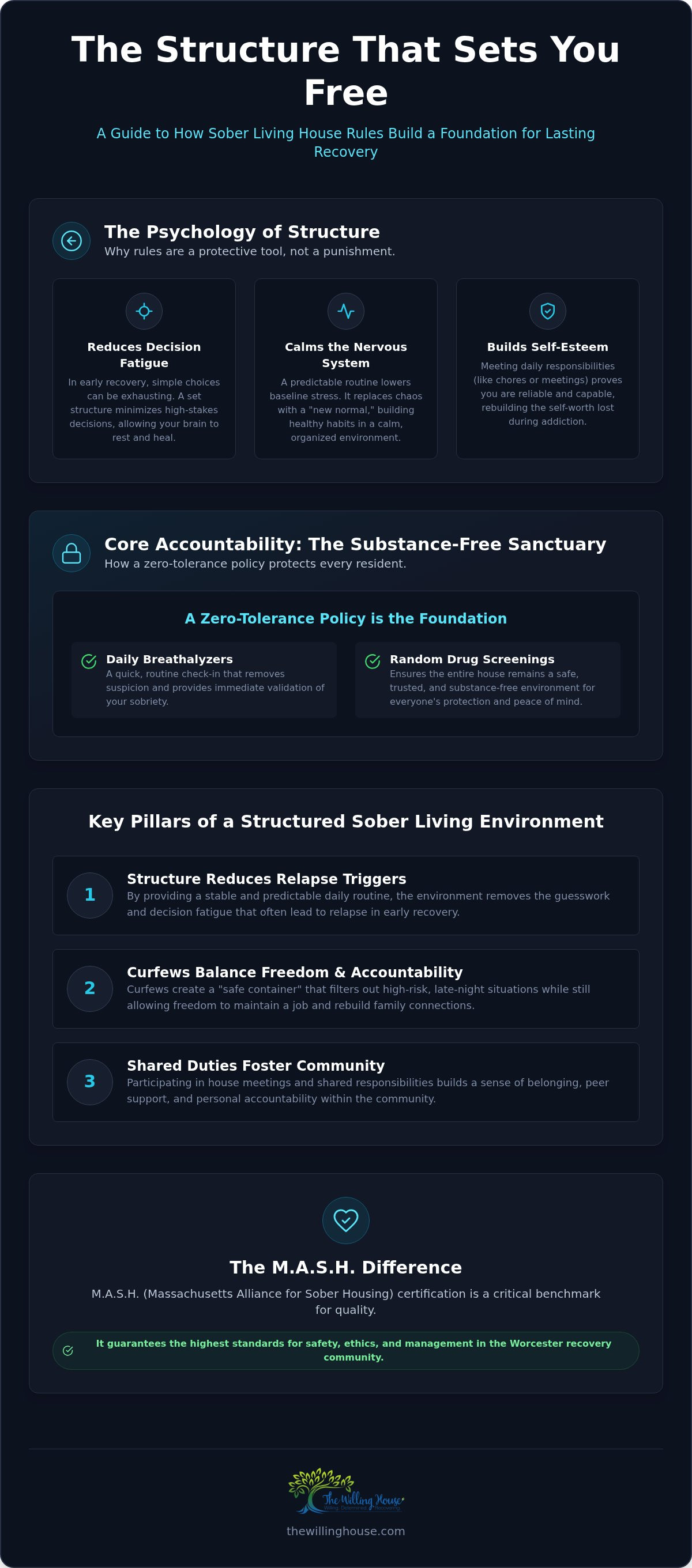
The Psychology of Structure: Why Sober Living House Curfews and Rules Matter
A sober living house serves as a vital bridge between the intensive, highly supervised environment of clinical treatment and the total independence of home life. It is a middle ground where the stakes of daily life are real, but a supportive safety net remains firmly in place. Many individuals find that moving from 24/7 supervision to complete freedom is a recipe for overwhelm. This is exactly why sober living house curfews and rules are established. They create a "safe container" that filters out high-risk triggers and late-night stressors while you focus on rebuilding your internal strength.
In early recovery, your brain is actively healing from the chaos of active use. Simple daily choices, like where to go after work or who to spend time with, can feel exhausting. This phenomenon is known as decision fatigue. When your mind is tired from making constant choices, it is much easier to slip back into old, destructive patterns. By providing a clear framework for your day, these rules minimize the number of high-stakes decisions you must navigate. You don't have to debate whether a late-night outing is a good idea; the curfew has already made that healthy choice for you, allowing your mind to rest and recover.
Reducing Decision Fatigue in Early Recovery
A predictable routine is more than just a schedule; it is a way to calm a hyper-vigilant nervous system. When you know exactly what is expected of you each day, your baseline stress levels begin to drop. Too much freedom too soon often acts as a trigger because it lacks the scaffolding necessary to support new, healthy habits. These rules help you establish a "new normal" where your life is defined by intentional actions rather than impulsive reactions. You aren't just following orders; you're teaching your brain how to function in a calm, organized environment.
The Role of Accountability in Building Self-Esteem
It might seem like chores or house meetings are just small administrative tasks, but they serve a much deeper psychological purpose. Meeting small, daily requirements builds a sense of mastery and self-worth that many lose during active addiction. When you consistently show up on time and contribute to the well-being of the household, you prove to yourself that you're a reliable and capable person. Over time, you'll likely notice a shift in your perspective. You stop feeling like you "have to" follow the rules and start realizing you're "choosing" a lifestyle that actually works for you. This internal discipline is the foundation of benefits of independent sober living. Structure isn't a form of punishment; it's a skill you're practicing so you can eventually manage your own life with total confidence and peace of mind.
Core Accountability Rules: Zero Tolerance and Drug Screening
At the heart of every successful recovery home is a commitment to absolute sobriety. While sober living house curfews and rules provide a daily rhythm, the core accountability measures ensure that the home remains a sanctuary. A drug and alcohol-free environment isn't just a preference; it's a foundational requirement that protects every person under the roof. When you enter a community dedicated to growth, you deserve to know that the person in the next room is just as committed to their recovery as you are. These standards create a level of trust that is often missing in the outside world.
Daily Breathalyzers and Random Screenings
Daily breathalyzers and random drug screenings often sound intimidating at first, but most residents quickly come to see them as a comfort. The process is designed to be a quick, routine part of the morning or evening, much like brushing your teeth. This consistency removes what many call the "burden of suspicion." Because everyone is tested, no one feels singled out or judged. It provides an immediate, objective record of your success, which can be incredibly validating in early recovery. These protocols are central to MASH certified sober living after rehab, ensuring that the environment meets the highest standards of safety and oversight. Research into Evidence Informed Practices in Sober Living shows that these clear markers of accountability are essential for maintaining the "social model" of recovery that helps residents thrive.
The Zero-Tolerance Policy: Protecting the Community
The zero-tolerance policy is the most serious aspect of house life, but it exists for a deeply compassionate reason. In a shared living space, one person's substance use can act as a powerful trigger for everyone else. To maintain a safe space for the majority, the community must be firm about its boundaries. If a resident returns to use, they are typically required to leave the home immediately. This isn't about punishment; it's about preserving the integrity of the "safe container" we've built together. If you're looking for a place where your sobriety is the top priority, you might want to explore our certified housing options to see how we maintain this balance.
When a relapse occurs, the path forward is focused on the individual's safety and the next level of care. We don't simply turn people away; we provide a supportive referral back to clinical treatment or detox. The goal is always to get the individual the specific help they need while ensuring the house remains a stable, substance-free environment for those continuing their journey. This clarity allows residents to focus on their own progress without the fear of a chaotic or unpredictable living situation.
Navigating Daily Life: Curfews, Work, and Treatment
Transitioning back into the rhythms of daily life requires a delicate balance between responsibility and self-care. While the idea of a set time to be home might feel restrictive at first, it serves as a powerful deterrent against high-risk environments that often thrive after dark. In early recovery, late nights are frequently associated with old people, places, and things. By establishing clear sober living house curfews and rules, the community provides you with a socially acceptable "out" when you're in situations that might feel uncomfortable or tempting. It's a tool that helps you prioritize your well-being without having to explain yourself to everyone you meet.
Most residents find that their days are quickly filled with productive activities like work, school, or Intensive Outpatient (IOP) programs. The house structure is designed to support these goals, not hinder them. When you need to reconnect with family or attend a special event, most houses offer a process for requesting overnight passes. These passes are a way to practice your recovery skills in the "real world" while still having a safe, certified home to return to. It's about gradual reintegration, ensuring you feel steady and supported every step of the way.
Balancing Employment with House Curfews
Maintaining a job is a vital part of rebuilding your independence and self-esteem. We encourage residents to work, and we understand that not every job follows a standard nine-to-five schedule. If you work a second or third shift, communication with house management is essential. M.A.S.H. certified houses are often flexible with curfews for verified employment, allowing you to fulfill your professional duties while remaining in good standing. My best tip for residents is to always keep a "recovery-first" mindset. Even with a busy work schedule, ensure you're leaving enough time for meetings and rest so you don't burn out. When your schedule changes, provide your house manager with a copy of your work hours as soon as possible to avoid any misunderstandings.
Phased Independence: Earning More Freedom
As you demonstrate consistency and growth, you'll likely move through a "phasing" system. This system is designed to grant you more flexibility as your recovery matures. In the beginning, curfews are often tighter to help you establish a routine. As you reach milestones, such as 30 or 60 days of sobriety, completing your chores, and attending all required meetings, you can earn later curfews or additional overnight passes. This progression mirrors the journey at a sober house Worcester Massachusetts, where the goal is to move you toward total independence. You aren't just following rules; you're building a track record of reliability that will serve you for the rest of your life.
Living in a recovery residence is about more than just finding a bed; it's about joining a micro-community where every member contributes to the collective peace. While earlier sections explored the logistical side of sober living house curfews and rules, this is where the "home" feeling truly begins. Shared responsibilities, such as chore rotations, ensure the house remains a clean and dignified space for everyone. These tasks aren't busy work. They are a practical way to practice the life skills needed for long-term independence, helping you transition back into a self-sufficient lifestyle.Beyond physical upkeep, personal growth is a core expectation of the community. Most houses include requirements for attending 12-step meetings or other recovery-focused groups. This ensures every resident is actively working on their internal healing, which in turn strengthens the stability of the entire household. When everyone is moving in the same direction, the atmosphere becomes one of mutual aid rather than just shared occupancy.
The Role of Weekly House Meetings
Weekly house meetings serve as the heartbeat of the community. Unlike clinical settings, these gatherings are often peer-led, creating an environment where you feel heard and respected. These meetings provide a dedicated space to resolve the inevitable friction of communal living, celebrate sobriety milestones, and plan house activities. Peer support reduces the weight of house rules by turning them into shared agreements rather than top-down mandates. It's a time to share successes and challenges, ensuring that no one feels like they're walking this path alone.
Visitor Policies and Maintaining a Safe Sanctuary
To keep the house a safe sanctuary, visitor policies are strictly enforced. Most certified houses prohibit overnight guests to protect the privacy and safety of all residents. Reconnecting with family and children is a vital part of the recovery process, and we encourage these visits in designated common areas during specific hours. The "sober visitors only" rule is a non-negotiable boundary. This rule prevents outside triggers from entering the home, ensuring your living space remains a dedicated zone for healing. If you are ready to join a community that balances these clear boundaries with genuine peer support, apply to join our sober living community today. This structure allows you to focus on your progress while knowing your home is protected and your peers are standing with you.
The MASH Difference: Why Certification Standards Matter in Worcester
Worcester is home to many recovery resources, but choosing the right environment requires looking beyond the surface. The Massachusetts Alliance for Sober Housing (MASH) serves as the primary certifying body in the state, ensuring that homes meet rigorous national standards for safety and ethics. When a home is MASH-certified, it means the sober living house curfews and rules aren't just suggestions made up by a landlord; they are part of a proven framework designed to support your long-term success. Unregulated homes can sometimes be unpredictable or even exploitative, lacking the oversight necessary to protect residents. By choosing a certified residence, you're choosing a home that has been inspected and held to a higher standard of care.
What MASH Certification Guarantees for Residents
MASH certification provides a layer of protection that every person in recovery deserves. It guarantees that the physical environment meets strict safety codes, including functioning fire alarms and clean, dignified living spaces. This certification is a mark of quality that state agencies and vendors rely on when making referrals. Beyond the building itself, certification ensures ethical management practices that prioritize the well-being of the individual. This oversight includes:
- Transparent Policies: Clear guidelines on resident rights and house expectations.
- Grievance Procedures: A formal, documented way to address concerns if you feel you've been treated unfairly.
- Regular Oversight: Ongoing inspections to ensure the house maintains high-quality standards for all residents.
This oversight means that the structure you're living in is designed to be a "safe container" for your growth, rather than a source of added stress. It ensures that the accountability measures in place are fair, consistent, and focused on your recovery goals.
Finding Your Place at The Willing House
At The Willing House, we take our role as a Worcester leader in MASH-certified excellence seriously. We believe that sober living house curfews and rules are not barriers to freedom; they are the very tools that make true independence possible. Our community is designed to help you balance the realities of Worcester local life, like finding a job or reconnecting with family, with the essential structure of a recovery-focused home. We act as a stable foundation for men and women in transition, offering a path that is both disciplined and deeply kind. If you're ready to see how a structured living program can change your life, we invite you to speak with one of our peer leaders or schedule a tour. Your journey to independence doesn't have to be a solo effort; we're here to provide the scaffolding you need until your recovery is strong enough to stand on its own.
Embracing the Structure That Sets You Free
Embrace the shift from chaos to clarity. Choosing a home with established sober living house curfews and rules is a profound act of self-respect. It means you're prioritizing your peace and protecting the progress you've worked so hard to achieve. By leaning into the structure of a MASH-certified environment, you're not just following a schedule; you're practicing the daily habits that lead to a lifetime of freedom. You deserve a living space that balances high standards of accountability with the warmth of a peer-led support model.
As Worcester's trusted recovery community, we've seen how these healthy boundaries transform anxiety into confidence. They allow you to focus on your career and family while knowing your home is a secure sanctuary. You don't have to navigate this transition alone. Ready to start your journey in a safe, MASH-certified home? Contact The Willing House today. Your future self will thank you for the stable foundation you're building right now. Stay strong and keep moving forward.
Frequently Asked Questions
Can I work a night shift with a sober living curfew?
Yes, you can work a night shift if your employment is verified by house management. MASH-certified houses in Worcester recognize that professional responsibilities don't always fit a standard schedule. You'll need to provide your work hours to ensure your sober living house curfews and rules are adjusted appropriately. This flexibility allows you to rebuild your financial independence while still benefiting from the accountability and safety of a structured recovery community.
What happens if I accidentally miss my curfew?
If you miss your curfew, you should call your house manager as soon as possible to explain the situation. Accountability is a core part of our model, so expect a follow-up conversation or a drug screen to ensure the safety of the house. While we understand that Worcester traffic or emergencies occur, consistent adherence to sober living house curfews and rules is essential. Your commitment to these boundaries protects your own progress and the entire community.
Are visitors allowed in my room at a sober house?
Visitors are prohibited from entering private bedrooms to respect the privacy and boundaries of every resident. We value family reconnection and encourage you to meet with loved ones in the designated common areas during approved visiting hours. This policy helps maintain the house as a safe sanctuary for everyone. By keeping personal rooms private, we ensure that every individual in our Worcester community has a trigger-free space to rest and reflect on their journey.
Do I have to attend 12-step meetings to stay in a sober house?
Most certified sober homes require residents to attend 12-step meetings or a similar peer-led recovery program. These meetings are vital for building the fellowship and support network needed for lasting sobriety. Worcester has a vibrant recovery community with many local meetings available throughout the week. Showing up for these groups demonstrates your active commitment to growth and helps you integrate the skills you're learning into your daily life outside the house.
Is there a rule about how long I can stay in sober living?
There isn't a fixed rule for how long you can remain in sober living. Many residents stay for several months or even a year as they stabilize their lives and save for their own place. We view our Worcester homes as a bridge to total independence, so you can stay as long as you're following house rules and making progress. Your transition is a personal journey, and we're here to provide a stable foundation for your growth.
What happens if my roommate breaks a rule but I don't?
You are not penalized for the actions of others, but you are expected to help maintain the safety of the household. If a roommate breaks a major rule, such as bringing substances into the home, you should report it to management immediately. This protects your own sobriety and the well-being of the entire Worcester community. Our peer-led support model relies on everyone working together to keep the environment honest, safe, and supportive for all.
Can I have my cell phone and laptop in a sober living house?
Yes, residents are welcome to have their own cell phones and laptops. We believe these tools are essential for managing modern life, whether you're applying for jobs in Worcester, attending school, or staying in touch with supportive family members. Unlike clinical treatment, independent sober living is about learning to manage your own time and technology responsibly. We encourage you to use these devices to build the life you're proud of while staying grounded in your routine.
Are there rules about what medications I can take?
Residents can take prescribed medications, but they must be disclosed and stored according to house safety policies. Most homes require that medications are kept in a locked box to prevent any risk to the community. It's important to discuss your specific prescriptions with the house manager during the intake process. While we don't offer medical services, we ensure that your health needs are managed in a way that keeps our Worcester home safe and secure.


